Warner Bros AI Photo Booth Experience Explained
Introduction
A Warner Bros AI photo booth experience is best understood as a campaign-specific interactive activation, not one standard product that appears unchanged at every premiere, game launch, or fan event. It can turn a guest’s portrait into themed digital content, place them in a cinematic visual world, or pair a physical capture station with automated delivery. The exact format depends on the property, audience size, creative rights, venue, and campaign goal.
That distinction matters if you are evaluating an activation for a studio event, entertainment campaign, influencer screening, or branded pop up. “AI photo booth” is often used as a catchall phrase, yet an AI portrait generator, a GIF booth, a Glambot, and a bullet time system solve very different problems. One creates personalized still imagery; another captures real motion; another may be designed around spectacle, throughput, or social video.
Table Of Contents
TL;DR
A Warner Bros AI photo booth experience is usually a custom campaign activation rather than a universally available Warner Bros product. The strongest AI specific example is BarbieSelfie.ai, while other Warner Bros events have used non AI formats such as photo booths, scream measurement, bullet time, and slow motion video. For decision makers, the key choice is not simply “AI or no AI.” It is whether personalized imagery, cinematic motion, high throughput, print collectability, or audience data capture is the priority.
What Counts As A Warner Bros AI Photo Booth Experience
It Is A Format, Not A Single Standardized Product
Publicly available evidence does not establish one official, always available Warner Bros AI booth with a fixed price, hardware package, privacy policy, or output style. Instead, Warner Bros related campaigns have used multiple interactive formats tailored to specific titles and audiences.
The clearest AI adjacent example is BarbieSelfie.ai, a personalized web experience associated with the _Barbie_ campaign. PhotoRoom has said its AI powered image editing API supported the experience by removing backgrounds from user submitted photos and enabling themed creative generation. That is a different model from a physical event booth. A guest could use a phone, upload or take a selfie, and receive an asset without standing in front of dedicated event hardware.
By contrast, Warner Bros Interactive Entertainment commissioned two physical Gamescom photo booths for _Injustice 2_ and _LEGO Dimensions_,. Those booths are relevant because they show how a branded capture experience can serve a major public event, even if the available description does not identify them as generative AI systems.
For planners, this means the phrase “Warner Bros AI photo booth experience” should trigger a few practical questions:
• Is the output an AI generated still image, an edited portrait, a GIF, or a video?
• Is capture happening at a physical installation, through a tablet, or through a mobile web page?
• Does the campaign need official key art, character likenesses, or licensed visual assets?
• Is the priority fan participation, premium content, email acquisition, printed keepsakes, or rapid guest flow?
AI Compositing Is Not The Same As Generative AI
This is where descriptions can get blurry. An AI experience may use background removal, subject segmentation, portrait enhancement, style transformation, or full image generation. These are related technologies, but they do not create the same guest experience or introduce the same brand risks.
With AI compositing, the system identifies the guest, separates them from the original background, and places them into an approved Warner Bros themed scene. The result can be highly controlled: a superhero cityscape, a pink dreamhouse inspired setting, a fantasy portal, or a game universe frame. The campaign team supplies the permitted visual components, while automation handles the person cutout and image assembly.
A more generative workflow may create a newly stylized portrait from a source photo and a curated visual direction. This can feel more surprising, but it requires stronger creative testing. Facial details, costumes, hands, logos, and recognizable fictional elements can render inconsistently unless the workflow is carefully constrained.
For a useful primer on the difference between capture, transformation, and output, see What is an AI photo booth and how does it work.
Warner Bros Activations Extend Beyond Still Photos
The broader category includes experiences that are interactive but not AI based. At the _Evil Dead Rise_ premiere, says guests recorded and measured their screams with a decibel meter. The same premiere reportedly included a nine camera bullet time capture setup and both physical and digital branded outputs.
That is a useful boundary line. A Scream Booth measures participation. A bullet time rig records real movement from multiple angles. A Glambot creates dramatic slow motion video. An AI portrait system transforms a still photo into a different visual context. Calling them all “photo booths” is convenient, but it can lead to the wrong budget, staffing, creative, and queue assumptions.
How The Technology And Guest Journey Work
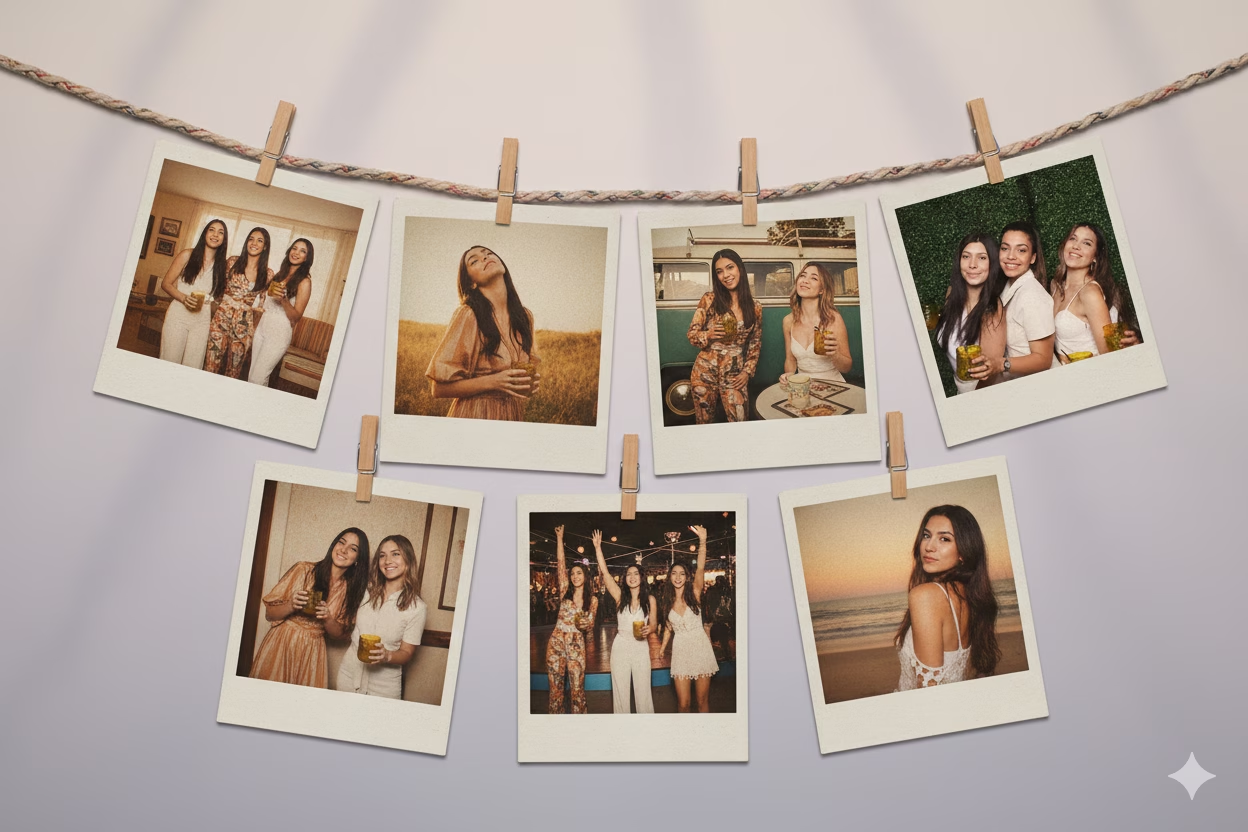
The Core Workflow Behind A Personalized Output
A polished activation feels simple to the guest: pose, capture, choose, receive. Behind that short interaction is a production workflow that needs clear decision points.
- Capture or upload: The guest takes a photo through a booth camera, tablet, or mobile browser. A physical booth often provides better lighting and framing control. A mobile flow can reach more people beyond the venue.
- Image qualification: The system checks whether a face is visible, whether the image is sharp enough, and whether the framing matches the creative template. If it fails, the guest should receive a plain language retake prompt rather than an unexplained error.
- AI processing: The software removes or masks the background, detects the portrait area, and applies the approved transformation or scene composition. In a controlled campaign, the creative layer should be locked to approved assets rather than left open ended.
- Brand assembly: The final file receives the campaign frame, title treatment, legal line where required, and delivery metadata. This stage protects visual consistency across hundreds or thousands of outputs.
- Delivery: The guest receives a QR code, text message link, email, print, or on screen download option. Each choice affects speed, data handling, and social sharing behavior.
PhotoRoom’s case study reports that the image processing used for BarbieSelfie.ai was designed to return high quality results in less than 300 milliseconds. That metric is important, but it should not be confused with total guest turnaround. Capture, guest selection, rendering, delivery, and network conditions can make the overall experience longer.
Speed Is More Than Model Latency
A vendor may advertise a result in roughly a minute. That may be realistic for a tested template under stable connectivity, but a premiere queue does not experience “processing time” in isolation. Guests experience the entire line.
Consider two scenarios. A fast AI service produces an image in 10 seconds, but guests spend 45 seconds entering email addresses on a shared screen. Another installation takes 35 seconds to render but delivers through a QR code that guests scan while stepping away from the camera. The second setup may move the physical line faster, even though its image generation is slower.
Use throughput, not only render time, to plan capacity. Throughput means completed guest outputs per hour after including check in, posing, retakes, processing, delivery, printing, and staff intervention. If a red carpet window lasts 90 minutes, a one person experience and a four person group experience need very different capture rules.
A helpful point of reference comes from a Warner Bros Canada _Mortal Kombat II_ influencer screening, where Booth Empire reported approximately 134 cinematic slow motion videos in three hours. That figure illustrates the importance of measuring completed outputs, not simply describing an activation as “high volume.” It also reflects a video format, not a direct AI image generation benchmark.
Physical Booth, Mobile Web Experience, Or Both?
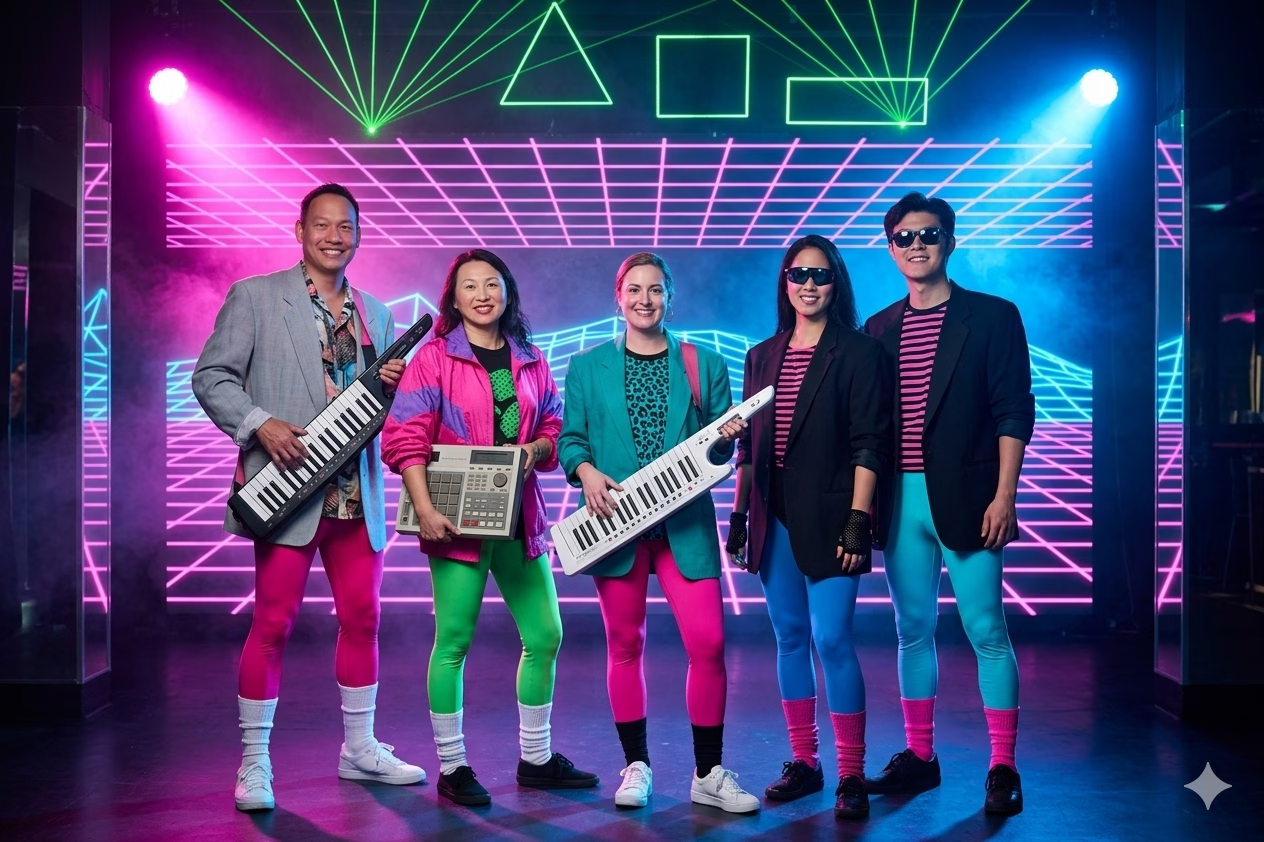
A physical booth creates a premium focal point. It controls lighting, camera angle, backdrop, and the moment of participation. It also gives guests a visible destination inside a studio event, launch party, or premiere lounge.
A mobile web experience can expand reach before, during, and after an event. It is useful when fans cannot attend in person or when a campaign wants broad participation without installing hardware in every market. The tradeoff is less control over lighting, phone quality, framing, and user behavior.
Format | Best Use | Main Strength | Main Constraint |
|---|---|---|---|
Physical AI booth | Premiere, gala, studio event | Controlled capture and premium presence | Queue and venue footprint |
Mobile web selfie tool | Broad fan campaign or roadshow extension | Scales beyond one venue | Uneven image quality |
Hybrid booth plus mobile | Major launch with onsite and remote audiences | Extends campaign reach | More technical and creative coordination |
Print focused booth | Collectible fan moment | Tangible branded takeaway | Printer supplies and slower handoff |
For an event in Los Angeles, a custom AI photo booth experience at Millwick DTLA provides a useful example of why venue flow, lighting, and guest circulation should be designed alongside the visual concept rather than after it.
Choosing The Right Activation Format
Match The Capture Method To The Campaign Objective
Start with the output your audience should want to keep. A personalized movie poster is not interchangeable with a kinetic video clip. Each format creates a different reason to participate.
Activation Type | Choose It When | Avoid It When |
|---|---|---|
AI portrait or composited poster | Personalized character world imagery is the core campaign idea | You need real movement or very large group capacity |
Conventional photo booth | You need dependable portraits, prints, and low creative risk | The campaign requires a dramatic transformation |
GIF booth | A short looping social asset fits the tone | You need cinematic production value |
Bullet time booth | The audience should look like part of an action sequence | Space, staffing, and camera rig budget are limited |
Glambot style video | Influencers, cast, or VIP moments need premium slow motion | High volume public queues are the primary goal |
Mobile web generator | Reach beyond the venue matters most | You need tightly controlled lighting and guest flow |
If your campaign centers on a familiar fictional world, AI compositing often offers the best balance of personalization and brand control. The guest still sees themselves in the output, while the campaign retains approved visual boundaries. If the property is action driven, a multi camera sequence may communicate the story better than a still image.
Design For Queues Before You Design For Novelty
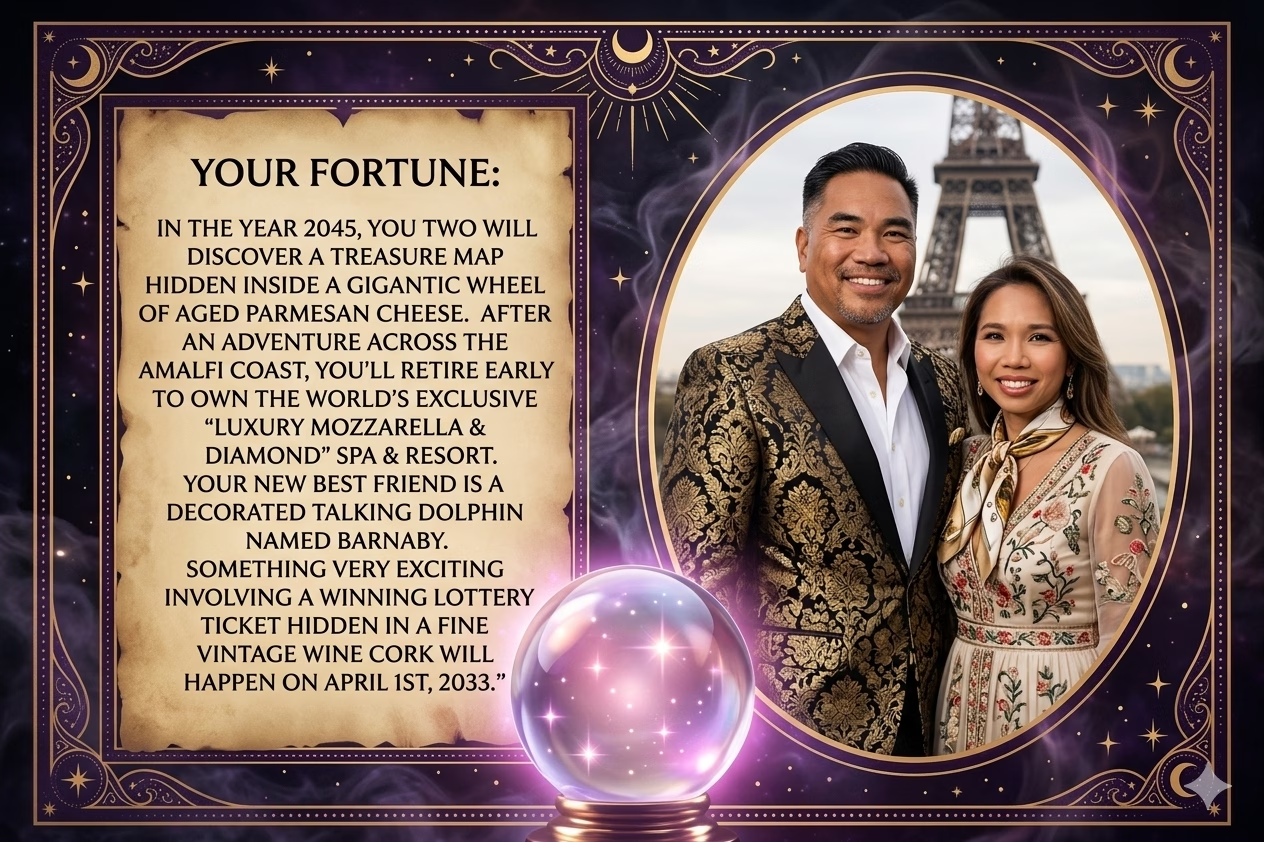
A spectacular activation that processes too slowly can create frustration, especially during short arrival periods. Build the queue plan into the creative brief from day one.
• Limit the number of selectable styles when time is tight. Three strong choices usually move faster than ten variations.
• Use a visible preview loop so guests understand the pose before reaching the camera.
• Separate capture from delivery whenever possible. QR retrieval can let guests leave the station while their output completes.
• Create a fallback asset. If an AI render fails, deliver a branded original portrait or a standard composited version rather than sending the guest away empty handed.
• Confirm whether venue Wi Fi is sufficient, whether a dedicated connection is needed, and what happens if connectivity drops.
Fair warning: internet outages are not the only failure mode. A constrained AI workflow can also reject hats, sunglasses, low light portraits, multiple faces, or highly reflective costumes. A good guest interface explains what to do next. “Retake with one face centered in frame” is far better than a generic error message.
Delivery, Consent, And Retention Need Real Decisions
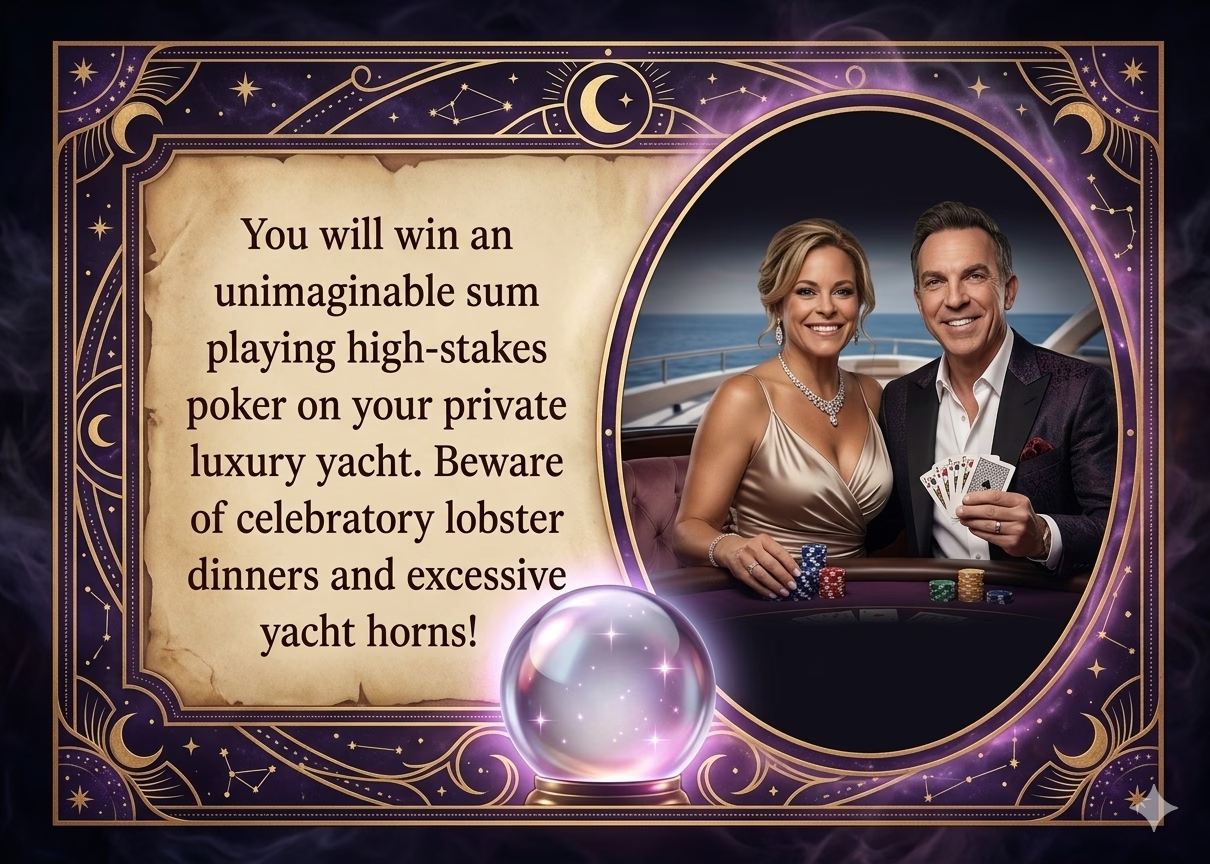
Email delivery supports follow up marketing but asks guests to type personal information. QR delivery is faster and can reduce friction, but it does not automatically create a marketing contact. Text message delivery may feel convenient but requires a clear consent flow and reliable phone input. Prints avoid digital data capture altogether, though they add consumables and staff attention.
For a Warner Bros style activation, organizers should request written answers to these questions before launch:
- What image data is captured, processed, stored, and deleted?
- Is the face used only to create the requested output, or is it used for analytics, training, or future marketing?
- How long do raw images and final assets remain available?
- Can minors participate, and if so, what consent process applies?
- What is the offline fallback if the delivery system or connection fails?
- Who approves the licensed visual assets, character references, copy, and social terms?
Public material does not establish one universal Warner Bros retention period or consent standard. Treat privacy language as a campaign deliverable, not a checkbox. For example, a one night invite only screening may use QR delivery and short asset availability, while a nationwide fan campaign may need a more detailed privacy notice, age gating, and customer support plan.
For a broader view of how immersive capture environments can shift event photography from documentation into participation, read How the AI photo lounge is revolutionizing event photography.
FAQ
Key Takeaways
• A Warner Bros AI photo booth experience is typically customized for a particular title, launch, event, or audience rather than sold as one fixed public product.
• BarbieSelfie.ai is the most clearly documented AI centered example; several other Warner Bros activations used physical capture formats that were not necessarily AI driven.
• Processing speed matters, but full guest throughput is the better planning measure because check in, retakes, sharing, and printing can slow the line.
• Choose AI compositing for controlled personalized imagery, and choose bullet time or Glambot formats when movement is the story.
• Consent, image retention, network backup, and delivery method should be decided before creative production begins.
Common Questions
What Is The Warner Bros AI Photo Booth Experience?
It is a broad description for a personalized, Warner Bros themed capture activation that may use AI image processing, branded compositing, or related interactive technology. It is not publicly documented as one standardized Warner Bros product with a universal specification.
Was BarbieSelfie.ai A Physical AI Photo Booth?
Not in the usual event hardware sense. BarbieSelfie.ai is better described as a web based personalized selfie generator. It used user submitted photos and AI supported background removal to create themed shareable creative, making it a useful model for a mobile campaign rather than proof of one physical booth format.
Which Warner Bros Properties Have Used Interactive Photo Activations?
Documented examples include _Injustice 2_ and _LEGO Dimensions_ at Gamescom, _Evil Dead Rise_ at a premiere, and a _Mortal Kombat II_ related influencer screening. The formats varied, from photo booths to sound measurement and cinematic video capture, so they should not all be labeled AI experiences.
Can Guests Receive Prints And Digital Files?
Yes, an activation can offer one or both. Prints create a collectible item and reduce dependence on guest follow up. Digital delivery supports sharing and can allow later retrieval. Offering both can be effective, but it adds printer management, fulfillment decisions, and potentially longer wait times.
How Quickly Does A Finished Image Arrive?
That depends on the full workflow. AI processing can be very fast, but the guest may still need to pose, review, enter contact details, scan a QR code, or wait for a printer. Plan around completed outputs per hour rather than relying only on a render speed claim.
Does The Experience Require A Physical Booth?
No. A browser based mobile web flow can let guests use their own phones. Physical booths offer superior control over lighting and framing, while mobile experiences offer broader reach. A hybrid approach works well when an event wants both a premium onsite moment and a remote fan extension.
How Much Does A Warner Bros Style AI Activation Cost?
There is no reliable public standard price. Costs vary with creative development, licensing approvals, hardware, staffing, event duration, print volume, network requirements, custom software, delivery tools, and venue logistics. Ask for a scope based proposal rather than expecting a universal rental rate.
Conclusion
A successful Warner Bros AI photo booth experience does more than place a logo on a guest portrait. It translates a film, series, or game into a clear participatory moment: step into the frame, become part of the visual world, and leave with content worth keeping.
For decision makers, the best format follows the campaign objective. Choose controlled AI compositing when personalized imagery is the star. Choose video or multi camera capture when performance and motion matter more. Then protect the experience with practical planning around throughput, delivery, rights approval, guest consent, and a graceful fallback when technology misbehaves.
If you are developing an entertainment focused activation, begin with the guest journey and the final asset. The technology should make that moment feel immediate, polished, and unmistakably on brand.
Ultimately, selecting the right Warner Bros AI Photo Booth requires balancing technical ambition with brand safety. Whether you prioritize a Warner Bros AI Photo Booth for social reach or a Warner Bros AI Photo Booth for deep engagement, clarity is vital. A well-planned Warner Bros AI Photo Booth should align with your specific campaign goals, while a poorly executed Warner Bros AI Photo Booth may miss the mark. Always evaluate if a Warner Bros AI Photo Booth offers the necessary creative control. If a Warner Bros AI Photo Booth feels too complex, consider simpler alternatives. Every Warner Bros AI Photo Booth serves as a touchpoint, so ensure your Warner Bros AI Photo Booth reflects the studio’s quality. Finally, choose a Warner Bros AI Photo Booth that guarantees a seamless, memorable guest experience.
To better understand the underlying mechanics of these activations, you can explore the foundational concepts of artificial intelligence through this comprehensive overview.