A Corporate AI photo activation Huntington Beach event can do more than give attendees a polished image. When it is planned well, it becomes a branded interaction that can support employee engagement, trade show traffic, product launches, social sharing, and lead collection. The difference between a memorable activation and a slow, off-brand station usually comes down to planning details that are easy to overlook: approvals, guest throughput, venue infrastructure, and post-event reporting.
Table Of Contents
- Key Takeaways
- Planning A Corporate AI Photo Activation
- Designing The Guest Experience And Event Operations
- Frequently Asked Questions
- Sources And References
Key Takeaways
• An AI photo activation works best when it has one clear purpose: engagement, branded content, lead capture, employee recognition, or a combination of these goals.
• I recommend approving every visual style, overlay, prompt boundary, and delivery message before event day. AI imagery needs governance, not just creative ideas.
• “Fast” image generation does not automatically mean fast guest flow. A busy corporate gala or trade show needs enough space, staffing, and queue planning to prevent long waits.
• Digital delivery is useful for QR scans, text sharing, and data capture. Print output can be more effective when a physical keepsake supports the campaign or event theme.
• Huntington Beach venue logistics matter. Power access, Wi-Fi reliability, load-in timing, floor layout, daylight, wind, and outdoor conditions can all affect the setup.
• Success should be measured with agreed metrics such as participation rate, QR scans, image shares, leads, dwell time, and gallery use after the event.
Planning A Corporate AI Photo Activation
Define The Business Result Before Choosing The Visual Style
The most useful starting point is not, “What background should we use?” It is, “What should attendees do, feel, or remember after this interaction?” A corporate AI photo activation can serve several goals, but a single deployment should have a primary objective.
For example, an executive retreat photo experience in Huntington Beach may focus on employee belonging and a polished keepsake. A trade show tech activation booth in HB may prioritize badge scans, qualified leads, and fast shareable content. A product launch photo booth rental in Huntington Beach may need to place a new product at the center of every output.
I would define the campaign objective in one sentence before requesting a quote. That statement guides every later choice, from the AI style to the staffing model.
Primary Objective | Best Activation Design | Metric To Track | When To Avoid It |
|---|---|---|---|
Employee engagement | Team portraits, recognition frames, optional prints | Participation rate, employee feedback | When the event schedule allows only brief transitions |
Product launch | Product-centered AI scenes, branded share screens | Shares, scans, campaign reach | When the product cannot be visually represented accurately |
Trade show lead generation | QR or form workflow with consent language | Qualified leads, completion rate | When internet access and CRM ownership are unclear |
Corporate gala | Premium portrait styling, print and digital delivery | Guest participation, gallery downloads | When the event has very limited floor space |
Sponsorship activation | Co-branded templates and campaign-specific calls to action | Scan volume, branded content output | When sponsor approvals are not complete |
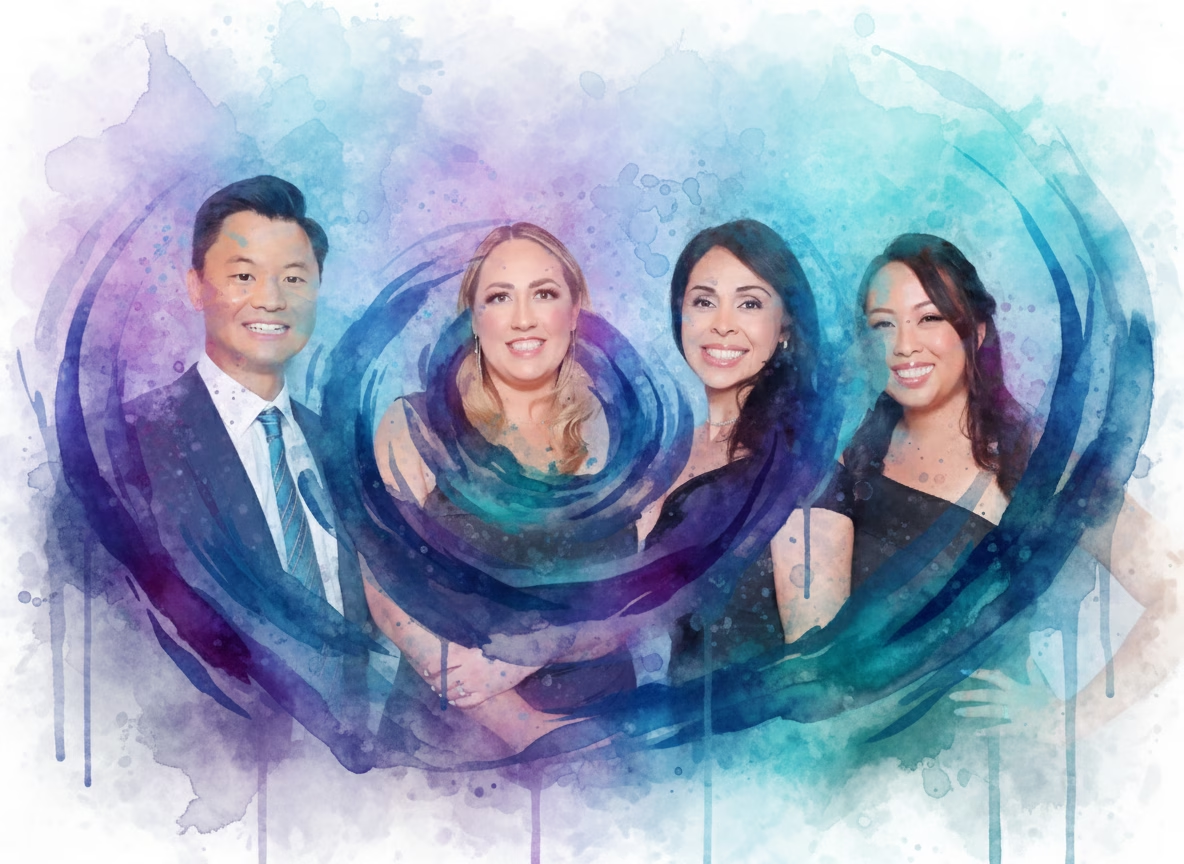
AI photo booths are distinct from standard booths because they transform a captured or uploaded image into a themed visual result. That can range from a professional-style AI portrait to a campaign-specific scene. Lucky Frog Photos describes an AI portrait workflow that can use uploaded or captured images to generate professional-style AI portraits, which is one reason the format can fit employee programs and executive-facing events as well as high-energy promotions.
That local applicability is helpful, but event fit still depends on the operational plan, not the city name alone.
Build Brand Safety Into The Creative Approval Process
Corporate branding should shape the AI system before guests arrive. A logo on the final image is useful, but it is not a complete brand-safety plan. The underlying visual style, approved pose guidance, prohibited concepts, campaign language, and sharing screen should all be reviewed in advance.
A practical approval path can look like this:
- The event team provides the campaign style guide, logo files, approved colors, audience profile, and product imagery.
- The activation provider creates a limited set of AI visual directions and sample outputs.
- Marketing, legal, sponsor, and event stakeholders approve the final style and identify unacceptable outputs.
- The team confirms escalation rules for any unexpected image, attendee complaint, or technical issue.
- Onsite staff follow the approved workflow and document exceptions for the post-event report.
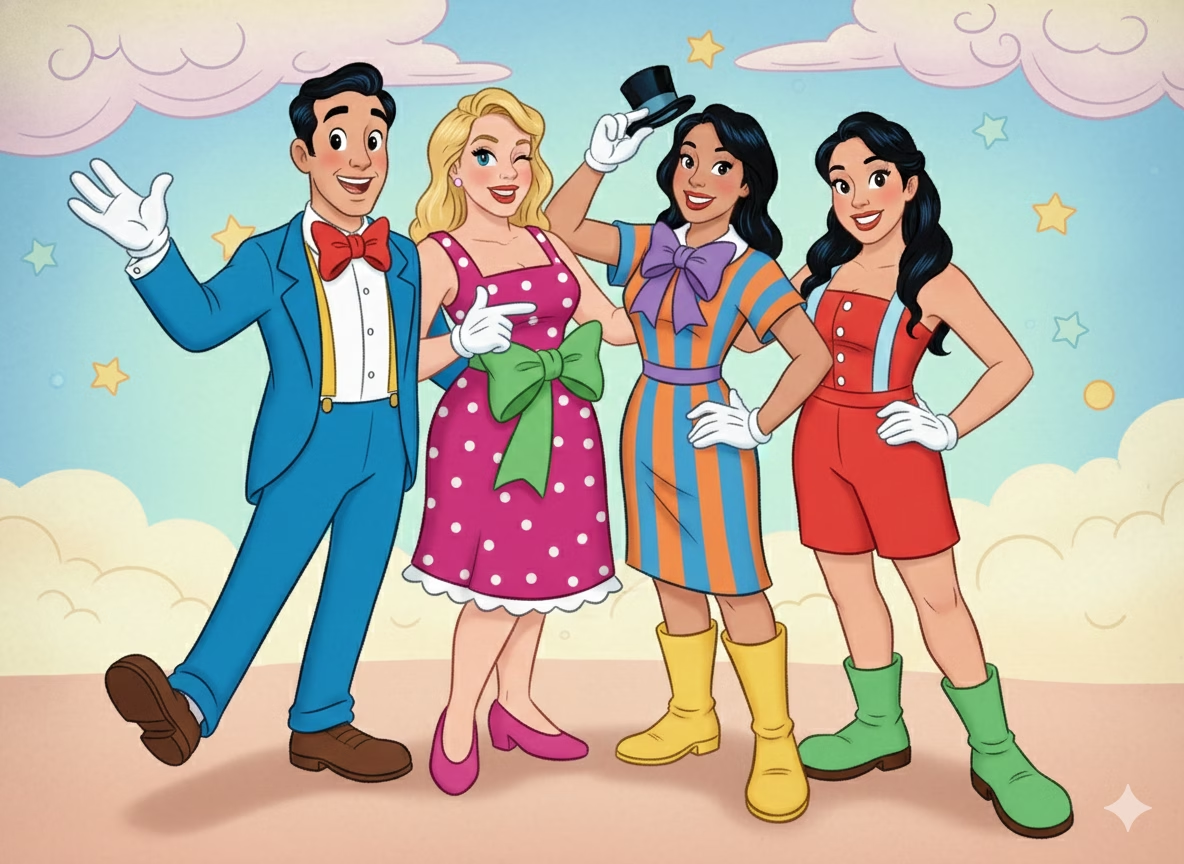
Fair warning: A broad creative concept such as “make everyone look like a celebrity” can create avoidable likeness, rights, and brand-control problems. A safer brief describes an original setting, approved wardrobe mood, lighting direction, and campaign story without relying on public figures or protected characters.
Human review can be valuable where reputation risk is high. The implication is simple: a controlled activation is not necessarily less creative. It is more likely to produce usable campaign assets consistently.
I would also decide whether attendee images are delivered automatically or reviewed before release. Automatic delivery may suit a high-volume public promotion with pre-approved, tightly constrained styles. Review may be preferable for a corporate gala, leadership event, or sponsor-sensitive installation. This depends on risk tolerance and expected volume.
Compare Digital, Print, And Hybrid Delivery
The delivery format should match the event’s job. Digital-only activation is often efficient for conferences and trade shows because guests can scan a QR code, retrieve an image, and continue moving. It also creates a natural point for optional consent-based lead capture.
Prints can be more persuasive at an employee event, executive retreat, or gala because guests leave with a physical reminder. The tradeoff is operational: printers need supplies, a stable setup area, additional timing, and a plan for printer delays or reprints.
Format | Best Use Case | Strength | Main Tradeoff |
|---|---|---|---|
Digital-only | Trade shows, conferences, product launches | Fast sharing and easier mobile follow-up | No physical takeaway |
Print-inclusive | Galas, retreats, employee celebrations | Tangible keepsake and longer brand presence | More equipment and production steps |
Hybrid | Premium brand activations and sponsor events | Supports both sharing and souvenirs | Higher complexity and budget |
The same provider states that personalized images can be delivered in under 60 seconds by text or QR scan, with same-night gallery delivery and organizer delivery within 24 hours.
Those figures are useful benchmarks, not a universal rate card. Custom AI builds, extensive design revisions, multi-day conventions, complex data workflows, custom scenic elements, staffing requirements, and printing volume can change the final cost. I would ask for a quote that separates the base activation from creative production, staffing, travel, printing, lead capture, and reporting so comparison is meaningful.
For ideas on matching the format to a coastal event setting, review how to elevate your Huntington Beach event with AI photo booths. A visual concept should feel connected to the campaign and venue without turning every corporate event into a generic beach postcard.
Designing The Guest Experience And Event Operations
Plan Throughput Instead Of Trusting “Instant” Claims
An image generated in under a minute can still create a long line. Guest throughput includes more than generation time: greeting, consent, style selection, posing, capture, processing, delivery, and the moment someone asks for another version all add seconds.
A reasonable planning model uses the full session length rather than the AI render time. If the average guest session is two minutes, one station could theoretically handle about 30 guests per hour. In reality, pauses, group photos, retakes, technical adjustments, and guests deciding how to share may reduce that number. A busy trade show should plan conservatively rather than promise a volume that only works under perfect conditions.
Event Condition | Recommended Approach | Reason |
|---|---|---|
High-volume trade show | Use a simple, preselected AI style and quick QR delivery | Reduces choices and keeps the line moving |
Gala with flexible timing | Allow premium portraits, prints, and guided posing | Guests have more time for a polished result |
Team event with groups | Schedule short team windows or add an extra station | Group setup can slow individual flow |
Product launch press moment | Reserve timed access for VIPs or media | Protects priority guests from a public queue |
A visible queue is not always bad. It can signal interest. But a queue that blocks an aisle, runs into a meal service, or leaves guests waiting through a keynote is a planning failure. I would place the activation where it can be seen without becoming a bottleneck, and assign an attendant to explain the process before guests reach the camera.
The guest journey should be clear in five steps:
- Notice the activation and understand the benefit.
- Provide consent or opt into a lead-capture flow, if used.
- Choose from a small number of approved styles.
- Take the photo and receive the generated result.
- Share, print, save, or continue to the next event activity.
Too many choices can reduce participation. A campaign with three strong, approved visual directions is usually easier to understand than one with a long menu of styles. For a useful broader perspective, see how next-gen AI photo booths are upgrading events, especially when comparing a simple booth rental with a more intentional experiential marketing installation.
Check Huntington Beach Venue Conditions Early
Venue logistics can decide whether an activation feels smooth or improvised. Huntington Beach events may be held in hotels, conference spaces, restaurants, outdoor patios, beach-adjacent venues, or temporary event footprints. Each setting creates different constraints.
I would confirm the following before signing off on the floor plan:
• Dedicated power access close to the booth location
• Reliable Wi-Fi or a tested backup connection where cloud generation or mobile delivery depends on it
• A footprint that includes the booth, guest queue, attendant workspace, and printer area if needed
• Load-in routes, elevator access, loading dock rules, and setup windows
• Indoor light conditions or outdoor shade plans that protect photo quality
• Wind, heat, moisture, and visibility considerations for outdoor or coastal settings
• ADA-accessible approach routes and enough room for mobility devices
• Simple attendee instructions in languages appropriate to the invited audience
There is no single public standard for the exact booth footprint or connectivity requirement because equipment and workflows vary. Consider two event scenarios. A ballroom activation may have stable power and lighting but a narrow service corridor during load-in. An outdoor hospitality event may have generous space but inconsistent Wi-Fi and late-afternoon sunlight. Both can work, but they need different setup decisions and contingency plans.
Local venue applicability is not purely theoretical. That workflow can be useful when event organizers want a more polished portrait experience, but it still requires a controlled capture area and a tested delivery plan.
Treat Lead Capture As A Separate Campaign System
Lead capture should not be added as an afterthought. A photo activation can gather emails, mobile numbers, survey responses, badge scans, or opt-in preferences, but the campaign must define what happens to that data next.
Start by deciding whether data collection is optional or required for image delivery. Optional collection may improve trust and reduce friction. Required collection may increase captured records but can lower participation, especially at employee events or premium hospitality functions where guests expect a lighter experience.
The handoff process should answer four questions:
- What data is collected, and why?
- What consent language appears before submission?
- Who receives the data after the event?
- How quickly can sales or marketing use it?
A CRM integration is only valuable when field names, consent status, campaign tags, and ownership are agreed in advance. Otherwise, a spreadsheet of names may arrive after the event with no clear next action. For a trade show tech activation booth in HB, I would request a sample export before the event. That simple step can reveal missing fields, formatting issues, or unclear consent flags before they affect the campaign.

Measure The Activation Beyond Photo Count
Photo count is a basic activity metric. It does not prove brand impact by itself. A better measurement plan combines participation, engagement, and downstream action.
KPI | What It Shows | Best For |
|---|---|---|
Sessions completed | Total activation use | Overall engagement |
QR scans or text deliveries | Interest in receiving content | Digital delivery performance |
Shares or social actions | Potential earned-media value | Consumer-facing campaigns |
Lead forms completed | Contact capture volume | Trade shows and promotions |
Qualified lead rate | Sales relevance of captured data | B2B events |
Average wait time | Guest-flow health | High-volume deployments |
Gallery downloads | Continued interest after the event | Follow-up and recap value |
For a corporate gala digital photo booth in Huntington Beach, participation and gallery downloads may matter more than leads. For a launch, shares and campaign-tagged scans may matter most. For a recruiting event, the useful metric may be opt-ins for future communication rather than public sharing.
A strong post-event report should separate raw activity from business outcomes. It should note how many people participated, how many opted into communications, whether peak periods created queues, what delivery method guests used, and when the organizer received the gallery. That makes the next activation easier to improve rather than simply repeat.
If the campaign needs a wider creative framework, transform your event with AI can help connect the photo moment to the rest of the event experience. The photo station should reinforce the program, not operate as a disconnected attraction in the corner.
Frequently Asked Questions
What Is A Corporate AI Photo Activation In Huntington Beach?
It is a branded event experience that captures a guest image and uses AI to create an approved themed result. Companies may use it for employee events, conferences, product launches, trade shows, sponsor activations, and corporate galas. The final image can include campaign graphics, a logo, a QR delivery path, or a physical print.
Is An AI Photo Activation Better Than A Standard Photo Booth?
Not always. Choose AI when the event needs a transformation, such as a campaign scene, professional portrait style, or product-related visual story. Choose a standard booth when speed, familiar interaction, simple group photos, or lower creative complexity matter more. A hybrid approach can work when the booth captures traditional photos and offers one controlled AI option.
How Much Does A Corporate AI Photo Booth Cost In Huntington Beach?
Pricing varies by hours, printing, staffing, customization, and data requirements. Captured Celebrations lists a starting point of $1,995 for three hours of digital-only service and $2,500 for three hours with printing. Custom corporate work may cost more when it includes a unique AI style, custom campaign screens, lead capture, reporting, or a multi-day schedule.
Can Attendees Share Images Instantly?
Usually, yes. QR scanning and text delivery are common ways to send images to a guest’s phone. Before booking, confirm the expected delivery speed, Wi-Fi or backup connection plan, consent language, and whether the sharing screen can include a campaign call to action.
How Many Guests Can Use The Booth Per Hour?
The answer depends on the full session time, not just AI processing speed. A short, simple individual flow can support more guests than a group portrait with prints, retakes, and detailed style selection. Ask the provider to estimate throughput based on your exact event format and provide a queue-management plan for peak periods.
What Venue Requirements Should Be Checked Before Booking?
Confirm power, internet, floor space, line placement, load-in access, lighting, indoor or outdoor weather protection, and accessibility. For outdoor Huntington Beach events, also discuss shade, wind, heat, and a backup plan if conditions change.
How Do Companies Keep AI Images Brand-Safe?
They use a limited set of approved visual styles, review sample outputs before the event, avoid prohibited concepts such as celebrity likenesses, and establish a process for handling exceptions. Human quality control may be appropriate for sponsor-sensitive or executive-facing events.
What Metrics Should Be Tracked After The Event?
Track completed sessions, QR scans or text deliveries, shares, leads, consent rates, wait times, and gallery use. Then match those results to the original campaign objective. A high photo count is encouraging, but it is more useful when paired with evidence of engagement, lead quality, or ongoing brand interaction.
Ultimately, a successful Corporate AI photo activation requires meticulous preparation. When you prioritize a Corporate AI photo activation, you elevate your brand’s presence. Every Corporate AI photo activation should align with your core marketing goals. By planning your Corporate AI photo activation carefully, you ensure seamless guest experiences. A well-executed Corporate AI photo activation builds lasting engagement. Consider how a Corporate AI photo activation fits your venue’s unique constraints. Your Corporate AI photo activation strategy must include robust data collection. Investing in a professional Corporate AI photo activation provides measurable ROI. We believe a Corporate AI photo activation transforms passive attendees into active brand advocates. Choose a partner who understands that a Corporate AI photo activation is more than just technology. A high-quality Corporate AI photo activation leaves a lasting impression. Start your next Corporate AI photo activation with clear objectives. A strategic Corporate AI photo activation is the future of event marketing.
Corporate AI Photo Activation Guide
Huntington Beach Event & Summit AI Headshot Activation Framework
Integrating an AI photo booth activation into your Huntington Beach corporate retreat or trade show provides guests with instant studio-grade headshots. Powered by Lucky Frog Studios, this guide outlines standard implementation for local business events.
Activation Features
- Instant AI Processing: High-resolution corporate headshot generation in seconds right from the venue floor.
- Branded Overlays & Presets: Custom frames featuring your company logo, sponsor branding, or vintage coastal filters.
- Lead Generation & Analytics: Streamlined email/SMS capture integrated directly with event CRM tools.
Huntington Beach Venue Compatibility
Designed for seamless deployment across major local venues including the Hyatt Regency Huntington Beach, Paséa Hotel & Spa, and The Waterfront Beach Resort.
Reserve Your Activation Booth
Explore full event packages, equipment specs, and custom scheduling options.
Book with Lucky Frog Studios