City Market Social House DTLA Generative AI Photo Booth Guide
Introduction
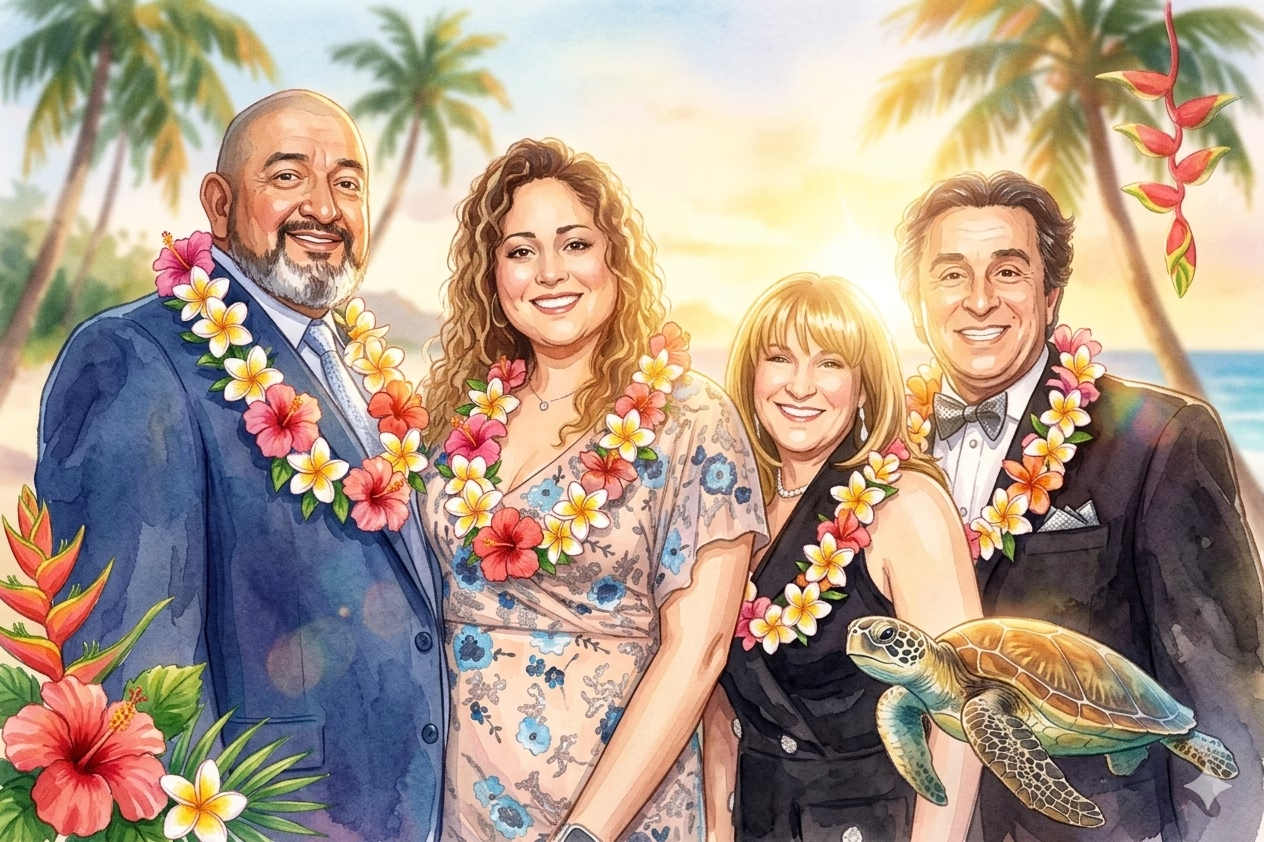
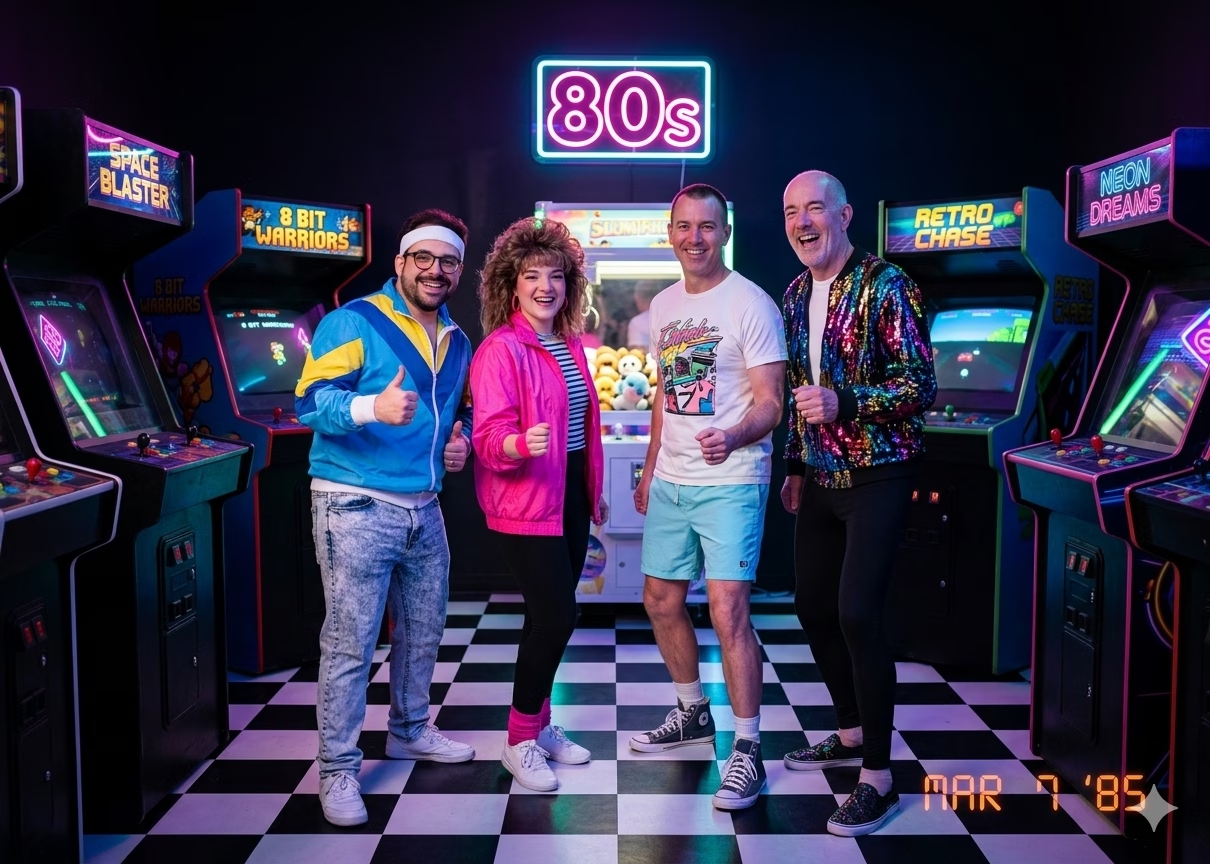
A City Market Social House DTLA generative AI photo booth can turn a standard event portrait into a custom visual moment: a guest steps in, takes a photo, selects a creative direction, and receives an AI transformed image that may look editorial, cinematic, futuristic, surreal, or fully aligned with a campaign theme.
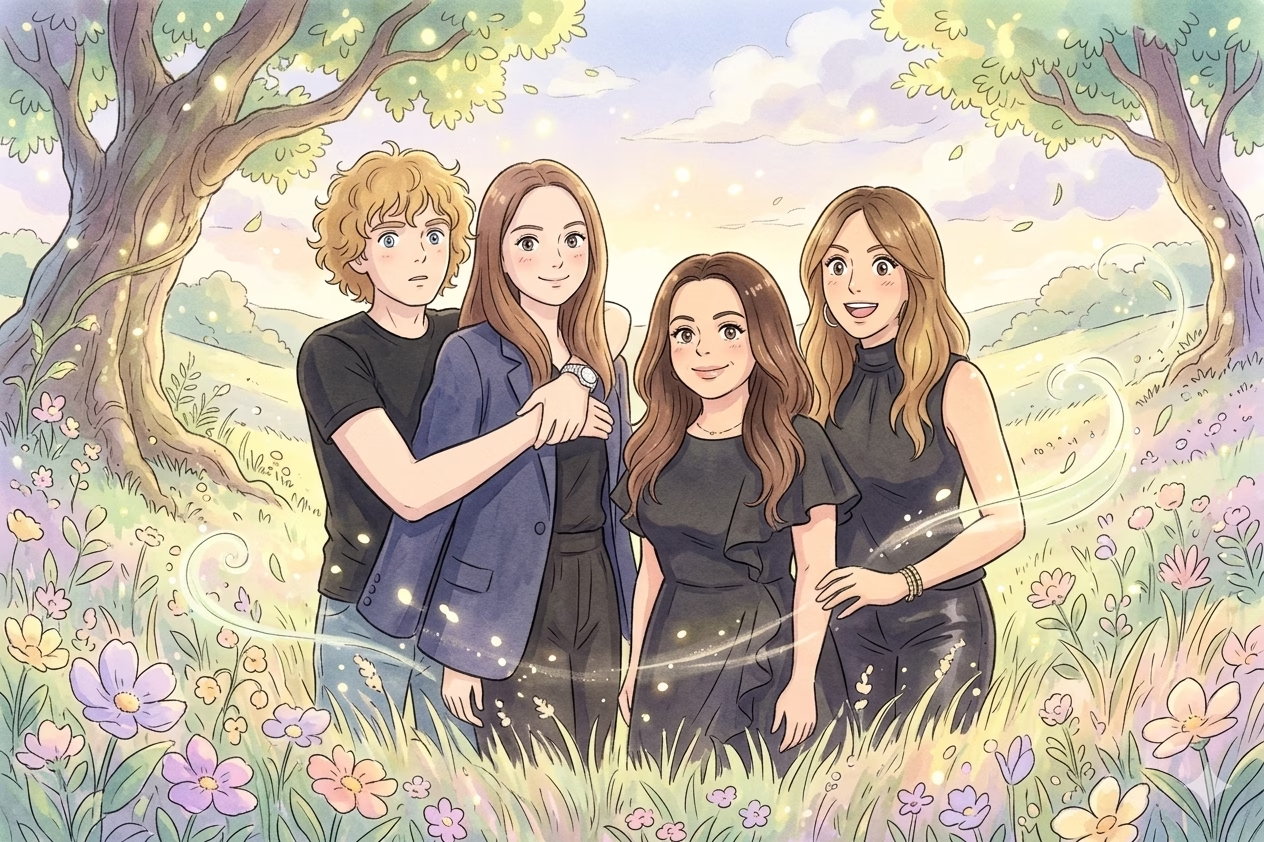
For decision makers, the appeal is obvious. You are not simply giving guests a backdrop and a print. You are creating an interactive content station that can support brand visibility, event energy, and social sharing. But the technology also introduces real planning questions. Who operates the booth? Where are facial images processed? Can the experience keep up with a busy reception? What happens when the network slows down or the generated result misses the theme?
City Market Social House is a DTLA Fashion District event venue with approximately 20,000 square feet of space, according to the venue’s official event space overview. That scale can create room for a substantial activation, but it does not automatically answer the operational details that matter for an AI booth. Placement, power, internet, event schedule, lighting, and guest traffic still need to be confirmed for each event configuration.
Table Of Contents
• What A Generative AI Photo Booth Actually Does
• Planning The Booth For City Market Social House
TL;DR
A generative AI booth may be a strong fit for City Market Social House when you want customized guest content rather than a basic photo station. The venue is associated with photo booth activity, but available public information does not verify that it owns or officially operates a generative AI booth. Treat the experience as a vendor and venue coordination project: confirm placement, connectivity, consent, processing, retention, and a backup plan before booking.
What A Generative AI Photo Booth Actually Does
The Difference Between AI, Green Screen, And 360 Experiences
A generative AI photo booth starts with a real guest capture, usually a portrait taken with a camera and controlled lighting. Software then interprets the image and creates a new visual output based on a selected style, scene, or branded concept. Depending on the setup, the system may preserve the person’s pose and face while changing wardrobe, environment, color treatment, or overall artistic direction.
That is different from a green screen booth. Green screen technology separates a person from a colored background and places them into a prepared scene. It is fast and predictable because the replacement scene already exists. A 360 booth, meanwhile, captures motion focused video from around guests. It is built for kinetic clips rather than transformed still portraits.
Format | Best For | Core Strength | Planning Tradeoff |
|---|---|---|---|
Generative AI photo booth | Branded concepts, themed portraits, imaginative guest content | Highly flexible visual transformation | Requires clear privacy and delivery planning |
Green screen booth | Fast themed photos with known backgrounds | Reliable, immediate compositing | Less visual variety once backgrounds are chosen |
360 video booth | High energy entrances and group movement | Motion driven social clips | Needs more clear floor area and traffic control |
GIF booth | Light, quick animated content | Fast repeat participation | Produces less dramatic transformation |
The practical decision is not which format is most impressive in isolation. It is which one matches your event goal. If your priority is a product launch where attendees should look like they belong inside a campaign world, AI may be the better creative medium. If you need hundreds of guests to move through quickly during a short cocktail hour, a conventional capture format may be easier to manage.
The Green Screen advertises instant green screen photography and social sharing, and its PartySlate profile includes listed events at City Market Social House. That makes its City Market Social House event association a useful reminder that conventional photo experiences remain viable alternatives when speed and predictable output matter most.
What Happens After A Guest Takes A Photo
The term _generative AI_ can sound mysterious, but the workflow is understandable. A well planned activation usually follows a sequence like this:
- Capture: The booth takes a portrait with calibrated lighting and a stable camera position.
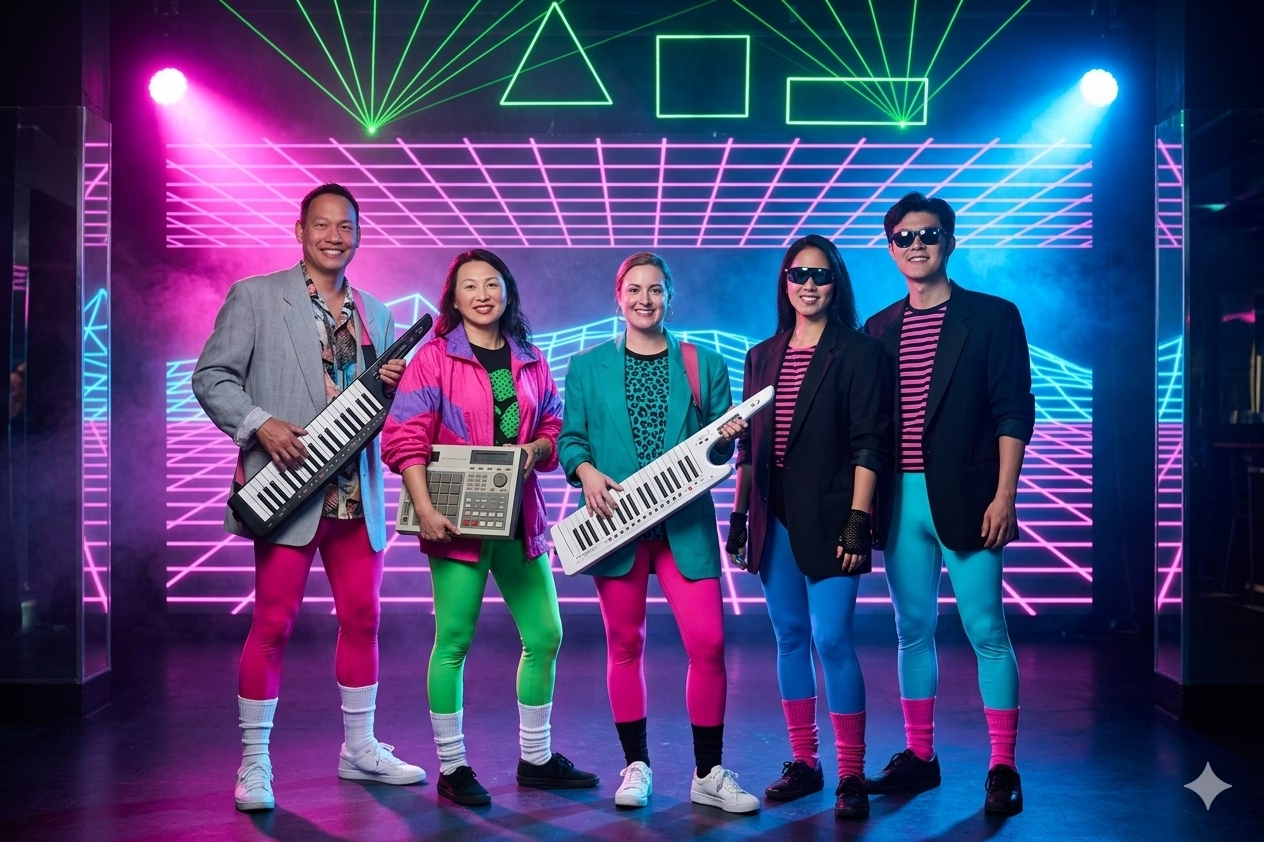
- Selection: The guest or attendant chooses a visual style, such as retro editorial, chrome futurism, fantasy travel, illustrated portraiture, or a brand designed concept.
- Processing: The photo is sent to the image generation system. The system uses the selected creative instructions and the captured face to create a transformed output.
- Review: The guest sees one or more results. Some systems allow retakes or alternate style selections.
- Delivery: The final image may be sent by text message, email, QR code, gallery link, print station, or a combination of formats.
The important detail is that the capture is only the beginning. Unlike a conventional photo booth, where the output may appear immediately, the AI system has to generate and return an image. Delivery time can vary based on the vendor’s workflow, image settings, internet connection, and demand. Publicly available material does not establish average generation time or throughput for an AI booth at City Market Social House specifically.
Fair warning: this uncertainty matters when your event has a sharp rush window. Imagine 150 guests arriving at the same time for a brand launch reveal. A booth that produces beautiful individual portraits but serves guests slowly can form a queue that blocks a bar, entrance, sponsor wall, or aisle. Ask vendors to explain how they manage peak demand, not just how the images look in a portfolio.
Creative Direction Is More Than A Prompt
For a polished activation, do not treat the creative setup as a loose collection of random effects. Define a small menu of approved image directions. Three to five options are often easier for guests to understand and easier for a brand team to approve than twenty unrelated styles.
For example, a fashion focused event could offer these directions:
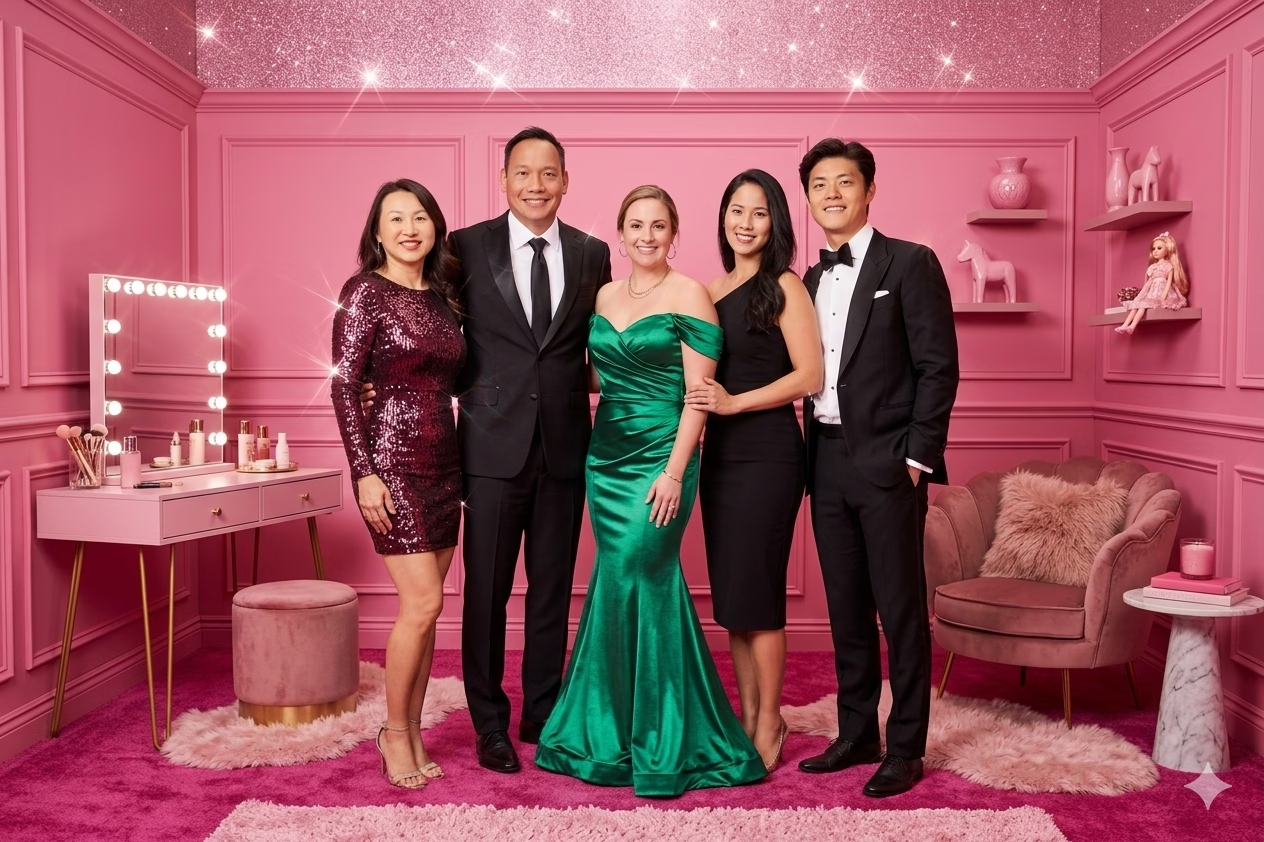
• Editorial Studio: High contrast portrait lighting, clean typography, brand colored background accents.
• Future City: Architectural lights, stylized DTLA inspired depth, metallic materials, and a cinematic mood.
• Graphic Illustration: Bold linework and controlled color blocks built around a product palette.
• Campaign Fantasy: A location or world connected to the launch story, while keeping the guest recognizable.
Each direction should be reviewed for brand safety before the event. Ask whether the visual system can avoid unwanted text, distorted logos, confusing wardrobe changes, or imagery that conflicts with campaign rules. AI can create surprising results, which is part of its appeal. But a corporate event often needs creative boundaries, not unlimited randomness.
For broader context on what this technology can and cannot do, the Generative AI Photo Booth Guide for Los Angeles explains the planning considerations that apply across local events.
Planning The Booth For City Market Social House
Confirm What Is Venue Provided And What Is Vendor Provided
The clearest answer is also the most important one: available public information does not verify that City Market Social House itself owns, packages, or officially operates a generative AI photo booth. The venue has hosted photo booth related events and is connected with vendors through event listings, but a vendor reference is not proof of venue endorsement or an in house technology package.
One, Two, Smile! advertises interactive AI photo experiences and lists City Market Social House among its venue references on its Los Angeles photo booth rental page. This supports the possibility that an AI capable vendor has worked with the venue, not a claim that the venue runs that specific service.
The Vendry also lists City Market Social House spaces, capacities, and photo booth related event associations through its venue profile and event listings. Use that information as a starting point for vendor research, then verify current availability, insurance requirements, load in rules, and technical specifications directly with the venue and your selected provider.
A useful first conversation should separate responsibilities clearly:
Responsibility | Confirm With Venue | Confirm With Booth Vendor |
|---|---|---|
Approved booth location | Yes | Yes |
Load in timing and access | Yes | Yes |
Dedicated power source | Yes | Yes |
Internet availability and restrictions | Yes | Yes |
Camera, lighting, printer, and attendant | No | Yes |
AI processing platform | No | Yes |
Photo delivery method | No | Yes |
Guest consent language | Yes | Yes |
Image deletion request process | Yes | Yes |
This split protects you from the common assumption that “the venue has production” means every activation requirement is automatically covered. Production capability can be valuable, but it does not replace a booth specific technical plan.
Choose Placement Around Guest Flow, Not Empty Space
A photo booth needs more than a patch of open floor. It needs a visible invitation point, a capture area, a waiting zone, and an exit path where guests can receive their images without stopping the next person. The best placement depends on your room plan and event rhythm.
At City Market Social House, potential placement ideas may include a perimeter zone near a reception area, a dedicated activation corner, or a location near but not inside the main social traffic path. These are planning concepts, not confirmed venue placements. The actual choice should be approved using the event’s floor plan and production schedule.
Avoid placing the booth directly beside loud speakers, a busy bar queue, a check in desk, or a narrow transition point between rooms. A striking booth can become an obstacle if guests must cross its line to reach food, restrooms, or the stage.
Consider the difference between a wedding reception and a conference. At a wedding, a booth near the dance floor may benefit from the evening’s momentum, especially after dinner. At a conference, the better location might be near an exhibit or sponsor zone, where it can capture people during scheduled breaks without interrupting a keynote exit. The same equipment can feel completely different depending on how the crowd moves.
For venue specific planning ideas across the downtown area, review the AI Photo Booth Rental Planning Guide for Downtown LA. It is especially helpful when you are comparing access, timing, and guest flow constraints across event spaces.
Test The Operational Details Before Event Day
Do not assume a beautiful room automatically produces ideal AI portraits. Generative systems depend on a clear initial capture. Low light, colored stage washes, reflective surfaces, guest movement, and a crowded background can all reduce consistency if the booth is not designed to control those variables.
Your vendor should explain how the setup creates reliable source images. Look for a defined capture position, portrait friendly lighting, a backdrop or controlled visual field, and an attendant who can help guests stand in the best spot. This is less glamorous than the final image, but it is where quality begins.
Ask for a short pre event test plan that covers:
• A lighting test under the actual event lighting conditions.
• A connectivity test, including what happens if venue Wi Fi is crowded or unavailable.
• A branded output review that checks logos, overlays, colors, and legal copy.
• A print test if physical keepsakes are part of the experience.
• A fallback workflow for network, printer, or generation delay issues.
A recovery plan is not pessimistic. It is professional. For example, if AI processing is delayed, the vendor might still deliver the original portrait immediately and send the transformed version later by text or email. If the generation service becomes unavailable, a branded standard portrait mode may keep the activation open instead of leaving a dark, unusable station on the floor.
Treat Privacy And Consent As Design Requirements
An AI portrait activation handles facial images, which means privacy should be considered before the first guest steps up. Public venue and vendor materials reviewed for this topic do not identify the AI model, processing location, retention period, or deletion policy for a booth used at City Market Social House. You should get those answers in writing from the vendor.
At minimum, request clear answers to these questions:
- Is the photo processed locally, through a cloud service, or through a third party platform?
- Is the original image stored, and if so, for how long?
- Are generated images used to improve a model, train systems, or shared beyond event delivery?
- Can a guest request deletion, and how is that request handled after the event?
- What consent approach applies to minors, employees, invited guests, and public attendees?
- Can guests use the booth without joining a marketing list or accepting promotional messages?
Clear signage works best when it is short and visible. It should explain that photos are used to generate an AI image, describe the delivery method, and point guests to the full privacy terms. For a corporate event, coordinate language with legal, HR, and brand teams. For a private event with minors, a parent or guardian process may be necessary depending on the activation design and applicable requirements.
This is also a cultural question, not just a legal one. A well designed AI booth can invite playful self expression. A poorly explained one can make people wonder where their face is going. Transparency keeps the experience fun because guests understand the exchange.
Match The Activation To The Audience You Want To Engage
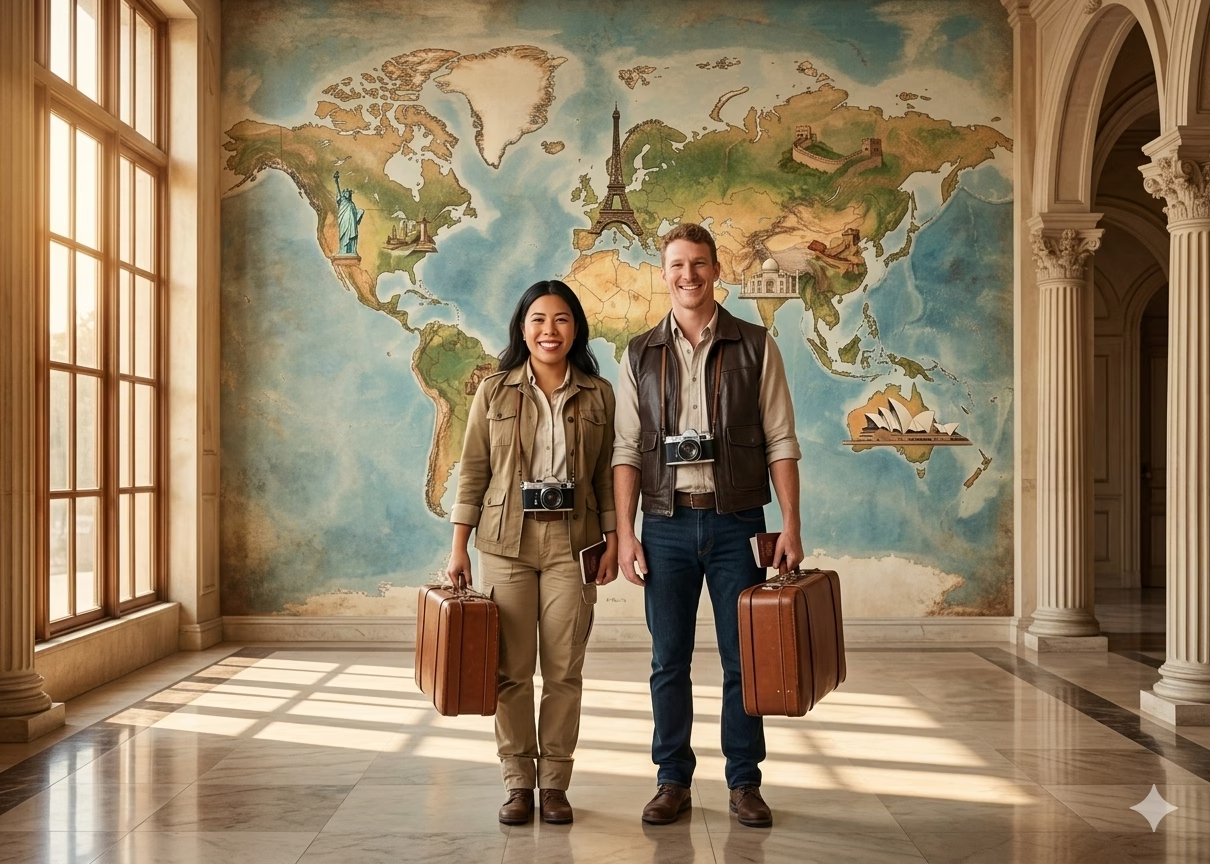
Choose AI when the story matters as much as the photo. It is particularly useful for brand launches, media events, fashion adjacent gatherings, sponsor activations, and celebrations where guests are likely to explore a creative theme.
Avoid making AI the only photo option when your audience values speed, privacy, or simple group shots above novelty. An executive reception with a short agenda may benefit more from a fast portrait station. A large open house may use AI successfully, but only if multiple capture paths, scheduled participation, or a carefully managed queue are available.
A nearby venue example can also help frame expectations. The AI Photo Booth Experience at Tom’s Watch Bar DTLA offers another downtown context for considering how an interactive photo activation can fit into a social event setting.
Key Takeaways
• City Market Social House can be a compelling setting for an AI photo activation, but public information does not confirm that the venue itself operates or includes a generative AI booth package.
• A generative AI booth is strongest when you need themed, branded, or imaginative portrait content, not simply a quick event snapshot.
• Creative quality begins with the original capture. Controlled lighting, a stable shooting position, and a clear guest flow matter as much as the AI style selection.
• Ask about throughput before promising an open access experience. The venue specific generation speed, queue length, and technical performance are not publicly documented.
• Make privacy visible. Confirm image processing, storage, third party involvement, deletion procedures, and consent rules before launch.
• Build a fallback mode. A branded standard portrait or delayed digital delivery can protect the guest experience if generation or network performance changes.
Frequently Asked Questions
Does City Market Social House Offer A Generative AI Photo Booth?
Available public information does not verify that City Market Social House directly owns or officially operates a generative AI photo booth. The venue has associations with photo booth vendors and event technology, but you should ask the venue whether outside vendors are permitted and whether it has any current preferred provider requirements.
Which Photo Booth Vendors Have Worked At City Market Social House?
Public listings associate vendors including One, Two, Smile!, The Green Screen, and LA Photo Party with events or venue references connected to City Market Social House. These associations are helpful leads, not proof that any vendor is currently approved, available, or providing the same equipment today. Confirm current status directly.
Can You Bring An Outside AI Photo Booth Vendor Into The Venue?
That depends on the event agreement and current venue policies. Ask about vendor insurance, certificates of insurance, load in windows, staffing, power, internet, and placement restrictions. The venue’s official event gallery contact details provide an appropriate route for confirming address, email, telephone, and event coordination questions.
How Much Space Does An AI Photo Booth Need?
There is no publicly verified booth footprint for City Market Social House. The space requirement depends on the booth design, backdrop, lighting, printer, attendant station, waiting area, and accessibility needs. Request a scaled vendor floor plan rather than relying on a generic minimum measurement.
Can AI Images Include Brand Colors, Event Logos, Or Campaign Themes?
Usually, yes, but the degree of control varies by vendor and platform. Confirm whether branding appears as a fixed overlay, an output frame, a digital gallery treatment, or an AI generated scene element. Logos often work more reliably as overlays than as AI generated objects, which can be distorted or unreadable.
How Quickly Will Guests Receive Their Images?
There is no published venue specific turnaround time. Ask the vendor for expected processing time, peak capacity, and delivery options. For high attendance events, plan for the possibility that guests receive a base portrait immediately and an AI version shortly afterward by text, email, or gallery link.
What If Lighting Or Internet Conditions Affect The Booth?
Require a pre event test and a backup plan. A vendor can often use dedicated lighting to stabilize the portrait capture, while a backup connection or standard photo mode may reduce disruption if online processing slows. Confirm this workflow before event day, not while guests are waiting.
Are Guest Images Stored Or Sent To A Third Party AI Service?
The available information does not identify a universal answer for booths used at this venue. This is vendor specific. Obtain the vendor’s privacy policy and ask directly where files are processed, how long they remain stored, whether they are used for model training, and how deletion requests are handled.
Conclusion
A City Market Social House DTLA generative AI photo booth can create a memorable layer of participation when it is planned as a full experience rather than a piece of novelty equipment. Choose a creative direction guests can understand, protect the quality of the initial portrait, plan for queue pressure, and make consent easy to see.
Before you sign, bring the venue, vendor, production team, and brand stakeholders into one practical conversation. When everyone knows where the booth goes, how it connects, what it produces, and what happens if conditions change, the result can feel effortless to guests for all the right reasons.
Selecting the right DTLA corporate event AI photo booth requires balancing innovation with operational reliability. When planning your DTLA corporate event AI photo booth, prioritize vendors who understand the unique layout of City Market Social House. A successful DTLA corporate event AI photo booth elevates brand engagement, while a poorly managed DTLA corporate event AI photo booth risks guest frustration. Always test your DTLA corporate event AI photo booth connectivity before doors open. If your DTLA corporate event AI photo booth requires high bandwidth, ensure the venue supports it. A premium DTLA corporate event AI photo booth offers lasting impressions, but only if the DTLA corporate event AI photo booth workflow is seamless. Consider how a DTLA corporate event AI photo booth integrates with your overall theme. Every DTLA corporate event AI photo booth needs a clear privacy policy. A well-executed DTLA corporate event AI photo booth transforms standard portraits into marketing assets. Your DTLA corporate event AI photo booth should reflect your brand identity. Before finalizing a DTLA corporate event AI photo booth contract, confirm all technical requirements. A DTLA corporate event AI photo booth is an investment in attendee experience. Ensure your DTLA corporate event AI photo booth staff are trained professionals. A DTLA corporate event AI photo booth can be the centerpiece of your activation. Choose a DTLA corporate event AI photo booth provider with a proven track record. A DTLA corporate event AI photo booth adds a modern touch to any gathering. Finally, ensure your DTLA corporate event AI photo booth aligns with your event timeline. A DTLA corporate event AI photo booth is more than just a novelty; it is a strategic tool.