Anime Expo LA AI Photo Booth Experience: What to Verify
Introduction
The Anime Expo LA AI photo booth experience sounds like a natural fit for a convention where cosplay, digital art, fandom, and highly shareable visuals meet. A booth that can transform a guest into a stylized hero, place them in a fantasy setting, or create an original anime inspired portrait could be a memorable activation. But there is an important distinction to make before you build plans around it: available public coverage does not verify a dedicated, attendee facing AI photo booth at Anime Expo Los Angeles.
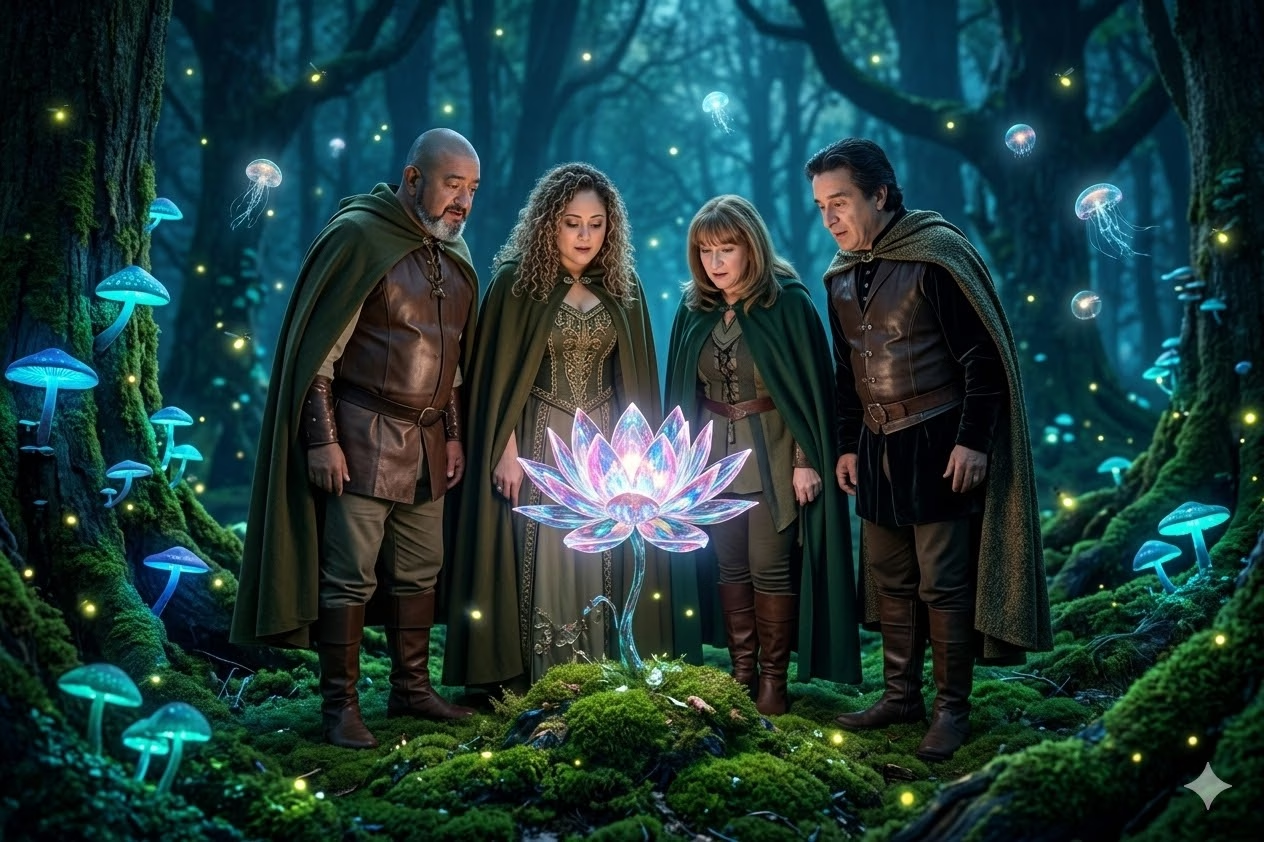
That does not mean Anime Expo lacks impressive photo experiences. It means you should separate confirmed franchise photo opportunities, immersive displays, and 360 degree capture zones from an actual AI image generation workflow. For exhibitors, agencies, and event decision makers, that distinction affects budget, staffing, privacy language, guest expectations, and the final content guests receive.
Table Of Contents
• What Is Actually Verified At Anime Expo?
• How An AI Photo Booth Would Work At A Convention
TL;DR
Anime Expo supports interactive booths, immersive exhibits, and photo opportunities, but a specific Anime Expo LA AI photo booth experience has not been publicly verified through authoritative event information. If you are considering one for an activation, treat location, access, pricing, turnaround, consent, and image retention as items to confirm directly with the operator before promoting it.
What Is Actually Verified At Anime Expo?
Interactive Booths Are Not Automatically AI Booths
Anime Expo is designed to accommodate visual, interactive exhibitor experiences. Its official exhibitor information describes interactive booths, photo op displays, immersive exhibits, and designated exhibitor spaces. Those spaces can support a wide range of experiences, from a printed character backdrop to a camera based animation station.
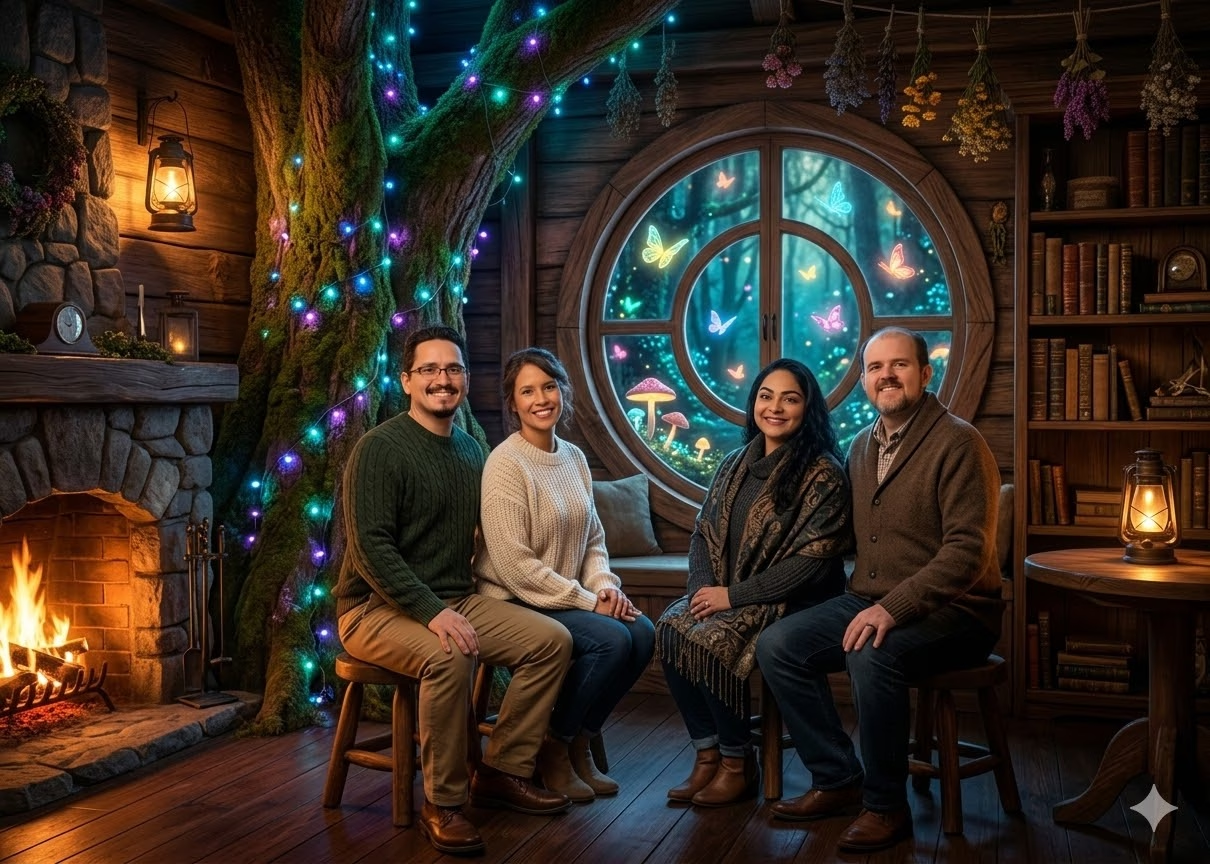
Still, a photo opportunity is not necessarily an AI transformation. The terms are often used loosely in event marketing, especially when an installation feels futuristic or uses large LED walls. For guests, the difference is simple: a conventional setup captures what is already in front of the lens, while an AI system creates or materially changes the final image using software.
A convention photo area may include any of the following:
• A branded backdrop where guests use their own phone
• A staffed DSLR portrait station with lighting and a printed or digital overlay
• A 360 degree camera rig that records movement around the subject
• An augmented reality experience that places digital effects over a live image
• An AI portrait experience that transforms a captured photo into a newly generated scene or style
Each option can be entertaining. They simply create different guest expectations and operational demands.
What The 2026 Coverage Does Confirm
One reported 2026 activation provides a useful example of why terminology matters. GameMeca reported that the Miraesi exhibit included a 360 degree photo zone using attendees’ own equipment, cosplay models, and themed exhibition elements. That is an immersive fan photography environment, but it does not establish an AI image generation process.
The difference may feel technical, yet it changes the guest journey. In a 360 degree zone, you control your pose, your phone often remains in your hands, and the output is a capture of the actual scene. In an AI workflow, you may submit one or more portraits, select a visual direction, wait for processing, then receive an image that may alter clothing details, props, backgrounds, and even facial features.
Other Anime Expo activations have also offered established photo formats. Toho International and Hulu Animayhem offered themed anime related photo opportunities in 2026 coverage. Those are meaningful fan experiences, especially for attendees who want an official franchise setting. They should not, however, be described as AI booths without a verified transformation component.
Why The Verification Gap Matters
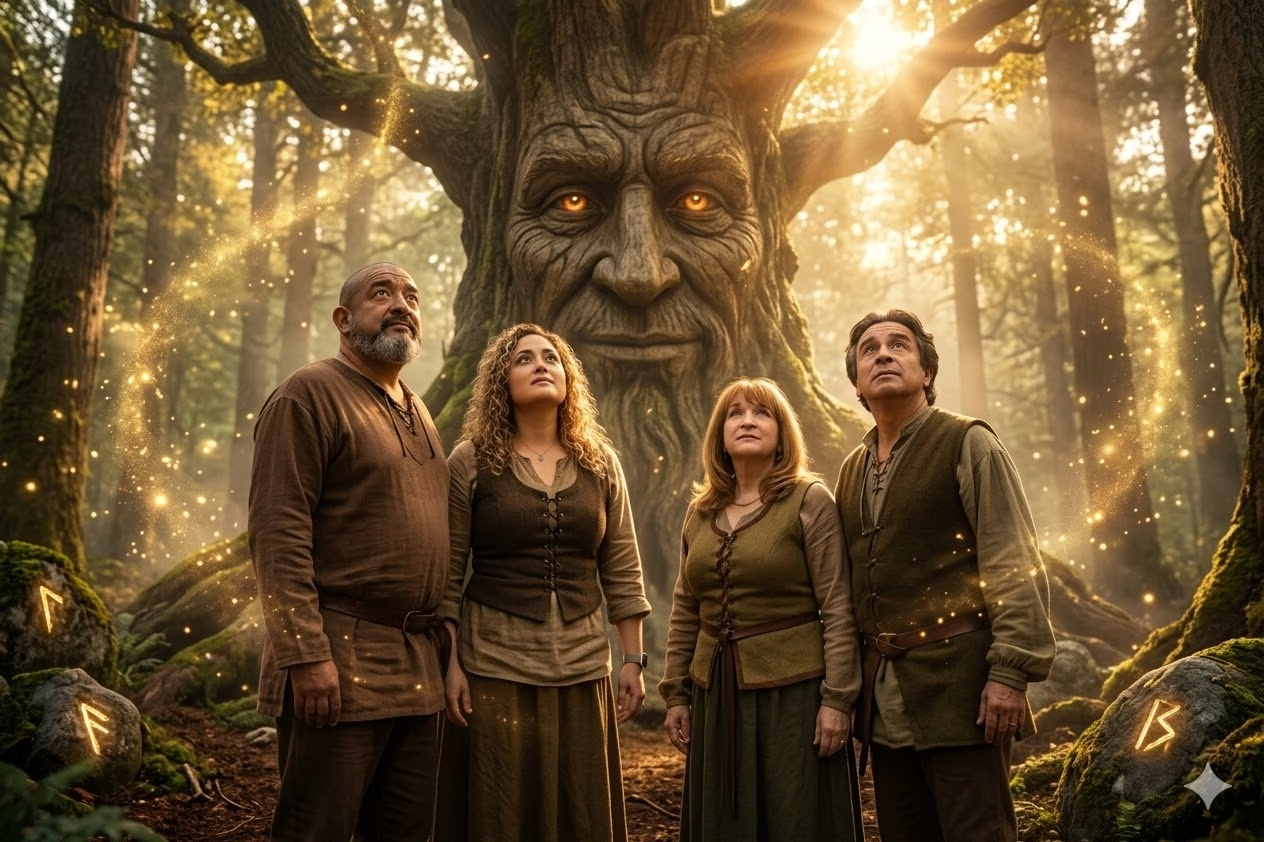
For an attendee, the uncertainty may only affect whether you set aside time in your convention schedule. For an exhibitor or event organizer, it has much bigger consequences. Promising “AI cosplay portraits” can imply a specific workflow, a level of personalization, and a privacy standard that ordinary photography does not carry.
The public discussion around Anime Expo and AI has also centered on something different: promotional art. A Reddit conversation about AI generated promotional artwork does not verify an attendee facing AI photo booth. That distinction is worth protecting, particularly in a fandom community where the source, style, and use of digital artwork can prompt thoughtful debate.
If a booth is announced, look for the operator’s name, the hall or lobby location, dates and hours, whether a badge is required, and an explanation of what guests actually receive. A strong activation does not need mystery. It should make the process clear before a guest joins the queue.
How An AI Photo Booth Would Work At A Convention
The Capture To Delivery Workflow
A well planned AI photo booth can feel quick and playful on the surface, but several steps happen behind the scenes. The guest first takes a portrait through a professional camera, tablet, or kiosk. Software then detects usable facial features, subject separation, pose, and lighting. The system may use that image as a reference while generating a new composition based on a preset style or campaign concept.
For example, a guest dressed as a magical warrior might select an original celestial temple scene. The system could preserve broad elements such as hair color, costume silhouette, and pose while generating a new environment, lighting treatment, and illustrated finish. The result is not simply a filter. It is a software generated interpretation of the source image.
That interpretation can be delightful, but it is also where errors emerge. Hands may gain extra fingers. Intricate armor may soften into generic shapes. A large prop may disappear or become unrecognizable. Detailed makeup, masks, wigs, and layered cosplay can be especially challenging because the system has less certainty about what it is seeing.
A practical workflow should include recovery options:
- Capture a clean original portrait before creating the AI version.
- Offer a small number of curated visual styles instead of an unlimited style menu.
- Let guests regenerate once if the first result fails to represent their costume or face well.
- Deliver both the original photo and the generated image when consent permits.
- Give staff a clear path for deleting a guest’s image upon request.
The first image is your safety net. It ensures a guest still leaves with a polished keepsake even when the transformation misses the mark.
AI Portraits Versus Other Anime Expo Photo Formats
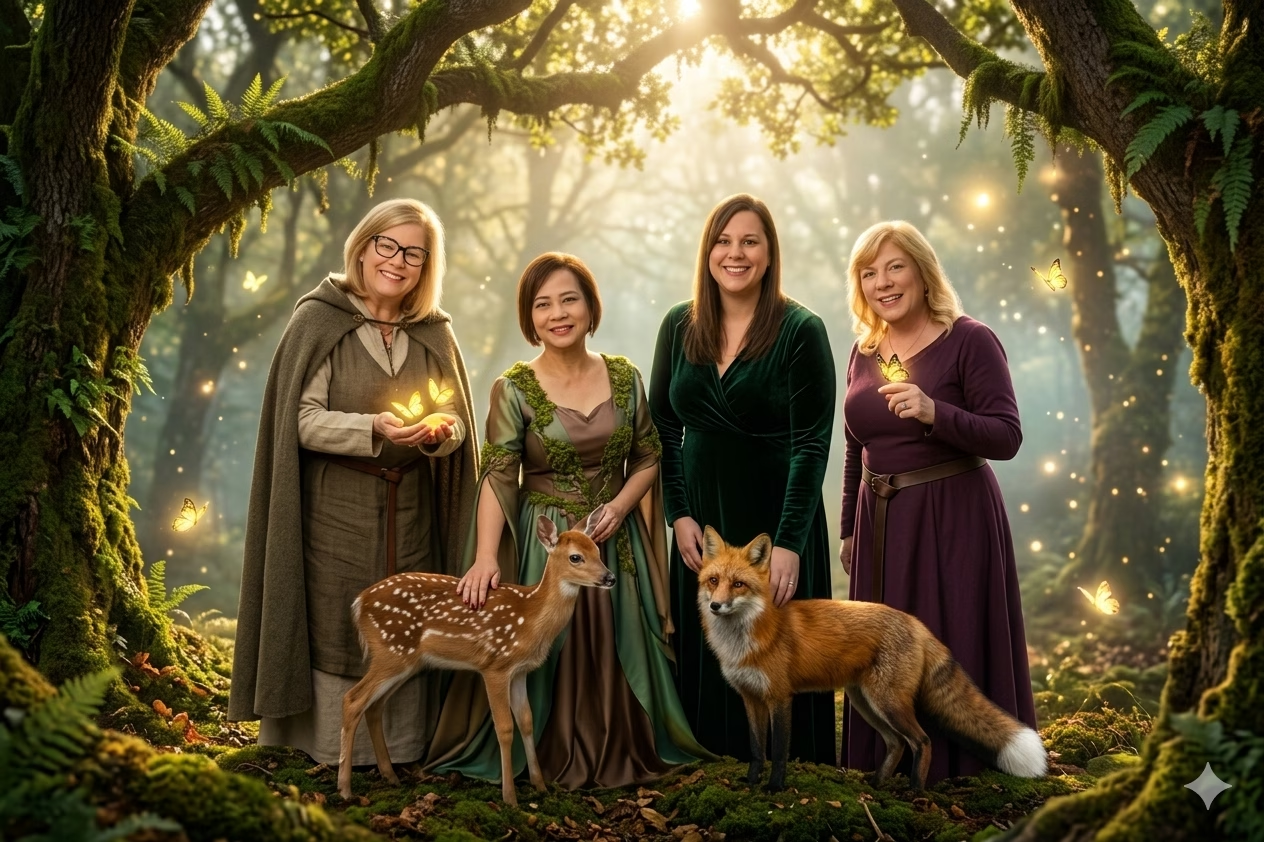
The right format depends on the campaign goal. If your activation needs rapid throughput and franchise accuracy, a physical set may outperform AI. If the goal is personalized digital art that invites repeat sharing, AI may be the more compelling option.
Experience Type | What The Guest Does | Typical Output | Best Fit | Main Limitation |
|---|---|---|---|---|
Branded photo op | Poses in a physical scene | Phone photo or staff photo | Fast fan participation | Limited personalization |
360 degree zone | Records video around a set | Dynamic clip | Movement and spectacle | Not an image transformation |
Augmented reality booth | Uses live digital overlays | Enhanced photo or video | Real time effects | Usually depends on preset effects |
AI photo booth | Captures a portrait and selects a visual direction | Generated digital artwork | Personalized, shareable portraits | Requires processing, consent, and quality controls |
An AI booth is most useful when the transformation itself supports the story. Consider an original anime inspired campaign that lets visitors become explorers in a fictional city, pilots in a mecha world, or stars of a custom fantasy poster. Avoid using it merely because AI is fashionable. A generic “anime style” option can feel disconnected from the brand, and it may raise questions about artistic intent or visual ownership.
For a local reference point outside the convention floor, this AI photo booth experience at Tom’s Watch Bar DTLA illustrates the kind of guest facing event format that can turn portrait capture into a more interactive digital moment. The convention version needs an added layer of queue planning because Anime Expo traffic can be intense.
Designing For Cosplay, Consent, And Crowds
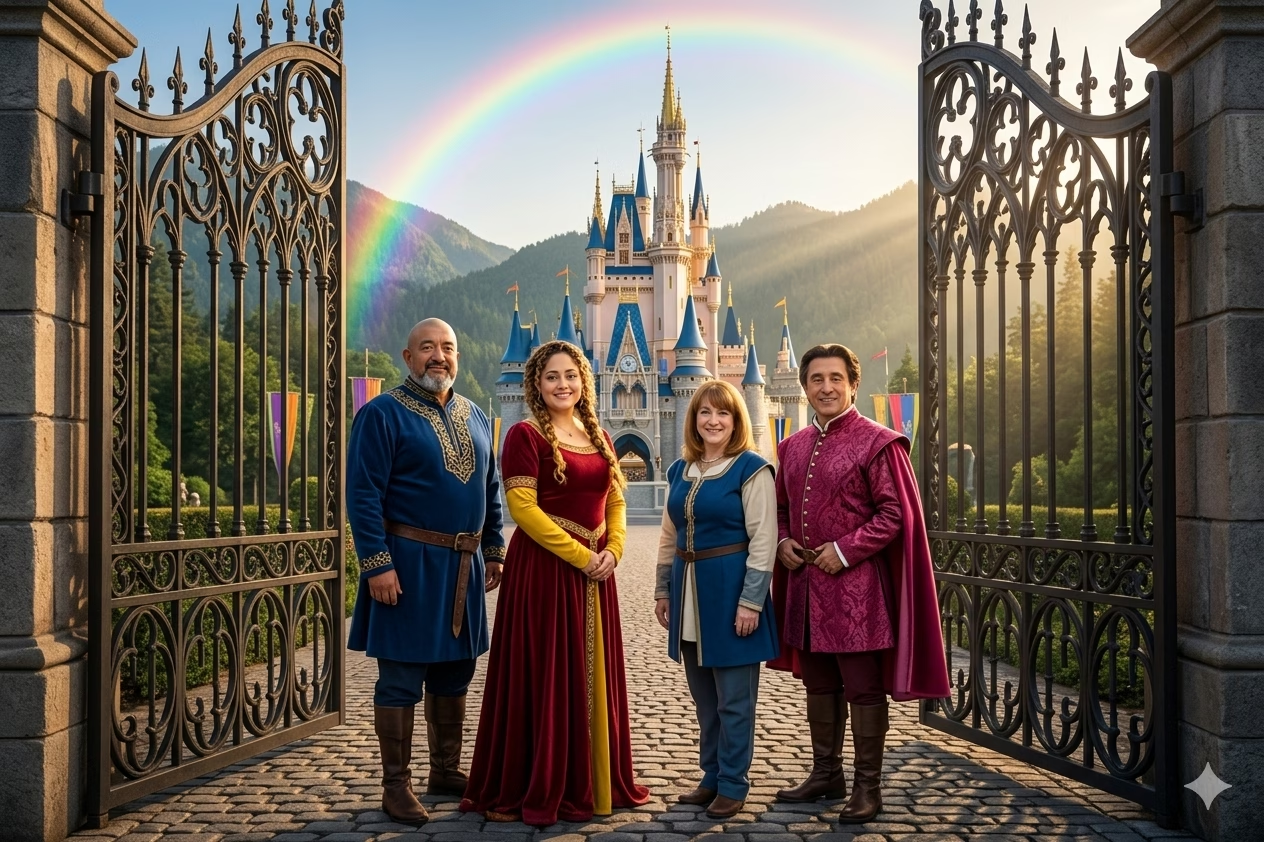
Cosplay makes the visual payoff stronger, but it also raises the production standard. Costumes often include reflective materials, elaborate wigs, face paint, masks, props, wide silhouettes, and character specific details. A single front facing camera capture may not be enough for every look.
For decision makers, the strongest solution is not necessarily the most open ended one. It is a booth designed around a controlled set of outcomes. Instead of asking guests to type any request, offer four to six art directions approved for the campaign. For instance, “neon city,” “celestial shrine,” “retro mecha poster,” and “storybook fantasy” can be visually distinct while maintaining a consistent brand identity.
Questions To Settle Before Launch
Decision Area | What You Need To Confirm | Why It Matters |
|---|---|---|
Access | Badge requirement, reservations, age rules, and queue policy | Prevents guests from discovering restrictions after waiting |
Capture | Camera, phone, operator assistance, and backup portrait process | Determines quality and accessibility |
Processing | Average generation time, retry limits, and offline contingency | Determines throughput and staff needs |
Delivery | QR code, text, email, print, or on screen download | Shapes the guest’s sharing experience |
Consent | Permission language for capture, processing, sharing, and deletion | Builds trust and reduces confusion |
Retention | Storage location, retention period, and deletion contact | Essential when faces and personal data are involved |
Privacy should be visible, not buried. Guests should know whether their image is uploaded, whether it is stored after delivery, whether it may appear in marketing, and how they can opt out. This matters even more for minors. If the activation welcomes younger guests, the operator should establish age appropriate consent procedures and clearly identify whether a parent or guardian must participate.
Fair warning: there is no verified Anime Expo specific AI booth policy establishing image retention, biometric handling, download rules, price, or processing speed. If you are evaluating a vendor, request those answers in writing. A vague promise of “instant AI art” is not an operational plan.
For organizers building a convention adjacent activation, an AI photo booth rental in downtown Los Angeles planning guide can help frame practical questions about guest flow, creative direction, staffing, and venue requirements. The right design turns a line into anticipation rather than frustration.
When AI Is Worth The Extra Friction
Choose an AI photo booth when personalization is central to the campaign, guests have enough time to interact, and the brand can define a clear visual world. It is particularly effective for launches, creator events, fandom celebrations, and experiential marketing programs where a digital collectible has value after the event ends.
Avoid it when the priority is moving a large crowd through a narrow footprint in seconds. A conventional character backdrop, roaming photographer, or 360 degree installation may be more reliable when volume matters more than transformation.
The ideal middle ground is often a two track experience. Guests receive a polished original portrait immediately, then choose whether to wait for the AI version. That structure protects the experience from connectivity issues, generation delays, and unexpected rendering errors. It also respects the fact that some cosplayers may prefer their real craftsmanship to remain untouched.
For venues and planners seeking a polished guest journey outside the convention environment, an AI photo booth rental at Hilton Pasadena offers another example of how a managed AI experience can be positioned around event goals rather than novelty alone.
Key Takeaways
• Anime Expo supports interactive exhibits and photo opportunities, but a dedicated AI photo booth at Anime Expo Los Angeles is not publicly verified by the available authoritative information.
• A 360 degree photo zone records a real environment and should not be presented as AI image generation unless a documented transformation occurs.
• An AI photo booth works best when it offers a defined visual concept, professional capture, a backup original photo, and a clear retry policy.
• Cosplay can produce striking generated portraits, but complex props, hands, masks, and costume details may create rendering errors.
• Privacy language should explain capture, processing, marketing use, storage duration, and deletion options before a guest participates.
• For high traffic activations, immediate delivery of the original image plus optional AI processing can reduce disappointment and preserve throughput.
Frequently Asked Questions
Does Anime Expo Los Angeles Have An AI Photo Booth?
There is no authoritative public confirmation in the available information of a dedicated Anime Expo LA AI photo booth experience. Anime Expo does support interactive and immersive exhibitor activations, so one could appear as part of a future brand exhibit. Check the official event schedule and the exhibiting brand’s channels before making plans around a specific AI booth.
Where Would An AI Photo Booth Be Located Inside Anime Expo?
A verified location has not been published for a dedicated AI booth. Interactive activations may appear in exhibit halls, lobby areas, or other designated event spaces. If one is announced, the exhibitor listing, hall map, and booth number should be treated as the most useful location details.
Is An AI Photo Booth The Same As A 360 Degree Photo Zone?
No. A 360 degree setup captures a guest from multiple angles, often with the guest using their own device or receiving a video output. An AI photo booth generates or significantly transforms imagery after capture. Both can be immersive, but they are different technologies with different privacy, timing, and output considerations.
Is The Experience Free, And Do You Need A Reservation?
No verified price, reservation process, or badge requirement has been published for a specific Anime Expo AI booth. Some convention activations are included with admission, while others may use timed entry, merchandise requirements, or capacity limits. Confirm the rules with the operator before arriving.
Do Guests Use Their Own Phones Or Receive A Professional Image?
That depends on the activation. The reported Miraesi 360 degree zone used attendee supplied equipment, but that does not establish how an AI booth would operate. A dedicated AI portrait setup may use a professional camera and deliver results by QR code, text, email, or print. Ask how images are captured and delivered before joining the line.
Can An AI Booth Turn Cosplay Into An Anime Style Image?
Potentially, yes. A system can use a cosplay portrait as a reference for a stylized result. Accuracy is not guaranteed, especially with elaborate wigs, masks, textured fabric, props, and hand poses. The best guest experience includes a preserved original portrait and at least one reasonable regeneration option.
What Happens If The Generated Image Looks Wrong?
A responsible operator should offer a limited retry, a different crop, or another approved visual style. If the booth cannot reproduce a costume or face accurately, the original professional photo should remain available. This is why capturing a high quality source image is more than a technical detail: it is the fallback that protects guest satisfaction.
Are Photos Stored After The Experience?
There is no verified Anime Expo specific retention policy for an AI photo booth. Before participating, look for consent language that explains whether images are uploaded, how long they are retained, whether they may be used in marketing, and how deletion requests are handled.
Conclusion
The most useful way to approach an Anime Expo LA AI photo booth experience is with enthusiasm and precision. The idea has real creative potential for cosplay and fandom culture, but an immersive photo set, 360 degree capture zone, and AI generated portrait are not interchangeable.
If you are planning an activation, define the visual concept, protect the original photo, make consent clear, and publish practical details before guests queue. If you are attending, verify the operator, location, access rules, and image policy first. That clarity gives the technology room to feel magical for the right reasons.