AI Photo Booth Long Beach: A Smarter Event Activation Guide
Introduction
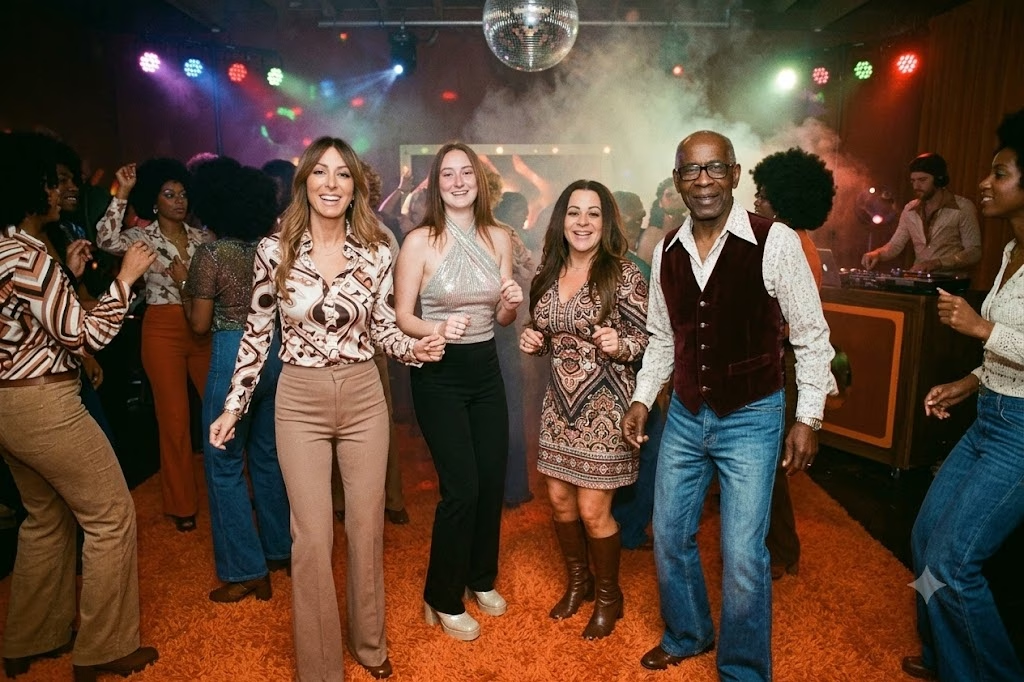
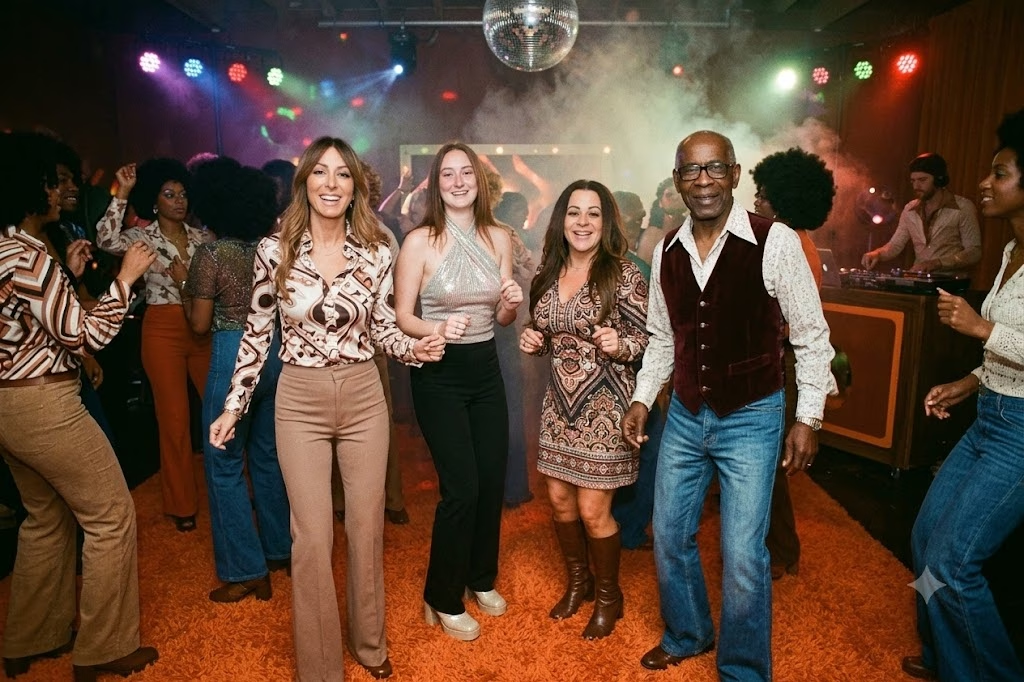
An AI photo booth Long Beach activation can turn a standard event portrait into a branded executive headshot, a futuristic campaign image, a stylized vacation scene, or a polished digital keepsake in less than a minute. For decision makers, the appeal is clear: guests receive something worth sharing, while your event gains a controlled visual experience that can support brand recognition, lead capture, or simple guest enjoyment.
The important question is not whether an AI booth looks impressive. It is whether the setup fits your venue, guest count, privacy expectations, connectivity, and event goals. A booth that renders beautiful portraits but creates a 20-person line can work against a trade show campaign. A digital-only workflow may be ideal for lead capture but feel incomplete at a gala where attendees expect printed favors.
TL;DR
An AI photo booth is best when you need more than a snapshot: it creates themed or branded portraits, supports instant digital delivery, and can collect opt-in guest information. Plan for a roughly 10-by-10-foot operating area, dependable power and internet backup, clear privacy terms, and enough staff support for your expected guest volume.
Table Of Contents
• Planning A Long Beach AI Booth Deployment
• Choosing The Right Format, Features, And Budget
How An AI Photo Booth Works
An AI photo booth starts with a well-lit guest portrait, usually captured by a DSLR or mirrorless camera rather than a basic webcam. The software then identifies facial structure, separates the guest from the original background, and processes the image through a selected visual workflow. Depending on the experience, that workflow may enhance the portrait, add a new environment, apply a style transfer, or place the guest into a campaign-specific concept.
Unlike a conventional booth, the most visible feature is not the camera. It is the transformation between capture and delivery.
From Portrait Capture To Finished Asset
A reliable guest flow typically follows five stages:
- Selection: The guest chooses a visual concept, such as an editorial headshot, an illustrated avatar, or a branded future-world scene.
- Capture: The booth takes one or more photos under controlled lighting. Consistent lighting matters because poor exposure, shadows, or crowded group poses can reduce the quality of an AI transformation.
- Rendering: Image-to-image processing applies the selected style, background, and approved brand elements. This is where a portrait becomes an output designed for the event rather than a generic filter.
- Review: The guest sees the result and may choose a preferred version if the workflow offers multiple renders.
- Delivery: The asset is sent by QR code, text, email, event gallery, or print workflow.
For corporate campaigns, the booth interface can also ask for consent and optional contact details before digital delivery. That detail changes the activation from entertainment into a possible marketing touchpoint. It also raises a higher bar for privacy language and data handling.

Why Rendering Speed Changes The Entire Guest Experience
“Instant” does not mean zero wait. Rendering time is one of the practical limits of an AI activation.
That is fast enough for many receptions, cocktail hours, and moderate-traffic brand events. Still, you should calculate flow rather than rely on the word “instant.” If a guest needs 20 seconds to choose a style, 15 seconds to pose, and 30 to 60 seconds for rendering, the experience can take roughly one to two minutes per person. Groups, retries, and guests comparing results increase that time.
For example, a 100-person gala can work smoothly with one booth if arrivals are spread across several hours. A convention-floor activation with 100 guests arriving in a 30-minute rush may need a simplified choice menu, a self-serve delivery path, or multiple capture stations. The goal is not to eliminate every queue. A visible line can create interest. The goal is to prevent the line from becoming longer than the experience feels worth.
Choosing Transformations That Fit The Event
Not every AI effect serves every audience. The safest choice is usually one that makes the guest look recognizable, flattering, and relevant to the event theme.
Event Goal | Strong AI Direction | Use Caution With |
|---|---|---|
Trade show lead generation | Professional headshots, industry-themed scenes, polished brand worlds | Complex multi-step choices that slow visitor flow |
Product launch | Campaign-specific avatars, imaginative product environments, branded storytelling | Effects that overwhelm or obscure the product identity |
Corporate gala | Elegant portrait enhancement, formal editorial styles, tasteful backgrounds | Comedic face swaps that may not match the dress code |
Wedding or private celebration | Romantic scenes, light illustration, destination-inspired looks | Heavy logo placement or aggressive data collection |
Team event | Cohesive themed characters and playful group concepts | Highly realistic historical or celebrity-style impersonation |
For corporate use, keep prompts and visual styles within brand guardrails. A custom experience should feel intentional, not random. You may also want approval controls that prevent inappropriate prompt changes during the event.
For related coastal planning ideas, the AI photo booth rental in Huntington Beach resource is useful when your event team is comparing neighboring market options and venue conditions.
Planning A Long Beach AI Booth Deployment
The technology may be digital, but the installation is physical. Your venue access, floor plan, lighting, power, and network conditions can determine whether an AI booth feels seamless or stressful.
Plan The Footprint Before You Approve The Floor Plan
A practical planning target is a 10-by-10-foot footprint for the booth, lighting, operator space, guest interaction, and a small queue. Some compact setups may fit into less room, but a narrow footprint can create problems when guests gather around the screen, pose in groups, or wait for their results.
Ask the venue and provider about these items early:
• The exact booth dimensions, including lighting stands, printer, backdrop, and cable protection.
• A nearby dedicated outlet and whether extension runs are permitted.
• Ceiling height, especially if overhead lighting or a physical set is included.
• The path from loading area to event floor, including elevators, ramps, stairs, and door widths.
• The time allowed for load-in, installation, testing, teardown, and removal.
• Whether the booth will compete with speakers, bar traffic, registration desks, or other attractions.
A common failure point is placing the booth in a visually attractive but operationally poor corner. Consider a waterfront reception room where the only open wall is beside a service corridor. Guests may enjoy the view, but staff movement, noise, and narrow access can disrupt the queue. Moving the booth closer to the cocktail area, with its own clear approach and exit path, usually creates a better user experience.
Internet, Power, And Offline Recovery
AI rendering and instant sharing depend on connectivity more than a standard print booth. A provider may use dedicated venue Wi-Fi, cellular LTE or 5G equipment, or a bonded connection that combines multiple signals. Do not assume public guest Wi-Fi will be adequate. Convention centers, hotels, and crowded event rooms can have heavy traffic that affects upload speeds and delivery reliability.
Your planning conversation should include a recovery plan:
• If Wi-Fi slows down, can the booth switch to cellular backup?
• If rendering is delayed, can images queue for later delivery?
• If SMS delivery fails, can guests retrieve images using a QR gallery?
• If the venue loses connectivity briefly, can photo capture continue locally?
• If a printer has an issue, can the team continue with digital delivery?
The answer may differ by provider and activation design. Get it in writing for high-stakes launches or trade shows. A fallback workflow is not pessimistic planning; it protects the guest experience when venue infrastructure is unpredictable.
Venue Compliance, Accessibility, And Staffing
Long Beach venues may have their own vendor rules, insurance certificate requests, loading procedures, and registration requirements. There is no single universal requirement for every location. Ask the venue directly whether it needs a certificate of insurance, vendor registration, security clearance, union coordination, or an approved load-in schedule.
Accessibility deserves the same attention. Place the screen and interaction controls where guests using mobility devices can approach comfortably. Avoid cable runs across accessible pathways. If your attendee group includes a broad mix of languages, ask whether the experience can use bilingual on-screen instructions or whether an attendant can provide assistance in the languages your guests commonly use.
Self-serve can lower staffing needs, but it is not automatically the right choice. Captured Celebrations notes that its AI booth offering can operate in a self-serve mode with optional attendant support. Self-serve works best when the experience has few choices and the audience is comfortable with touchscreen interfaces. Choose an attendant for VIP events, detailed lead capture, print distribution, high-volume traffic, or any setup where guest guidance protects the brand presentation.
Key Takeaways
• Choose AI portrait styles that match the event’s actual purpose, not just what looks dramatic in a demo.
• Build guest-flow assumptions around capture, rendering, and sharing time rather than assuming every image is immediate.
• Reserve adequate space for the booth, lighting, attendant, and queue; a 10-by-10-foot area is a sensible planning baseline.
• Confirm venue rules for power, load-in, insurance, and vendor access before finalizing the floor plan.
• Treat consent, image retention, and marketing permissions as separate decisions from basic event photography.
For an example of how an urban hospitality setting can shape the activation experience, explore the AI photo booth experience at Tom’s Watch Bar.

Choosing The Right Format, Features, And Budget
An AI booth package is not one fixed product. It is a combination of capture hardware, visual concepts, staffing, branding, delivery method, and output format. Comparing quotes line by line is more useful than comparing only the headline price.
Digital-Only, Print-On-Demand, Or Hybrid?
Digital delivery is usually the most efficient choice for trade shows and campaigns. It supports QR retrieval, text messages, email delivery, galleries, and optional lead capture. Prints create a more tangible moment, but they add equipment, supplies, staff attention, and a possible bottleneck if guests wait for multiple copies.
Format | Best For | Main Advantage | Main Trade-Off |
|---|---|---|---|
Digital-only | Trade shows, conferences, product launches | Fast sharing and easier lead capture | Guests leave without a physical keepsake |
Print-on-demand | Weddings, galas, milestone events | Immediate take-home value | Printer speed and paper handling can slow the flow |
Hybrid digital plus print | Premium events and mixed audiences | Gives guests both sharing and keepsake options | Higher operational complexity and likely higher cost |
Captured Celebrations lists digital-only AI photo booth service in Long Beach starting at $1,500 for three hours, while its print-inclusive three-hour option starts at $2,500. Those published figures are useful reference points, but your final quote can vary based on hours, print volume, custom creative, staffing, access conditions, and event timing.
If your objective is measurable campaign activity, digital-only may be the right call. If you are hosting a formal holiday party, hybrid service can make more sense: guests receive a print at the event and retain a mobile-ready file for later sharing.
Branding, Lead Capture, And Analytics
A corporate AI booth can support much more than a logo overlay. A well-designed activation can include a branded interface, campaign-specific backgrounds, custom visual styles, approved calls to action, QR landing pages, and opt-in fields tied to event goals.
Keep a distinction between delivery data and marketing consent. A guest might provide a phone number or email address solely to receive an image. That does not automatically mean they agreed to promotional follow-up. Your form language should make the choices clear, especially when CRM integration is involved.
Before approving a lead capture flow, define:
- Which data fields are truly necessary.
- Whether guests can receive their image without joining a marketing list.
- Who can access event images and collected contact data.
- How long images and contact information will be retained.
- Whether the brand may reuse portraits in social posts, recaps, or paid advertising.
For example, a trade show booth may ask for name, company, work email, and an optional consent checkbox. A corporate gala may skip data capture entirely and use QR sharing only. Both models are valid. They serve different expectations.
Comparing AI, 360, Glam, And Open-Air Booths
Choose the format based on the asset you want guests to leave with. An AI booth produces transformed portraits. A 360 booth produces motion content. A glam booth focuses on polished, beauty-oriented photography. An open-air booth is often the simplest flexible option for group photos.
An AI Booth experience starting at $1995 and frames it as an interactive branded activation within a broader menu that includes other event formats. That broader menu matters: you do not need to select AI merely because it is novel. Select it when a transformed image supports the story you want guests to share.
For Long Beach planners comparing nearby coastal event concepts, the Surf City AI photo booth guide can help clarify when a highly themed digital experience fits better than a standard photo setup.
Frequently Asked Questions
What Is An AI Photo Booth In Long Beach?
It is an event photo activation that captures guest portraits and uses AI image processing to create stylized, enhanced, or branded results. Local providers may offer it for corporate events, weddings, private celebrations, trade shows, and product launches.
How Much Does An AI Photo Booth Cost In Long Beach?
Pricing depends on hours, staffing, customization, delivery options, prints, and venue logistics. Published examples include Captured Celebrations’ digital-only three-hour package starting at $1,500 and its print-inclusive three-hour package starting at $2,500. Request a quote that clearly separates creative design, operation time, travel, prints, and add-ons.
How Long Does It Take To Receive An AI Photo?
Some providers state delivery can occur in under 60 seconds, but actual timing depends on rendering demand, network strength, guest choices, and whether the booth is processing individual or group images. For busy events, ask about throughput planning rather than focusing only on the fastest possible render time.
Can Guests Text Or QR-Share Their Images Instantly?
Yes, many AI booth workflows offer text or QR delivery. QR is often a useful backup because it lets guests retrieve their image without typing contact details. Confirm whether a gallery remains available after the event and how long it will be retained.
Does An AI Photo Booth Need Wi-Fi?
Usually, yes, especially for cloud rendering, SMS, email, and QR gallery delivery. A professional setup may also use cellular backup. Ask what happens if venue Wi-Fi is weak or unavailable, particularly at large convention or waterfront venues.
Is Printing Available Or Is It Digital-Only?
Both are possible. Digital-only is efficient for branded activations and lead capture. On-site printing gives guests a physical keepsake. A hybrid format can deliver both, although it usually requires more equipment and coordination.
What Privacy Rules Should Apply To Guest Photos?
Your event should state how images are collected, whether they are used only for delivery or also for marketing, who can access them, and how long they are stored. Avoid assuming that attendance equals permission for promotional use. Clear opt-in language is especially important when collecting email addresses or phone numbers.
Conclusion
The right AI photo booth in Long Beach is not simply the one with the most dramatic visual effect. It is the one that fits your event volume, venue access, brand standards, privacy expectations, and desired guest takeaway.
Start with the asset you want guests to receive, then work backward: decide on digital, print, or hybrid delivery; map the queue; confirm power and connectivity; and review consent language before the event opens. With those details handled, an AI photo booth can become a focused event entertainment feature rather than another technology station competing for attention.
When collecting guest information for marketing, ensure your activation adheres to current data privacy standards to maintain transparency and build attendee trust.