Why AI Photo Booths Cost More Than Traditional Photo Booths
Two quotes arrive for the same Saturday night in Anaheim. One is a few hundred dollars. The other is several times higher. Both vendors describe what they do as a photo booth, which is exactly why the second number can feel like a mistake rather than a reflection of what is actually being delivered.
The gap is real, and it is not arbitrary. An AI photo booth and a traditional photo booth share a camera, a footprint, and a crowd of guests. Almost everything past that point is different, and most of that difference sits in software, processing power, and the kind of image a guest walks away with.
The Short Answer: You Are Paying for the Output
The cleanest way to explain the price difference is to describe what each machine produces. A traditional photo booth produces a photograph, printed or digital. An AI booth produces a piece of artwork. That distinction comes directly from industry guides on how AI booths work, and it drives nearly every cost decision behind the scenes.
A photograph is captured. An artwork is generated, styled, and rendered, often from a live capture, in a matter of seconds, and then delivered as something that did not exist before the guest stood in front of the lens. One process is a camera plus a printer. The other is a camera plus a computing pipeline plus a creative model plus the people who build and tune all of it.
What Is Bundled Into a Traditional Photo Booth Rental
Traditional rentals are priced around time and prints. One cost analysis puts typical traditional photo booth pricing at $400 to $1,000 for two to five hours, with add-ons such as custom backdrops or extra props pushing the number higher.
For that money, guests typically get a camera, a light source, a prop bin, a backdrop, and a fast capture loop. Press the button, smile, wait a few seconds, collect the strip. Because capture is quick and the deliverable follows a template, an operator can move a high volume of guests with a small amount of gear and a single attendant.
What an AI Photo Booth Adds to the Same Setup
Real-Time Face Mapping
AI-powered versions actively improve every shot. They recognize faces and adjust the image accordingly, which means the system runs analysis on each guest before it does anything creative. That analysis has to happen in real time, on site, without stalling the line.
Generative Style Transfer and Digital Art Rendering
Once the face is mapped, the booth applies a transformation. A portrait becomes a painting, a sketch, a comic panel, a stylized avatar, or another digital art treatment. This is generative work rather than a preset filter, and that processing step is what separates the category from a standard booth.
Custom Backgrounds, Avatars, and Headshots
Many setups also remove the green screen requirement. Guests can be placed into generated environments, converted into characters, or photographed as polished headshots suitable for a corporate profile. Custom AI backgrounds can be built around a brand, a wedding palette, or an event theme. Every one of those options has to be designed and tested before the event, and design time is a cost.
Live Artist and Drawing Bots
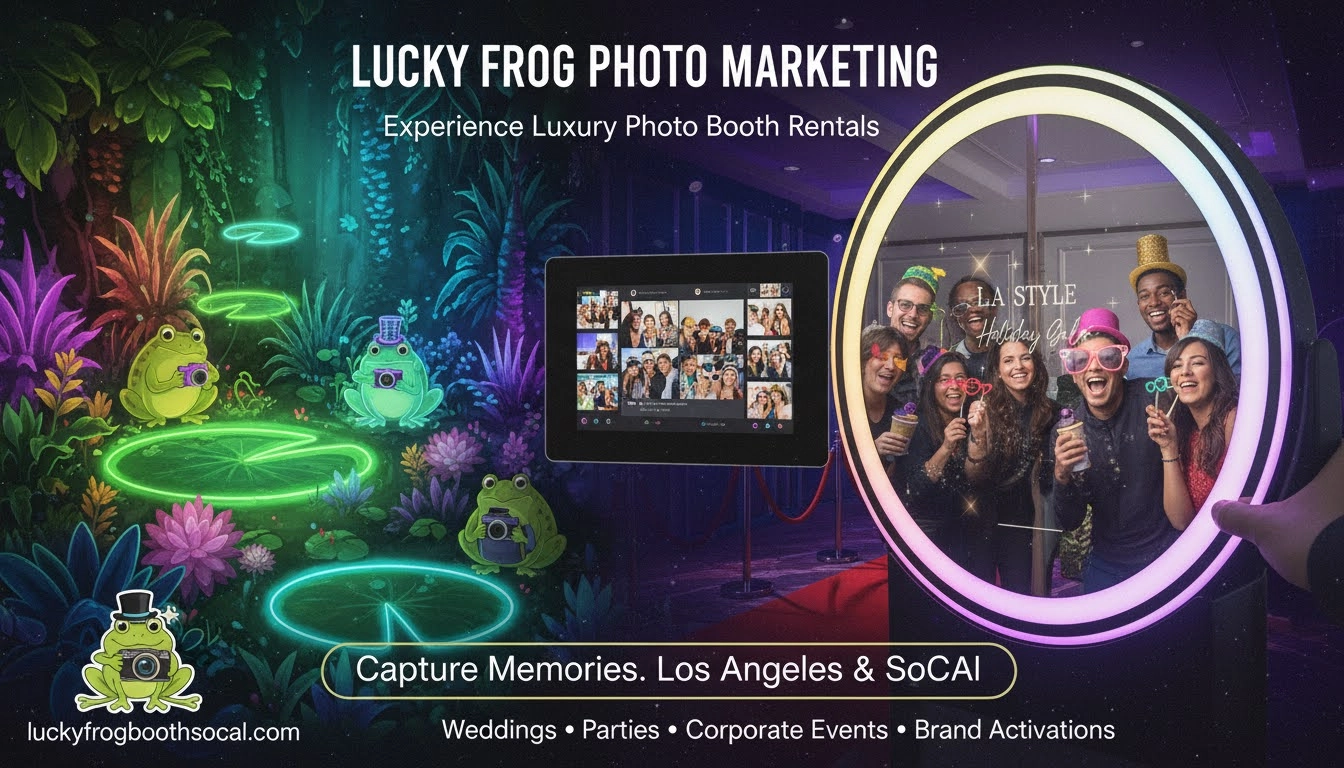
Some operators run a live drawing bot that sketches guests on the spot. Lucky Frog Photos builds its equipment locally in Los Angeles and offers a live AI sketch robot alongside an AI Portrait Studio, an AI Photo Lounge, an AI Toybox, and face swap experiences. Each of those products is its own build with its own hardware, software, and support load.
The Five Cost Drivers Behind the Higher Price
Strip away the marketing language and the higher price comes down to a handful of concrete costs.
Software licensing and model compute. The generation step depends on software and models that are licensed, hosted, or run on powerful local hardware. That is a recurring cost a traditional booth does not carry.
Slower throughput. An AI booth may take slightly longer per guest because the system must process and generate each transformation. One comparison notes 30 to 60 seconds of processing per image, which can create queues at peak moments.
More stations or more attendants. Where a traditional booth moves fast, an AI booth may need a second unit or extra staff to keep the line moving during a cocktail hour rush. Labor is the largest line item in most event budgets.
Pre-event design work. Custom backgrounds, avatar styles, branded skins, and test runs all happen before the event, and that time is priced into the booking.
Positioning and demand. AI experiences are still the newer offering. One Toronto-area comparison lists AI photo booths at $1,500 to $3,000, well above traditional pricing in the same market.
Processing Time Is a Real Cost, Not a Minor Detail
That 30 to 60 second window matters more than it looks on paper. During a reception, guests arrive in waves. A booth that takes a minute per transformation will back up quickly unless the operator plans for it.
The fix is usually capacity. Extra units, an extra attendant, or a flow that keeps guests entertained while the render finishes. All of those cost money, and those costs show up in the final quote rather than as a separate line item.
Comparing the Two Formats Side by Side
What you are comparing | Traditional booth | AI booth |
|---|---|---|
Primary output | Photograph, printed or digital | Piece of artwork |
Capture speed | Fast, usually near immediate | Slightly longer because generation is required |
Processing per guest | None beyond capture | Roughly 30 to 60 seconds reported in one comparison |
Pricing reference | $400 to $1,000 for 2 to 5 hours | $1,500 to $3,000 in one Toronto market comparison |
Customization | Backdrops, props, print templates | Face mapping, style transfer, avatars, AI backgrounds, headshots |
Line management | High volume with light staffing | May require extra units or attendants |
These ranges are market references, not fixed rates. Hours, guest count, print quantities, travel, and included design work all move the number, so confirm current pricing directly with the vendor before you build a budget around any figure.
Why the Gap Is Narrowing
Traditional booths have not stood still. Modern traditional booths now offer professional cameras, studio lighting, instant sharing, custom templates, and GIFs, so the base product is stronger than it was a few years ago. AI has been moving the other direction on price. As of April 2026, one industry write-up noted that the gap between a basic booth rental and a full photo experience has narrowed significantly over the previous five years.
Operators are also testing lighter configurations. In one operator discussion, a sleek iPad-based digital setup with no prints was described at $800 for four hours as an exception to the usual low-end quotes. The direction of travel is toward overlap, not a permanent split between cheap and expensive.
When the Higher Price Makes Sense
Brand activations where the artwork itself carries the logo, the campaign, or the message and guests share it because it looks good.
Weddings and milestone parties where the keepsake is meant to be framed rather than tucked into a drawer.
Corporate events that want professional-looking headshots or avatar content guests actually use on their own profiles.
Events where the booth is the headline attraction and the client wants a crowd standing around watching it work.
When a Traditional Booth Is the Better Buy
If the goal is volume, speed, and a printed strip in every guest’s hand, a traditional booth does that job well and costs less. A high-traffic school dance, a casual birthday, or a reception where guests cycle through quickly may not need transformation at all. The honest answer is that AI pricing reflects what the machine creates, and if you do not need what it creates, you are paying for capability you will never use.
Questions to Ask Before You Compare Two Quotes
How many hours are included, and what does an extra hour cost?
Are prints included, and how many? Is there unlimited printing or a cap?
How long does each guest experience take, including generation time?
How many attendants come with the setup?
Is custom artwork, branding, or background design included in the quote?
What happens if the system goes down mid-event?
How are digital files delivered afterward, and how long do guests have access?
Frequently Asked Questions
Why is an AI photo booth more expensive than a traditional photo booth?
Because the deliverable is different. A traditional booth captures a photograph, while an AI booth generates a piece of artwork. Generation requires licensed software, substantial processing power, longer per-guest handling time, and more design work before the event. Those recurring costs sit on top of the camera, lighting, and setup that both formats share.
Do AI photo booths take longer per guest than traditional booths?
They can. One comparison notes 30 to 60 seconds of processing per image, which is slower than an instant capture and print. During busy moments that delay can build a queue, which is why some operators run additional units or extra attendants. Ask about throughput per hour when you request a quote.
Are AI photo booths worth the higher price?
It depends on what you want guests to take home. If the booth needs to produce branded, frame-worthy artwork, custom avatars, or professional headshots, the extra cost buys something a standard booth cannot produce. If you mainly need fast printed strips in every hand, a traditional booth delivers that for less.
Is the price difference between the two formats shrinking?
Yes, based on recent industry commentary. An April 2026 write-up noted that the gap between a basic booth rental and a full photo experience has narrowed significantly over the previous five years. Traditional booths have added professional cameras, studio lighting, instant sharing, and templates, while AI configurations have become leaner and more varied.
How far ahead should I book an AI photo booth in Anaheim or Orange County?
Booking windows vary by operator and season, so ask the vendor directly rather than relying on a general rule. Because AI setups involve custom design work and testing before the event, earlier is generally safer than later. If your date falls on a popular wedding weekend, start the conversation well before you finalize other vendors.