Top AI Photo Booth Experiences for Brand Activations in 2026
What are the top AI and tech-driven photo booth experiences for brand activations in 2026? The strongest options go beyond a branded backdrop and a digital gallery. They turn guests into campaign characters, let them visualize products, create short social videos, and receive share ready content in moments. For marketers, the right setup can support awareness, product education, lead generation, and content creation at the same time.
The key is not choosing the most complicated technology. It is choosing an experience that fits the event goal, audience comfort level, space, and expected volume. A stunning AI portrait can stop traffic at a product launch. A virtual try on can be more useful for a retail pop up. A fast QR photo moment may be the smarter choice for a packed festival where lines can become the enemy.
Table Of Contents
• Top AI And Tech Driven Booth Formats
• How To Match The Booth To The Campaign Goal
• Designing A Fast, Safe, Reliable Guest Journey
• Measuring Results And Reusing Content
• Frequently Asked Questions
• Sources And References
Top AI And Tech Driven Booth Formats
The best photo booth activations in 2026 create a clear exchange: a guest gives the brand a few moments of attention, and the brand gives the guest content worth keeping or sharing. Here are the formats that most directly support that exchange.
AI Background Transformation Booths
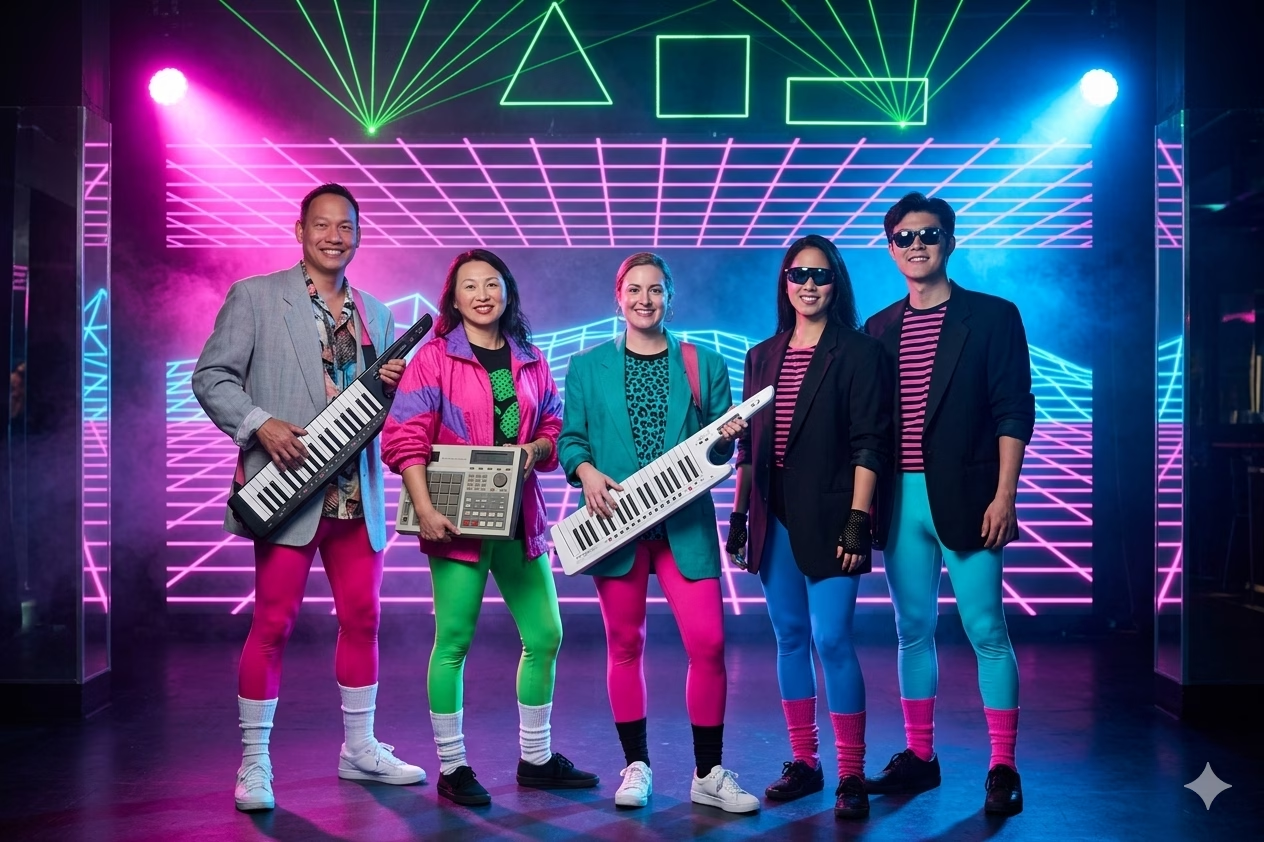
AI background transformation is one of the most flexible choices for launches, conventions, sports events, and themed pop ups. A guest takes one portrait, then the system places them inside a campaign visual world: a futuristic city, a tropical product escape, a movie inspired set, or an imagined version of the brand’s future.
This format works because it keeps the physical footprint small while making the output feel much bigger than the booth itself. Instead of building several expensive sets, a brand can use one capture area and offer several digital scenes.
An AI background changer photo booth is especially useful when campaign visuals need to change across cities, audiences, or event days. For example, a beverage brand could use regional scenes while keeping the same product message and core visual treatment.
Choose this format when:
• The campaign has a strong visual theme or destination concept.
• Guests need an easy experience with little instruction.
• The event space cannot support a large physical installation.
• The brand wants multiple image variations from one capture.
Avoid making the scene too busy. If the guest’s face, pose, and the product all compete for attention, the output can feel more like an effect than a branded memory.
AI Portrait And Headshot Activations
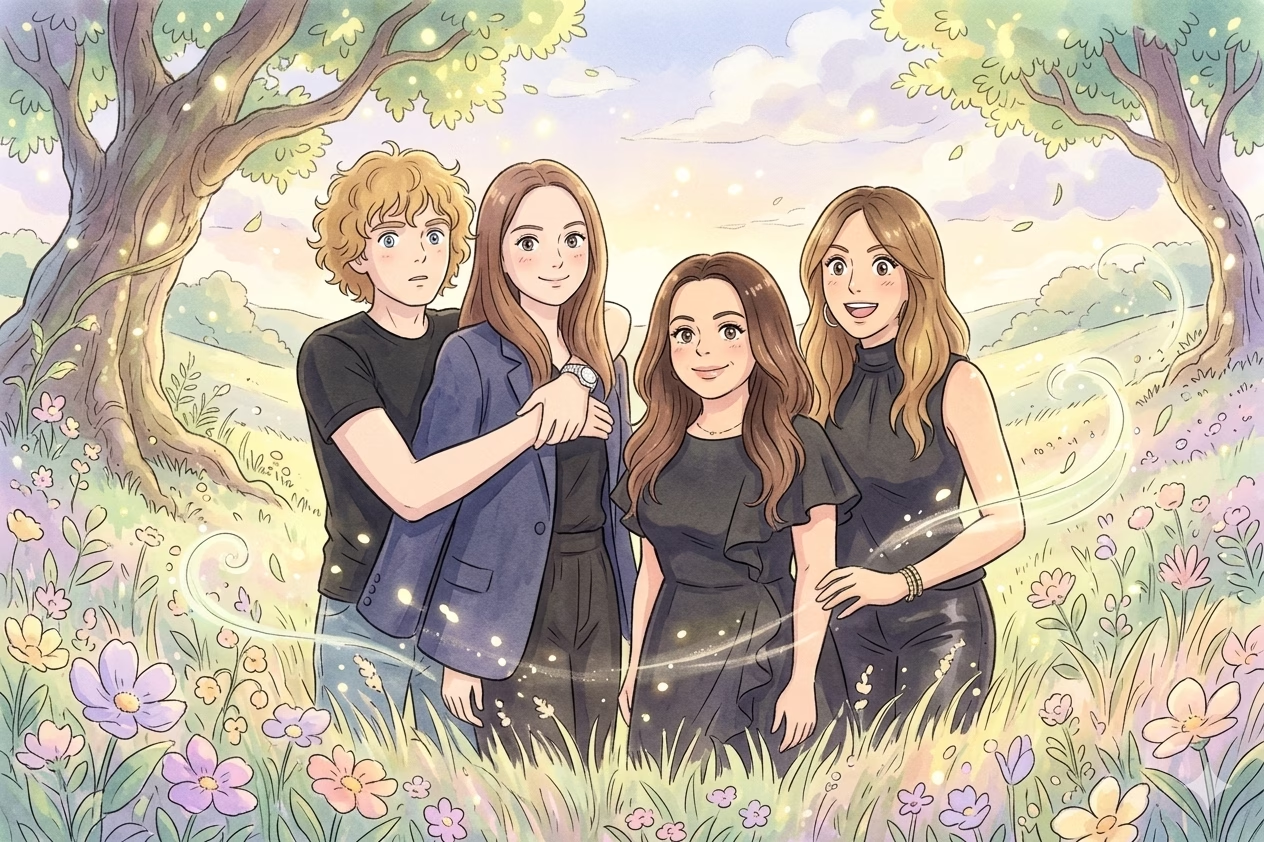
AI portrait booths create polished, stylized images from a guest photo. The style may be editorial, cinematic, fantasy based, illustrated, athletic, professional, or linked to a campaign mascot. These experiences are often stronger than a simple filter because the output can tell a story about who the guest could become inside the campaign world.
For a career event, an AI headshot activation may deliver a refined professional portrait. For an entertainment launch, it may place guests inside a dramatic poster style image. For a family event, an anime, caricature, toybox, or digital sketch approach can make the experience more playful.
The technology matters, but art direction matters more. The generated style needs approved colors, logo placement rules, wardrobe guidance, and scene prompts that have been tested for varied faces, hairstyles, glasses, mobility aids, and group sizes.
AI scene customization and product image integration, including ways branded clothing or product visuals can appear in generated content. That can strengthen product association, but only when the inserted item looks believable and does not obscure the guest.
Digital Avatar And Character Experiences
Digital avatars work best when the campaign asks guests to become something: a racing driver, an action hero, a game character, a fantasy explorer, or a stylized version of themselves. They tend to create more conversation than standard portraits because the output changes identity, not just scenery.
Digital avatars and lead data capture for live brand activations. The practical appeal is clear: avatar content can be entertaining enough to motivate opt in, while still providing a path to measurable follow up.
Still, avatars are not always the best fit. Some guests prefer recognizable, flattering photos over a highly transformed character. At a luxury beauty event, a realistic AI portrait may feel more aligned than a cartoon avatar. At a gaming convention, the opposite may be true.
AR Virtual Try On And Product Placement
Virtual try on is the most product focused option. It can show guests wearing glasses, makeup looks, jewelry, apparel, accessories, or themed merchandise. Product placement rendering can also put an item into a scene or into a guest’s hand, creating a visual version of a product trial.
This is a useful distinction: a photo booth can create _attention_, while a try on experience can create a closer connection to the product itself. If a guest can compare several styles, save a favorite, and receive a link to continue shopping, the activation starts to bridge entertainment and intent.
Choose try on when the product is visual, wearable, or customizable. Avoid it when accurate fit, shade matching, or technical product performance is the core purchase decision. A photo based rendering should be framed as inspiration, not as a guarantee that an item will fit or perform exactly the same way in real life.
AI Video, Sketch, Fortune Teller, And Interactive Formats
Still images remain the fastest option, but short form motion is gaining ground. A booth can produce a brief animated reveal, a digital sketch drawing sequence, an AI fortune teller result, or a character transformation clip. These formats are built for vertical sharing and can give a campaign more movement in social feeds.
The tradeoff is output latency. A five second animation may create stronger social lift than a static image, but it usually requires more processing and clearer guest expectations. If the event is crowded, a motion format should have an entertaining wait screen and a backup still image option.
A memorable booth does not need to do everything. It needs to give the guest one clear reason to step in and one clear reason to share.
How To Match The Booth To The Campaign Goal
The right experience begins with the primary objective. Awareness, qualified lead capture, product exploration, and user generated content are related goals, but they should not be treated as identical.
A Format By Objective Decision Map
Campaign Objective | Best Booth Format | Why It Fits | Watch Out For |
|---|---|---|---|
Brand awareness | AI background transformation | Creates bold, recognizable campaign scenes quickly | Generic scenes weaken recall |
Product launch | Product placement or virtual try on | Puts the product inside the guest output | Unrealistic rendering can hurt trust |
Lead generation | AI avatar or premium portrait | Gives guests a higher value reason to opt in | Heavy forms reduce participation |
Social content | AI video, animation, or character format | Motion and transformation can earn more shares | Slow output can create lines |
Retail traffic | Try on with QR follow up | Connects content to product browsing or shopping | Do not force checkout steps |
Professional event | AI headshot activation | Offers clear personal value to attendees | Keep the visual style polished |
For busy events, I recommend choosing one hero format rather than offering a menu of unrelated effects. Too many choices slow decisions and make the brand message fuzzy. A guest should understand the promise from a few feet away: “Step in, become part of this world, get your content.”
The 60 To 90 Second Time Budget
Guest flow is not a small production detail. It can decide whether an activation feels popular or frustrating. That is a useful target for many live events, though the best timing depends on crowd volume and whether guests are solo, in pairs, or in groups.
A practical live flow can look like this:
- A host explains the concept while the guest is still in line.
- The guest selects one or two approved styles.
- The booth captures the image with simple pose guidance.
- The system generates content while a branded animation holds attention.
- The guest scans a QR code or receives a print and share prompt.
For a high volume festival, aim closer to the lower end of that range. For an appointment based VIP lounge, a longer, more customized session can be appropriate. The mistake is building a two minute experience for a crowd that expects a quick photo moment.
Delivery Choice: QR, Print, SMS, Or Email
Delivery affects both throughput and data collection. The right method depends on what happens after the image is created.
Delivery Method | Best Use | Advantage | Limitation |
|---|---|---|---|
QR code | Large crowds and social events | Fast, low friction, guest controlled | Limited direct lead capture |
Weddings, premium events, retail keepsakes | Tangible reminder and visible branding | Adds supplies and printing time | |
SMS | Promotions and mobile campaigns | Direct phone delivery | Requires careful consent handling |
Qualified lead programs | Supports follow up and reporting | Can reduce completion if required upfront |
A smart compromise is to offer QR delivery by default and make email or SMS optional after the guest has already seen their result. The value comes first; the form comes second.
Designing A Fast, Safe, Reliable Guest Journey
A great concept can still fail if the system freezes, the line grows, or guests do not understand what happens to their photo. The production plan should account for technology, people, and consent from the first creative meeting.
Build Brand Control Into The Generation System
AI rendering should not be treated as an open creative sandbox at a live event. The strongest activations use a tightly controlled set of approved styles, poses, visual assets, and output templates.
The vendor should test for:
• Face placement and lighting consistency.
• How logos appear across different poses.
• Product visibility and proportion.
• Results for individual guests, groups, children, and taller or seated guests.
• Output quality under repeated use.
That list is useful because a beautiful demo image alone does not prove the system can perform for hundreds of guests under live conditions.
For planning help, an AI photo booth rental planning guide can help teams think through event timing, service needs, and how the activation fits the broader run of show.
Privacy, Consent, And Accessibility Need A Real Plan
Face based AI experiences may involve personal data and can feel sensitive to guests. Requirements vary by location, event type, data flow, and how long images or contact details are retained. There is no single universal implementation for every activation, so brands should confirm their privacy approach with appropriate legal and vendor teams before the event.
At minimum, use plain language that tells guests:
• What is being captured.
• Whether the image is transformed by AI.
• How long content and contact information are kept.
• Whether the brand may reuse the image.
• How a guest can participate without marketing consent.
Accessibility should be designed into the physical and digital flow. Provide a camera height or framing option for seated guests, readable on screen instructions, clear contrast, adequate space for mobility devices, and staff support without pressure. If voice prompts or fast animations are used, visual instructions should still communicate the core steps.
Plan For Failure Before It Happens
AI output can slow down because of network issues, rendering demand, device heat, or a sudden rush of guests. Fair warning: a cloud dependent activation without a fallback can turn a popular line into a visible problem.
A reliable plan includes a fallback mode. If AI generation is delayed, the booth should still be able to produce a branded original photo, animated overlay, or print. That means the guest leaves with something, even if the advanced effect arrives later or is temporarily unavailable.
Ask vendors how they will handle:
- Internet loss or weak venue Wi Fi.
- Rendering delays at peak volume.
- A camera, printer, or tablet failure.
- Duplicate QR scans and delivery errors.
- Staff escalation when an output is unusable.
This is where Next gen AI photo booths for events can be a useful planning reference: the technology should support the live moment, not become the whole show.
Measuring Results And Reusing Content
A booth should be measured against the campaign goal, not just the number of photos created. A crowded booth can look successful while producing little useful follow up. On the other hand, a smaller appointment based experience may generate fewer images but stronger qualified leads.
Use A KPI Hierarchy
Start with the metric closest to the campaign objective, then add supporting measures.
Primary Goal | First KPI To Watch | Supporting Metrics |
|---|---|---|
Awareness | Unique participants | Dwell time, branded outputs, social posts |
Engagement | Completion rate | Repeat sessions, time in zone, style selections |
Lead generation | Consented qualified leads | Form completion, email opens, conversions |
Product interest | Product interactions | Try on selections, QR clicks, retailer visits |
Social reach | Shared outputs | Hashtag use, creator posts, engagement rate |
The useful implication is that metrics should connect in sequence. A share count matters more when the brand can see whether that share led to a visit, sign up, or product interaction.
Turn Event Outputs Into A Content System
Before the event begins, decide what can be reused and what permissions are needed. Do not wait until the final hour to discover that the most compelling images cannot be reposted.
A simple content reuse workflow includes:
- Create a separate opt in for brand reuse rather than assuming delivery consent equals promotional permission.
- Tag assets by event date, location, experience type, and approved usage rights.
- Select strong examples for recap posts, paid social variations, internal presentations, and future event pitches.
- Review which style, prompt, or product scene earned the most completions and shares.
- Use those findings to simplify the next activation instead of adding more effects.
Key Takeaways
• AI background transformations are ideal for high impact campaign worlds in small spaces.
• AI portraits and avatars create stronger personal value when the style fits the audience.
• Virtual try on is best when product discovery matters as much as entertainment.
• A 60 to 90 second guest flow is a useful benchmark for many live events.
• QR delivery protects speed, while email and SMS should be optional when possible.
• Privacy language, accessibility, tested visual controls, and a fallback mode are part of the experience, not last minute extras.
• Measure the action closest to the campaign objective before celebrating broad vanity metrics.
Frequently Asked Questions
What Is An AI Photo Booth For A Brand Activation?
An AI photo booth captures a guest image and uses generative AI, augmented reality, or digital compositing to create a branded output. That output may be a portrait, avatar, short video, product try on, sketch, or campaign scene. The best versions make the guest the center of the brand story rather than placing a logo on a standard selfie.
Which AI Photo Booth Experience Is Best For A Product Launch?
Choose product placement rendering or virtual try on when guests need to see the product in use, on themselves, or within a branded scene. Choose an AI portrait or background transformation when the launch is more about building excitement around a larger campaign idea. If the product must be viewed accurately, pair the digital output with a physical sample or product demonstration.
Are AI Avatar Booths Better Than AI Portrait Booths?
Neither is automatically better. Avatars work well for gaming, entertainment, youth culture, sports, and fantasy themed campaigns. AI portraits are often a better fit for beauty, fashion, professional events, and premium experiences where guests want to remain clearly recognizable. The deciding factor is audience expectation, not novelty.
What Is The Fastest Format For A Busy Brand Activation?
A single capture with a prebuilt AI background or branded overlay is usually the fastest sophisticated format. It needs fewer guest decisions than an avatar builder, video sequence, or multi product try on. Use QR delivery and limit choices to two or three styles to protect the line.
Should A Brand Use QR Delivery, SMS, Email, Or Print?
Use QR delivery for speed and easy self service. Add print when the physical keepsake supports the event atmosphere. Use email or SMS when lead follow up is a real campaign goal, but make the process transparent and avoid making a long form mandatory before the guest sees their output.
How Can Brands Capture Leads Without Losing Guests At The Booth?
Give the guest their result first, then present an optional opt in for email, SMS, a prize entry, product information, or future offers. A guest who has already received a compelling image is more likely to understand the exchange. Keep the form short and make promotional consent separate from basic content delivery where appropriate.
What Are The Biggest Failure Points For AI Booth Events?
The most common risks are slow rendering, unstable internet, generic or inconsistent images, unclear instructions, and overbuilt lead forms. A tested fallback photo mode, a staffed queue, a limited style menu, and a clear privacy notice reduce those risks. If the event expects large crowds, load testing and backup equipment should be part of the vendor plan.
Brand Activations & Experiential Marketing
Bridging nostalgic craftsmanship with modern AI technology to create unforgettable consumer touchpoints across Los Angeles & Orange County.
At Lucky Frog Photo Marketing, we specialize in high-converting brand activations that turn standard event attendees into passionate brand advocates. By combining vintage aesthetics, tactile physical prints, and real-time Generative AI, we deliver photo experiences that drive measurable social impression metrics and direct consumer lead collection.
Activation Capabilities
AI Photo Lounge
Instantly transform guests into magazine covers, historical art styles, or custom branded campaign visuals in under 60 seconds with on-site edge processing.
Handcrafted Retro Wood Booth
Furniture-grade oak and mahogany cabinets equipped with studio DSLR cameras and high-speed sub-dye printers. Perfect for luxury pop-ups and galas.
DrawMatic Robotic Arm
A mesmerizing live plotter robot that draws guest portraits in real-time vector ink on custom-branded 4×6 cardstock keepsakes.
360 High-Definition Video
Capture dynamic, slow-motion video clips optimized for instant TikTok, Instagram Reels, and LinkedIn campaign distribution.
Choosing Your Activation Format
| Activation Style | Best For | Key Guest Experience | Marketing Output |
|---|---|---|---|
| Custom AI Engine | Product Launches & Brand Pop-ups | Immersive background style transformations | High-viral UGC & Digital Lead Capture |
| Retro Wooden Booth | Luxury Galas & VIP Lounges | Nostalgic heirloom tactile print strips | Premium Brand Association & Physical Prints |
| 360 Studio Video | High-Energy Parties & Festival Grounds | Action-packed slow-motion video captures | Short-form Video Content & Social Reach |
| AI Headshot Kiosk | Conferences & Corporate Summits | Polished, professional executive headshots | Verified First-Party B2B Lead Generation |
Why Top Brands Partner With Lucky Frog
Every campaign is engineered from the ground up to support your key performance indicators:
- Custom Interface Branding: Fully customized touchscreen workflows, branded start screens, and tailored micro-surveys.
- Instant SMS & QR Delivery: Frictionless digital asset distribution without requiring app downloads.
- Seamless Data Compliance: Opt-in lead capture workflows compliant with enterprise corporate privacy standards.
- Professional On-Site Staffing: Experienced booth attendants and brand ambassadors handling setup, operations, and guest engagement.
Plan Your Next Brand Activation
Let’s collaborate on a custom photo experience that elevates your event and captures meaningful consumer engagement.
Book Your Activation 🐸Ultimately, the success of AI photo booth activations relies on balancing technical innovation with human-centric design. When planning AI photo booth activations, prioritize guest comfort to ensure AI photo booth activations feel intuitive rather than overwhelming. The best AI photo booth activations serve as a bridge between digital engagement and physical brand loyalty. As you scale AI photo booth activations, remember that data collection within AI photo booth activations must remain transparent and secure. Whether hosting small AI photo booth activations or massive AI photo booth activations, consistency in branding is vital. Modern AI photo booth activations allow for unprecedented creative freedom, yet AI photo booth activations still require rigorous testing. By integrating AI photo booth activations into your broader strategy, you turn passive attendees into active brand advocates. Future AI photo booth activations will likely offer even deeper personalization, but current AI photo booth activations already provide immense value. Always evaluate AI photo booth activations based on ROI, not just novelty. When designing AI photo booth activations, consider the flow of traffic. Effective AI photo booth activations minimize wait times while maximizing impact. If your AI photo booth activations align with your campaign goals, the results will speak for themselves. Always audit your AI photo booth activations for accessibility. High-quality AI photo booth activations build lasting impressions. Remember, AI photo booth activations are tools, not just gadgets. Successful AI photo booth activations require clear calls to action. Every detail in your AI photo booth activations matters. Refine your AI photo booth activations based on attendee feedback. Finally, ensure your AI photo booth activations reflect your core brand identity. With the right approach, your AI photo booth activations will define your event’s success.
To ensure high engagement, marketers should prioritize intuitive design principles when developing augmented reality experiences for event attendees.