Robotic Sketch Artist Waldorf Astoria: What To Know
A Robotic Sketch Artist Waldorf Astoria activation is best understood as a live portrait experience designed for premium events. Guests pose for a camera, receive a stylized line drawing, and leave with a printed keepsake, a digital image, or both. It can feel theatrical without requiring a stage: a mechanical arm moves across paper while a portrait takes shape in view of the room.
The key detail is venue confirmation. Available published information associates Waldorf Astoria Monarch Beach Resort & Club with AI portrait or sketch style event activations, but it does not establish that every Waldorf Astoria property offers the same service or that one permanent installation exists. For a private event, the practical question is not simply whether the hotel has hosted this type of experience before. It is whether the specific property, ballroom, event date, and vendor plan can support it.
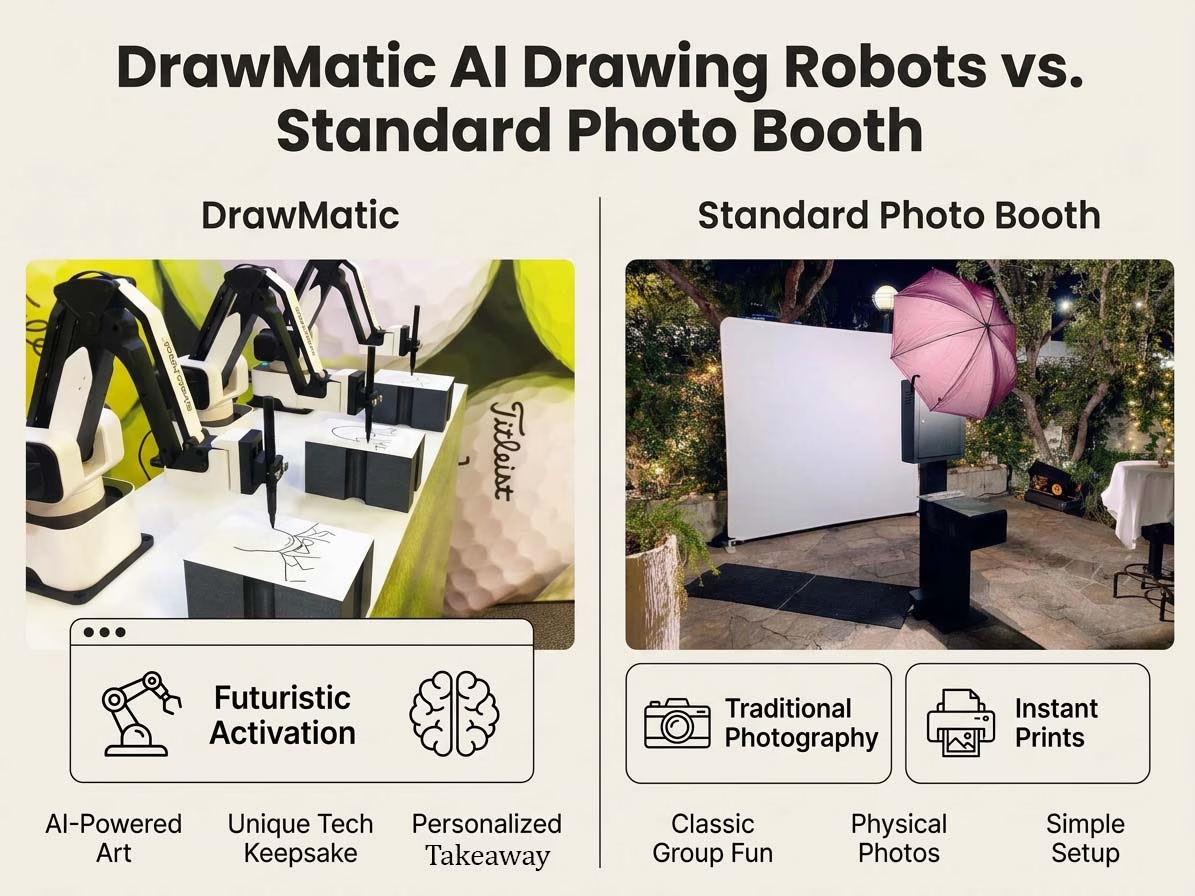
Table Of Contents
Key Takeaways
• A robotic sketch artist combines guest photography, software processing, and a physical drawing or print workflow.
• Waldorf Astoria Monarch Beach Resort & Club has been mentioned in connection with AI portrait and drawing bot activations, though public details about the exact setup are limited.
• For luxury events, success depends less on novelty and more on queue design, lighting, staffing, privacy choices, and a polished print presentation.
• A robotic drawing machine is not identical to an AI caricature booth. The visible drawing action and physical output can create a stronger performance element.
• I recommend treating the activation as either entertainment, branded hospitality, or keepsake production before booking. Trying to make it do all three equally can weaken the guest experience.
• Waldorf Astoria Venue Context
• How The Experience Works At A Luxury Event
• Planning For Flow, Privacy, And Reliability
• Choosing Between A Robot, AI Booth, And Live Artist
Waldorf Astoria Venue Context And What Is Confirmed
The clearest public association comes from a Lucky Frog Photos article that lists Waldorf Astoria Monarch Beach Resort & Club among premium venues connected with AI portrait and sketch style activations. That is useful context, but it should not be stretched into a broader claim. The article does not specify the event date, exact robot model, floor plan, or whether the experience was a one time event activation.
That distinction matters. A hotel may host a branded corporate reception in one ballroom, a wedding in another, and a guest facing seasonal event elsewhere on the property. Each scenario has different requirements for guest arrival, ambient light, power access, sound, and staff oversight.
For an event planner, the most accurate framing is this: a Robotic Sketch Artist Waldorf Astoria experience may be feasible at a qualifying property, but availability should be confirmed directly with the hotel event team and the entertainment vendor. Ask for the intended room, setup window, insurance requirements, loading access, and any restrictions on equipment placement. A stunning guest experience can be undermined if the robot arrives through a narrow service corridor too late to calibrate before doors open.
Why Luxury Hotel Context Changes The Activation
At a casual outdoor festival, a queue can form around a booth without much concern. At a luxury hotel gala, the same line can block a bar, distract from a sponsor step and repeat, or make the room feel crowded. The robot must feel intentional, not improvised.
I would place the activation near an existing circulation path rather than directly at the room entrance. Guests should be able to watch the drawing arm, understand what is happening, and decide to participate without stopping traffic. A small branded sign with three steps can help:
- Pose for your portrait.
- Watch the sketch take shape.
- Collect your printed keepsake.
This is also where a refined visual treatment matters. The paper stock, print border, table dressing, staff attire, and enclosure should match the event design. A basic white kiosk may work for a trade show. In a ballroom with floral installations, candlelight, and formal place settings, it can look unfinished unless the presentation is considered as part of the décor.
The Value Is More Than A Drawing
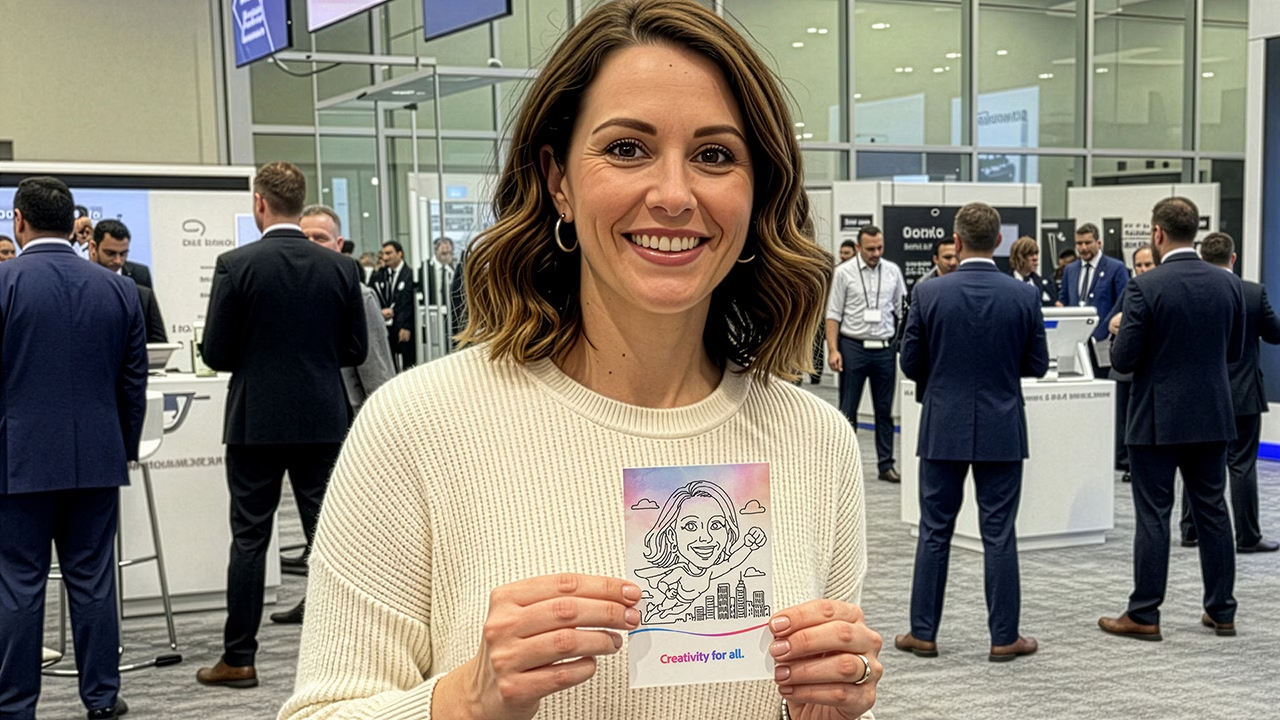
A portrait robot can serve three roles, but one should lead the plan:
Primary Role | Best Use Case | What Success Looks Like | Main Risk |
|---|---|---|---|
Entertainment | Receptions, cocktail hours, open house events | Guests gather to watch and participate | Long lines reduce comfort |
Branding | Product launches, conferences, sponsor events | A customized print travels home with the guest | Branding overwhelms the artwork |
Keepsake Production | Weddings, milestone celebrations, VIP dinners | Guests receive a personal memento | Output volume may not match attendance |
For a wedding, keepsake production may be the priority. For a corporate gathering, branding may matter more, especially when a logo, event date, or sponsor mark is integrated into the print layout. For a hotel hosted reception, entertainment may lead because the movement of the robotic arm becomes part of the room’s visual energy.
The deeper advantage is that the activity creates a pause. A guest does not only take a photo and move on. They pose, wait briefly, watch a portrait emerge, and carry away something that feels more tactile than a standard gallery link.
How The Experience Works At A Luxury Event
Most robotic portrait stations follow a simple guest path, but the machinery behind it has several layers. A camera or kiosk captures the guest image. Software converts that image into a line based drawing path. The system then either prints an image or directs a drawing mechanism to reproduce the lines on paper. Lucky Frog’s AI robotic sketch artist [](https://luckyfrogboothsocal.com/drawmatic-ai-drawing-robots/)presents this model as a photo capture based experience and distinguishes between local operation and its cloud based Dream Studio mode. That distinction is not just technical language. It affects event risk.
Local Processing And Cloud Processing
A local mode processes the image on site. It may reduce reliance on a strong internet connection, although the complete system can still have networking needs for sharing, monitoring, or updates. A cloud based mode may offer different creative processing options, but it introduces a dependency on venue connectivity.
For a hotel ballroom, I would ask one plain question: _What happens if the public Wi Fi is overloaded during cocktail hour?_ A vendor should be able to explain whether the core portrait workflow continues, pauses, or changes quality under that condition.
Consider a 250 guest awards dinner. During the first 30 minutes, many attendees may try the robot at once. If image processing depends on unreliable connectivity, the line can become the story instead of the artwork. If it runs locally, the bottleneck may shift to physical drawing time and print handling. Either way, a realistic plan needs to account for the slowest step, not the fastest vendor demonstration.
Lucky Frog’s photo-to-sketch delivery in roughly 50 to 60 seconds [](https://luckyfrogboothsocal.com/drawmatic-ai-drawing-robots/)in its event oriented workflow. That is a vendor stated figure, not a guarantee of real world throughput. A guest might need a retake, a print may require handling, or a staff member may pause the flow to explain the experience.
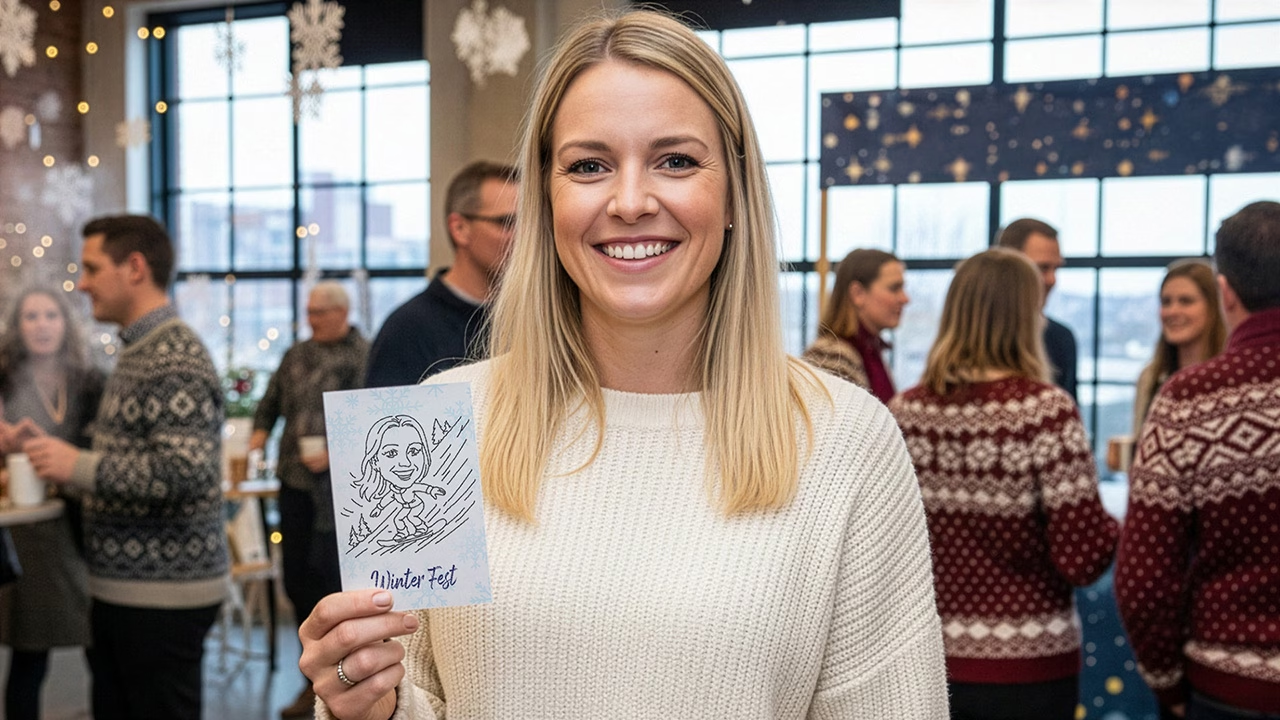
Live Drawing Versus Digital Sketch Effects
The terms _robotic sketch artist_, _AI portrait station_, and _AI caricature booth_ are often used loosely. They should not be treated as interchangeable.
Format | What Guests See | Typical Output | Best Fit |
|---|---|---|---|
Robotic Sketch Artist | A machine physically creating a drawing or visibly completing the sketch process | Paper line art, sometimes digital delivery | Events seeking spectacle and tactile keepsakes |
AI Portrait Booth | A digital transformation after photo capture | Digital file, print, or both | High volume branded experiences |
Traditional Live Sketch Artist | A human artist interpreting the guest in real time | Hand drawn paper artwork | Intimate, artistic, or highly curated gatherings |
A robot is compelling because the mechanical motion makes the process visible. It is a small performance. A digital AI portrait booth can often offer more style variations and may serve guests faster, but it may not have the same physical theater. A human artist brings spontaneity and emotional interpretation, yet may produce fewer portraits over the course of an event.
For planners comparing formats, Drawmatic AI Drawing Robots can help clarify why a visible drawing process occupies a different category from a conventional photo booth. The choice is not about which format is universally superior. It is about which one matches the event’s desired pace and visual identity.
What Guests Actually Experience
The strongest guest journey is brief and clear. A host welcomes the participant, checks that they are ready, guides them into a well lit pose area, and directs them to pickup. The staff member is not just there to solve technical issues. They keep the experience graceful.
A polished sequence may include:
- A short consent notice before photo capture.
- A camera position suitable for seated and standing guests.
- A neutral background that prevents distracting image artifacts.
- A visible drawing or output stage.
- A labeled pickup point so completed artwork does not pile up.
The portrait itself should be presented as stylized line art, not as a perfect biometric likeness. Soft shadows, glasses, elaborate hats, and busy background elements can change the result. That is not necessarily a defect. It is part of the medium. Still, guests should know what to expect before they pose.
Planning For Flow, Privacy, And Reliability
The most important planning work happens before the robot arrives. A beautiful drawing cannot rescue poor placement, insufficient power, or a queue that wraps into the dinner service path.
Space, Power, And Lighting
Exact footprint requirements vary by vendor and model, so do not rely on a generic measurement. Request a written equipment diagram that includes the robot, kiosk, printer, operator position, guest pose mark, pickup area, and line space. The usable footprint is larger than the hardware itself.
A reasonable site review should cover:
• Dedicated power access and cable protection.
• A level, stable surface that limits vibration.
• Lighting that supports flattering image capture without blinding guests.
• Clear access for delivery, setup, and breakdown.
• A nearby but discreet area for spare paper, tools, and technician supplies.
• A queue route that does not cross catering, emergency exits, or wheelchair paths.
Low light is a common hotel ballroom issue. Mood lighting can make an event look beautiful while producing a weak camera image. The solution is often controlled front lighting at the pose point, not brighter room lighting. The guest should be lit evenly, while the overall atmosphere remains intact.
Queue Management Is Part Of Hospitality
A vendor may describe a sketch as taking under a minute. In practice, planners should calculate capacity with a buffer for posing, retakes, collection, and pauses.
If 120 people are likely to participate during a 90 minute cocktail hour, the activation may work comfortably if the flow is steady. If 250 guests all arrive in the first 20 minutes, one station may not be enough. Use timed invitations, a roaming host, a second output station if available, or a sign that encourages guests to return after dinner.
Fair warning: an unmanaged line can make a premium activation feel less premium. A simple staff script helps: “Your portrait will be ready shortly. Please enjoy the bar while we prepare the next group.” That reframes waiting as part of the event rather than a service failure.
Failure Modes And Recovery Plans
Mechanical and digital systems can fail in ordinary ways. Paper can jam. A pen can dry out. The drawing alignment can drift. A camera can capture glare from eyeglasses. A printer can pause. None of these problems should be hidden from the planning process.
I recommend asking the vendor for a recovery plan that answers four questions:
- Who monitors the system throughout guest hours?
- What backup consumables arrive on site?
- Can the team switch to digital delivery if physical output pauses?
- How will guests be redirected if the station needs a short reset?
The goal is not perfection. It is graceful recovery. For example, if a paper feed problem interrupts drawing for ten minutes, an attendant can capture portraits and issue numbered collection cards, then resume printing or drawing once the equipment is reset. Guests still feel looked after.
Privacy And Accessibility Need Early Decisions
Face capture is personal data, even when the resulting art is playful. Before booking, clarify whether source photos are retained, how long digital files remain available, whether guests can opt out of sharing, and who controls branded galleries. A concise notice at the station should explain the essentials in plain language.
Accessibility is equally practical. Provide an approach route wide enough for mobility devices, offer a seated capture option, avoid requiring guests to hear spoken instructions, and use high contrast visual prompts. If a guest cannot comfortably stand at a marked pose point, the experience should adapt rather than exclude them.
For more ideas about preserving event memories beyond ordinary prints, see The Future of Event Keepsakes with AI Drawing Robots. The important planning principle is simple: technology should reduce friction, not create another barrier.
Choosing Between A Robot, AI Booth, And Live Artist
The right choice depends on what you need the activation to accomplish. A robotic sketch artist works best when guests will appreciate watching the process and when the physical artwork supports the event’s character. It is especially suited to receptions, luxury weddings, sponsor lounges, and product launches where a collectible print feels more valuable than a quick snapshot.
When A Robotic Sketch Artist Is The Better Fit
Choose the robotic format when:
• The event benefits from a visible technology and art moment.
• You want line art prints that can carry subtle event branding.
• The audience has enough dwell time to watch the drawing process.
• A host or technician can manage guest flow.
• The venue can provide a stable, well planned location.
Avoid relying on one robot as the only guest activity when participation demand is likely to be intense and compressed into a short window. A high volume trade show booth may need a digital portrait system, multiple stations, or a prebooked appointment flow instead.
When Another Format May Be Stronger
An AI photo booth can be better when rapid delivery, multiple visual styles, and digital sharing are the priorities. A human sketch artist can be better when artistic interpretation and conversation are central to the experience. Neither alternative is a lesser version of the robot. They create different social dynamics.
For example, a formal wedding with 70 guests may favor a live artist who can create a few elaborate works and interact warmly with families. A technology conference with 800 attendees may favor a fast digital portrait station. A 200 guest luxury reception may find the robotic sketch artist sits in the middle: more theatrical than a booth, more scalable than one human artist.
A Next-Gen AI Photo Booth may also complement, rather than replace, a robot. One station can serve high volume digital sharing while the robotic artist becomes a slower, more premium feature for VIPs, contest winners, or guests who want the physical line art.
A Practical Booking Brief
Before requesting proposals, define the following in writing:
Booking Question | Why It Matters |
|---|---|
How many guests are expected to participate? | Determines capacity and number of stations |
When will participation peak? | Shapes queue and staffing plans |
Is the output print, digital, or both? | Changes equipment and collection workflow |
What branding is required? | Affects artwork layout and approval timing |
What is the venue room and access path? | Determines footprint, power, and load in feasibility |
What is the privacy preference? | Establishes consent, gallery, and deletion expectations |
That brief gives both the hotel and vendor a shared operating picture. It also makes it easier to decide whether the activation should sit at cocktail hour, after dinner, near a sponsor lounge, or in a dedicated experience area.
Frequently Asked Questions
What Is The Robotic Sketch Artist At Waldorf Astoria?
It is a live event portrait activation in which a guest image is captured and transformed into stylized artwork, often with a visible robotic drawing process and a physical print. Public material connects Waldorf Astoria Monarch Beach Resort & Club with AI portrait and sketch style activations, but the exact configuration should be confirmed for each event.
Which Waldorf Astoria Property Is Associated With This Experience?
Waldorf Astoria Monarch Beach Resort & Club is the specific property named in the available venue related material. There is not enough public information to confirm a permanent robotic sketch artist offering across Waldorf Astoria properties.
Is A Robotic Sketch Artist The Same As An AI Caricature Booth?
No. Both may begin with photo capture and software generated artwork, but a robotic sketch artist emphasizes the physical drawing or visible sketch creation process. An AI caricature booth often emphasizes digital style transformation and fast digital delivery.
How Long Does A Sketch Take?
Vendor stated times can range from under 45 seconds in certain SketchBots use cases to about 50 to 60 seconds in SketchBot Pro descriptions. Actual event throughput is slower once posing, retakes, print handling, and line management are included.
Can The Artwork Be Branded For A Wedding Or Corporate Event?
Usually, yes. A border, logo, names, event date, or sponsor mark can often be incorporated into the final print design. Keep branding restrained for luxury events so the portrait remains the focal point.
What Happens If The Line Gets Too Long?
Use an attendant, clear wait expectations, a return later invitation, or timed participation. If demand is much higher than expected, redirecting guests to a digital companion station can protect the overall experience.
Does It Work In A Dim Hotel Ballroom?
It can, if the portrait capture area has controlled front lighting. Ambient ballroom lighting alone may create weak images, especially when guests wear glasses or stand against dark décor.
Are Guest Photos Stored After The Event?
That depends on the vendor’s system and event settings. Ask before booking whether source images and digital portraits are retained, who can access them, and when they are deleted. A written answer is better than an assumption.
• Lucky Frog Photos — Revolutionizing Events: AI Drawing Bots and Sketch Artists Take Over Southern California’s Premier Venues: https://www.luckyfrogphotos.com/blog/revolutionizing-events-ai-drawing-bots-and-sketch-artists-take-over-southern-californias-premier-venues
Timeless Photo Experiences
Classic Aesthetic Meets Modern Activation Technology
Elevate Your Celebration
Whether hosting a rustic coastal wedding, an elegant gala, or a corporate brand activation in Southern California, pairing classic vintage styling with modern digital photo technology delivers an unforgettable experience for your guests.
Activation Styles & Package Features
| Experience Package | Design & Aesthetic Highlights | Digital & Print Features |
|---|---|---|
| Classic Vintage Booth | Rich wood cabinet finish, retro brass accents, classic curtain enclosure | Lab-quality physical photo strips & instant SMS gallery delivery |
| Glamour B&W Studio | High-key diffuse studio lighting with minimalist cream backdrops | Real-time portrait smoothing filters & postcard-size prints |
| DrawMatic AI Robot | Live mechanical plotting arm on heavy-weight textured paper | Physical vector sketch art & timelapse video MP4 transfers |
Why Choose Vintage-Inspired Photo Booths?
- Seamless Venue Integration: Natural wood tones and neutral color palettes complement historic estates, coastal resorts, and industrial lofts alike.
- Tangible Keepsakes: Guests leave with physical print strips and robot sketches that double as high-end event favors.
- Modern Connectivity: Hidden high-speed digital engines allow instant AirDrop, QR code, and social media sharing without breaking the classic vintage charm.
Explore custom backdrops, photo booth packages, and robotic art options at Lucky Frog Photo Booth SoCal or discover specialized AI sketching activations at DrawMatic AI Drawing Robots.