How to Choose an AI Photo Activation for Anaheim Corporate Events
Anaheim pulls in a steady mix of conferences, trade shows, company parties, product launches, and gala fundraisers. Event teams here are often working with a convention floor, a hotel ballroom, or a campus space that has to serve several purposes in one day. An AI photo activation fits that reality because it gives guests something to do that also produces content your marketing team can use after the last box is packed.
The decision is not about renting the flashiest booth on the market. It is about matching the experience to your goal, your venue, and your internal approval process. Get those three things right and the activation runs itself. Get them wrong and you end up with a line of bored guests and a folder of photos nobody posts.
Define the Activation Goal Before You Compare Vendors
Define your activation goal first. That single step filters every other decision. A trade show booth built for lead capture needs a different flow than an employee appreciation party where the goal is simply that people leave happy.
Write down what success looks like in one sentence. Examples include collecting qualified contact details, driving social posts with a campaign hashtag, showcasing a product in a themed scene, recognizing long-tenured employees, or giving sponsors visible placement in guest content. Once the goal is on paper, you can judge whether a given AI experience supports it or just looks impressive in a demo video.
What an AI Photo Activation Actually Does
An AI photo booth is a camera station that transforms each guest portrait in real time into a themed image, such as a magazine cover or a movie poster. Guests step in front of the camera, choose an AI transformation, and receive the result. The experience can run on pre-crafted AI scenes or on custom AI scenes built around your brand, your event theme, or a specific campaign.
-
Pre-crafted scenes are ready-made transformations that already exist in the vendor’s library.
-
Custom scenes are designed around your logo, tagline, product, or event concept.
-
Every activation should be designed around the event concept, the guest flow, and the final guest output, not dropped in as a generic add-on.
That last point separates a real activation from a novelty. Corporate events demand on-brand experiences, and the booth should feel like an extension of your campaign rather than a third-party toy sitting in the corner with someone else’s branding on it.
Match the Format to the Anaheim Venue and Guest Flow
Anaheim corporate events happen in very different spaces, and each one changes how the activation should be built. A convention hall with forty thousand square feet of foot traffic is a different problem from a ballroom with a seated dinner and a dance floor.
Trade show floors and conference halls
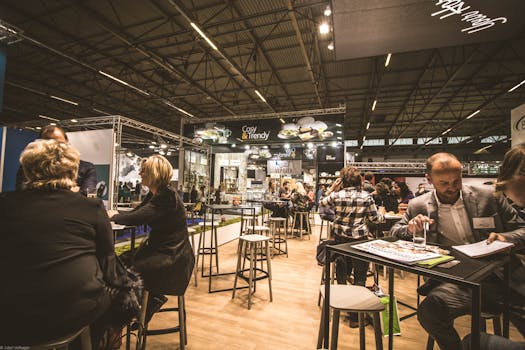
On a trade show floor, attendees walk past your booth in seconds. The activation has to read clearly from the aisle and produce a result fast enough that people do not block traffic. A branded transformation that places the guest inside a scene tied to your product or campaign works well here, and it gives your sales team an easy opening line when the guest comes back to collect the image.
Hotel ballrooms and corporate galas
Gala guests are dressed up, seated, and moving between courses, awards, and the dance floor. Placement along the natural path to the bar, the restroom, or the step-and-repeat banner catches them without competing with the stage program. Group portraits matter more here than solo shots, since teams and tables want a picture together.
Business park and campus events
Employee events held inside a business park often come with tighter space, shared walls, and limited power drops. A smaller footprint or a roaming setup can work better than a full booth build. Ask what the vendor needs in terms of floor space, power, and setup time before you commit to a location, and confirm those details with the venue’s event contact.
Get Brand and Legal Approval on the Calendar Early
Brand approval timelines are real. Legal, brand, and marketing stakeholders may all need to review logo usage, color treatment, taglines, and how the AI renders your marks inside a generated image. Build review cycles into your schedule instead of assuming a design can turn around in a couple of days.
Ask the vendor how many revision rounds are included and who supplies final artwork files. If your campaign involves a regulated product or a co-branded partnership, route the mockups through the same approval channel your other printed materials use. It is far easier to fix a scene three weeks out than the morning of the event.
Plan the Data Capture and QR Handoff
Data capture integration matters for most corporate activations, so decide what you actually want to collect. A common flow has guests scan a QR code, complete a short survey, choose their photo experience, and receive the result on a branded microsite. Every scan and every submission becomes a trackable touchpoint.
Work through the details in advance: which fields the survey asks for, what the confirmation screen says, how the microsite looks on a phone, and how the collected data gets exported to your CRM or marketing platform. Loop in your legal team on consent language rather than borrowing wording from another campaign.
Test IT, Power, and Network Requirements
IT and network requirements are where ambitious activations quietly fall apart. Venue Wi-Fi is often shared with other events in the building, and guest networks may be restricted or throttled. Before booking, ask the venue’s event contact about dedicated connections, available power, load-in windows, and whether a technician needs to be on site.
Then ask the vendor what happens if connectivity drops mid-event. Find out whether the experience can continue to capture and print while the connection recovers, and whether results can be delivered after the event instead of live. A backup plan discussed in advance is worth more than an apology the next morning.
Check Group Accuracy and Inclusive Design
Corporate audiences are visually diverse, and AI transformations are only as good as the faces they handle well. Ask about true group and likeness accuracy, including how the system performs with varying skin tones, glasses, headwear, and different heights in a single frame.
Also ask how many people can fit in one capture. A magazine cover or movie poster composition may only hold a few people before it looks crowded, while a wider scene can take a larger team. Knowing the limit lets you set expectations with guests instead of turning people away at the curtain.
Compare AI Booths With Other Photo Experiences
AI transformations are one option among several. Matching the format to the room and the crowd matters more than following a trend.
Experience | Best suited to | Guest takeaway |
|---|---|---|
AI photo activation | Brand campaigns, trade shows, themed parties, sponsor placement | A themed image such as a magazine cover or movie poster, often delivered by QR or print |
360 video booth | High-energy receptions and after-parties | A short shareable video clip |
Classic open-air booth | Mixers and employee events where speed matters | Instant printed strips or 4×6 prints |
Roaming photo unit | Crowded floors and multi-room venues | Photos captured wherever guests already are |
Some events combine two formats, placing an AI activation near the entrance and a video booth closer to the bar. Decide based on guest count, room layout, and how much floor space you can spare.
Questions to Ask Before You Sign
-
Which parts of the experience are pre-crafted scenes and which are custom built for our brand?
-
How many revision rounds are included, and what is the artwork deadline?
-
How does data capture work, and how do we export the results?
-
How many guests fit in a single AI capture?
-
What are the power, network, and floor space requirements?
-
What is the setup and teardown window, and who handles load-in?
-
What is the contingency if the venue network fails?
Pricing and What to Verify
Pricing for AI photo activations depends on rental duration, the number of custom scenes, printing, staffing, and travel distance. Public listings vary widely. One Anaheim AI photo booth page advertises rates starting at $1,995 for three hours, including an on-site attendant and custom elements, which is a useful market reference point but only one data point. Request a written quote that spells out hours, deliverables, overage rates, and travel so you can compare proposals on equal footing.
Why Southern California Coverage Helps
Lucky Frog Photos operates across Los Angeles, Orange County, and San Diego, with equipment crafted locally in Los Angeles. For an Anaheim event, that means a shorter drive for crew and gear, which reduces the chance that a traffic problem on the 5 turns into a late setup. The team builds activations around DSLR cameras, studio-grade lighting, touchscreen interfaces, and custom software, with instant printing available as 2×6 strips or 4×6 prints and digital delivery through QR or email.
Options include the DrawMatic AIrtist Bot, AI Portrait Studio, AI Face Swap, AI Photo Lounge, AI Toybox, and custom AI background generation, plus video formats such as a 360 Video Booth, Vogue Light Tunnel Booth, LED Viral Video Booth, and GIF or boomerang capture. That range lets you pick the format that fits the room instead of forcing one product into every event.
Frequently Asked Questions
How much does an AI photo booth cost for an Anaheim corporate event?
Rates depend on rental hours, custom scene development, printing, staffing, and travel. Public listings vary widely, and at least one Anaheim AI booth page advertises starting rates of $1,995 for three hours with an on-site attendant and custom elements. Treat any single figure as a reference point only and request a written quote covering setup, teardown, and deliverables.
Can guests get their photos the same night?
Yes. Most activations offer instant output through printing or digital delivery. Common options include printed 2×6 strips, 4×6 prints, and sharing by QR code or email, with results also routed to a branded microsite. Confirm which delivery methods are included in your quote, since printing volume and digital hosting can be priced separately.
How far in advance should we book an AI activation?
Build your timeline around brand approval rather than the vendor calendar. Logo reviews, revision rounds, and legal sign-off all take time, and custom scenes need development before the event. Once concepts are approved, lock the date and confirm load-in details with the venue contact. Peak seasons fill faster, so start the conversation early.
Do AI photo activations work for large groups?
They can, but the composition sets the limit. A magazine cover or movie poster layout holds fewer people than a wider scene, so ask the vendor how many guests fit comfortably in a single capture. Knowing that number helps you set expectations, design your signage, and keep the line moving during busy periods.
What happens if the venue Wi-Fi is unreliable?
Ask the venue about dedicated connections and available power first, then ask the vendor what the fallback plan is. A well-prepared activation should be able to keep capturing and printing even when the network struggles, with digital delivery handled once connectivity returns. Discussing this before the event beats troubleshooting it during the reception.