AI Photo Booth Festival Throughput: Guests Per Hour
Festival organizers tend to ask about capacity before anything else. How many people can one generative AI photo station actually move through in an hour, and what happens to that number when the crowd peaks? The answer decides how many stations you book, how much floor space you reserve, how many staff members you schedule, and whether the line turns into a crowd problem by late afternoon.
Published guidance from AI photo booth operators places a well-run generative AI station at roughly 80 to 150 real guest experiences per hour, per station. More conservative single-station planning figures land between 40 and 60 guests or groups per hour, based on a full cycle that runs 30 to 60 seconds per person or group. Both numbers can be correct at the same event, because they measure slightly different things.
The Short Answer: Guests Per Hour Per Station
Across published vendor guidance, one AI photo booth station typically lands somewhere between 40 and 150 guest experiences per hour. The spread is wide because the definitions differ. Some sources count completed transformations, some count groups, and some count every individual who steps into the activation.
Published estimate | What it counts | Typical condition |
|---|---|---|
40 to 60 guests per hour | One full transformation per person or group | Single station, conservative planning figure |
Roughly 50 to 60 groups per hour | Groups, using a 45 second to one minute cycle | Steady flow with printing in the loop |
80 to 150 guest experiences per hour | Individual guests, per station | Optimized AI booth with digital-first output |
Hundreds per hour | Guests, per station | Festival-grade build with managed lines |
If you need one number for a planning spreadsheet, treat 40 to 60 as your conservative per-station figure and 80 to 150 as your realistic ceiling when the booth is well designed, well staffed, and the share step is digital. Anything above that depends on the specific build and how the operator handles queues.
Why Two Booths That Look Identical Report Different Numbers
Raw generation speed is only one part of throughput. A station that produces a striking image in under a minute can still bottleneck if the guest briefing is unclear, the line has no clear entry and exit, or the sharing step stalls. Operators who publish capacity numbers tend to name the same handful of chokepoints.
Briefing clarity: guests who understand the prompt options move faster than guests figuring it out on the spot.
Queue flow: a defined lane with one greeter consistently outperforms an open cluster waiting near the screen.
Share step: QR codes and email delivery keep people moving; a slow upload can hold the whole line.
Group size: a six-person group still takes one cycle, so counting guests rather than groups raises the hourly figure.
Printing: physical prints add handling time that digital-only delivery avoids.
Staffing: an attendant who keeps the cadence, resets props, and manages the next group protects the throughput rate.
What One Guest Cycle Actually Looks Like
Understanding the sequence makes the hourly math easier to trust. Generative AI booth processing is commonly described as delivering results in under 60 seconds per guest, with individual transformations running 30 to 60 seconds. Laid out step by step, a typical festival cycle looks like this.
Greeting and prompt selection, where the guest picks a style or theme.
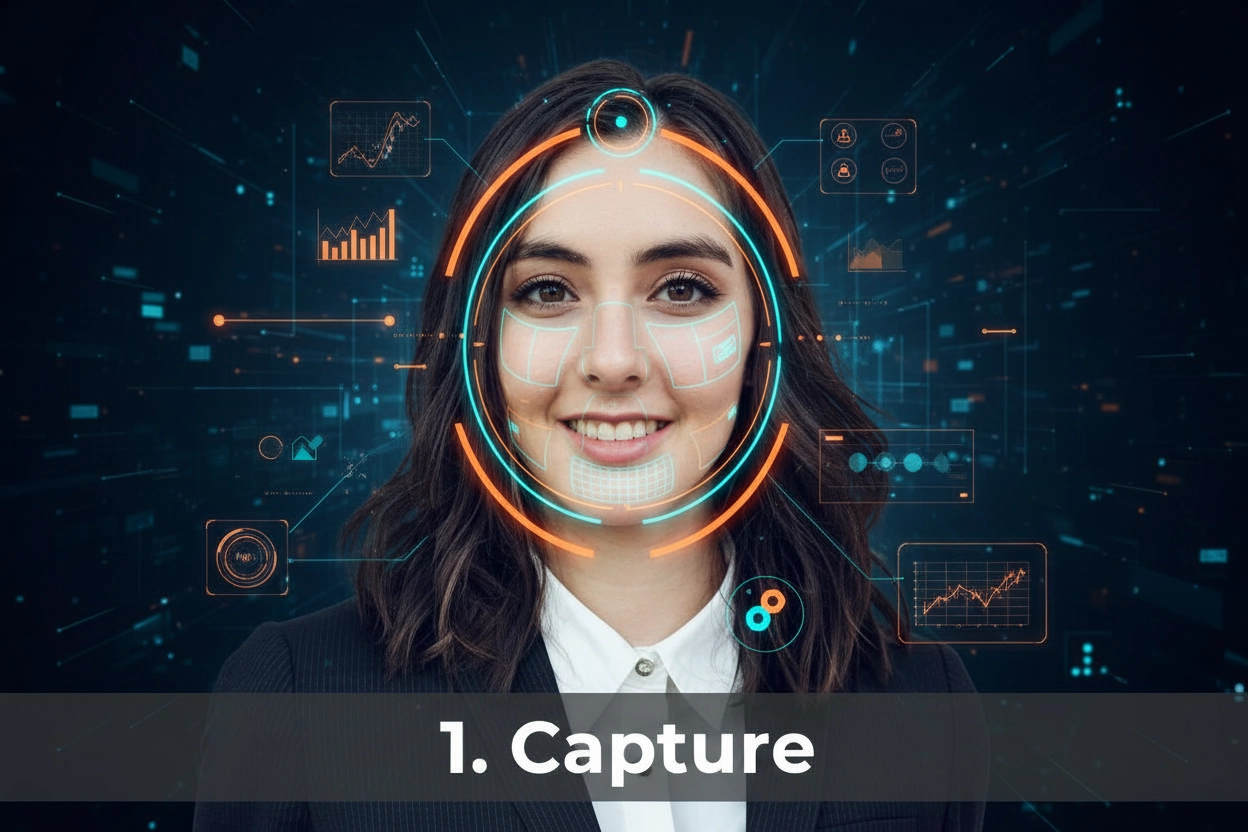
Capture, using studio lighting and a touchscreen interface to frame the shot.
AI generation, the 30 to 60 second window where the style is applied.
Review, and a possible reshoot if the guest wants another pass.
Delivery, either instant QR and email sharing or on-site printing.
Steps one, four, and five are where time disappears. The generation step is largely fixed by the software. The human steps are the ones an experienced operator can compress.
Festival Throughput Is a Different Animal
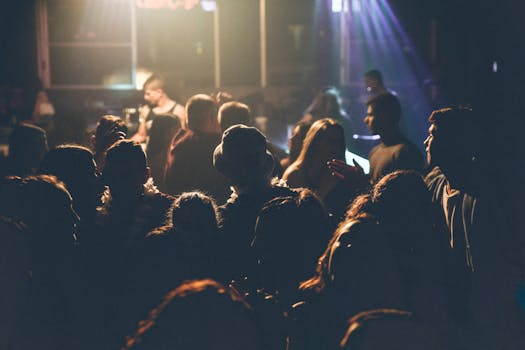
Festival activations are not corporate receptions with a bigger guest list. Published festival planning guidance notes that festival booths need to handle roughly 10 to 50 times the throughput of a typical corporate event. The best festival-grade AI booths are described as handling hundreds of guests per hour without performance degradation or technical failures, which is a very different design brief than a two-hour gala window.
What changes at that scale is redundancy. Power, network, backup hardware, and a second attendant all matter more, because a single stall at a festival is amplified by the size of the crowd waiting behind it. A booth that fails quietly at a corporate party is a minor inconvenience. The same failure in a festival queue creates a visible problem.
Space and Footprint Planning for Festival Lines
Space planning directly affects how many guests per hour you can realistically process. Published guidance from one Los Angeles area AI booth provider recommends a minimum footprint of about 10 by 16 feet to accommodate the activation and its flow. At a festival, that footprint needs to include the queue lane itself, not just the equipment.
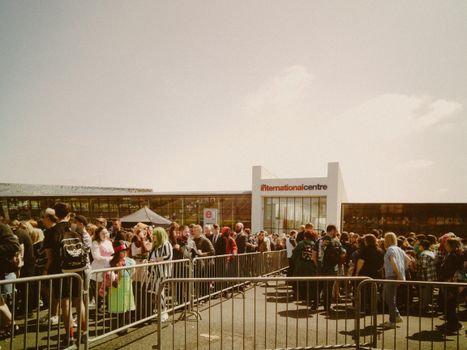
Practical layout decisions include a single entry point, a clear exit that does not cross the entry lane, room for a greeter to work the front of the line, and enough buffer that a spillover crowd does not block an adjacent vendor or walkway. Two stations placed side by side can share a greeter and often beat two stations placed far apart, because staffing is easier to balance.
How Digital Sharing Speeds Up the Line
Instant QR and email delivery removes the handling step that printing introduces. At a festival, where guests are moving between stages and rarely want to carry a physical print for hours, digital delivery is both faster and more practical. It also gives the sponsor or organizer a clean path to branded sharing, since every image that leaves the booth can carry the event identity.
Printing still has a place. An on-site print station works well as a second touchpoint after the AI experience, so the generation line keeps moving while guests who want a physical keepsake step to a separate table. Splitting those two functions protects the throughput number that matters most.
Doing the Throughput Math for Your Event
Start with the peak hour, not total attendance. Estimate how many guests will pass the activation zone during your busiest 60 minutes, then divide by a realistic per-station figure. If your peak hour brings 300 guests past the booth and you plan conservatively at 60 guests per station, that is five stations. At an optimized 100 guests per station, it is three stations plus a buffer.
Then add margin for the moments nobody plans for: a headline act ending, a sudden rain shower pushing people under cover, or a social media moment that sends a wave toward your activation. Festival booths are often judged on their worst 15 minutes rather than their average hour, so plan for the spike.
Anaheim, Orange County, and Southern California Events
For organizers in Anaheim and the surrounding Orange County area, throughput conversations usually sit alongside questions about which activation fits the room, the outdoor venue, or the brand footprint. Lucky Frog Photos builds AI and interactive experiences for weddings, corporate galas, brand activations, proms, and private celebrations across Anaheim, Los Angeles, Orange County, and San Diego.
The lineup includes an AI Portrait Studio, the DrawMatic AIrtist Bot live sketch experience, AI Face Swap, an AI Photo Lounge, AI Toybox, and custom AI background generation, plus 360 video booths, LED viral video booths, glamour filter booths, open-air booths, roaming retro units, and selfie stations. Equipment is crafted locally in Los Angeles with professional DSLR cameras, studio lighting, touchscreen control, on-site printing, and instant QR and email sharing.
Rental cost depends on station count, hours, footprint, custom branding, and staffing, so the right step is a quote based on your specific event rather than a published rate. When you request that quote, ask directly how many guests per hour each proposed configuration is expected to handle at your venue.
Questions to Ask Before Booking an AI Photo Booth for a Festival
A vendor’s answer to these questions tells you more about real-world festival performance than any feature list.
How many guests per hour does this exact configuration handle at a comparable event?
What is the per-guest cycle time, including briefing and sharing?
Does the throughput figure assume digital delivery, printing, or both?
How much space do you need for the booth plus the queue lane?
What happens if the network drops mid-event?
How many attendants come with each station?
Frequently Asked Questions
How many guests per hour can one AI photo booth handle at a festival?
Published guidance puts a single generative AI station at roughly 80 to 150 guest experiences per hour when the flow is optimized, while conservative planning figures sit between 40 and 60 guests or groups per hour. The difference usually comes down to how the count is defined and whether printing is part of the cycle.
Does printing slow down an AI photo booth line?
Printing adds handling time to every cycle, which lowers the hourly figure compared with digital-only delivery. At festivals, many operators keep the generation line digital with instant QR and email sharing, then offer prints at a separate table so guests who want a keepsake do not hold up the main queue.
How many AI photo booth stations does a festival need?
Start with your busiest hour rather than total attendance. Divide the number of guests expected in that peak hour by a realistic per-station figure, such as 60 for conservative planning, then add a buffer for crowd surges. Festival booths are often described as needing far higher throughput than typical corporate event setups.
How long does one AI photo take to generate?
Generative AI booth processing is commonly described as delivering results in under 60 seconds per guest, with individual transformations running 30 to 60 seconds. A complete cycle including prompt selection, capture, generation, review, and sharing typically runs about 45 seconds to one minute per person or group.
Do AI photo booths work for corporate galas as well as festivals?
Yes, and they are often easier to plan for at galas because peak volume is lower and more predictable. The same station that serves a steady gala flow can be configured for festival volume with additional staffing, space, and network redundancy. For Anaheim events, ask about expected throughput at your specific venue.