AI Brand Activation Anaheim CA: A Practical Planning Guide
By 13 min read
Introduction
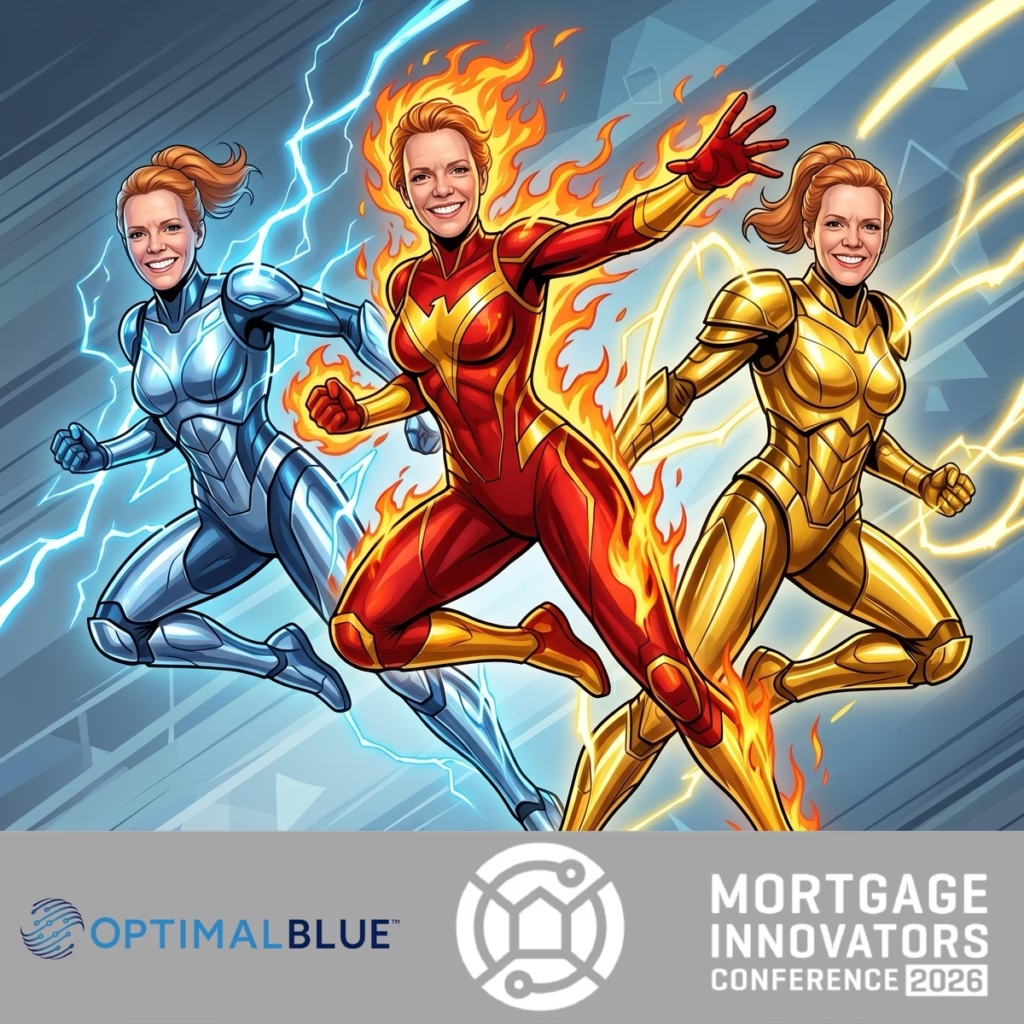
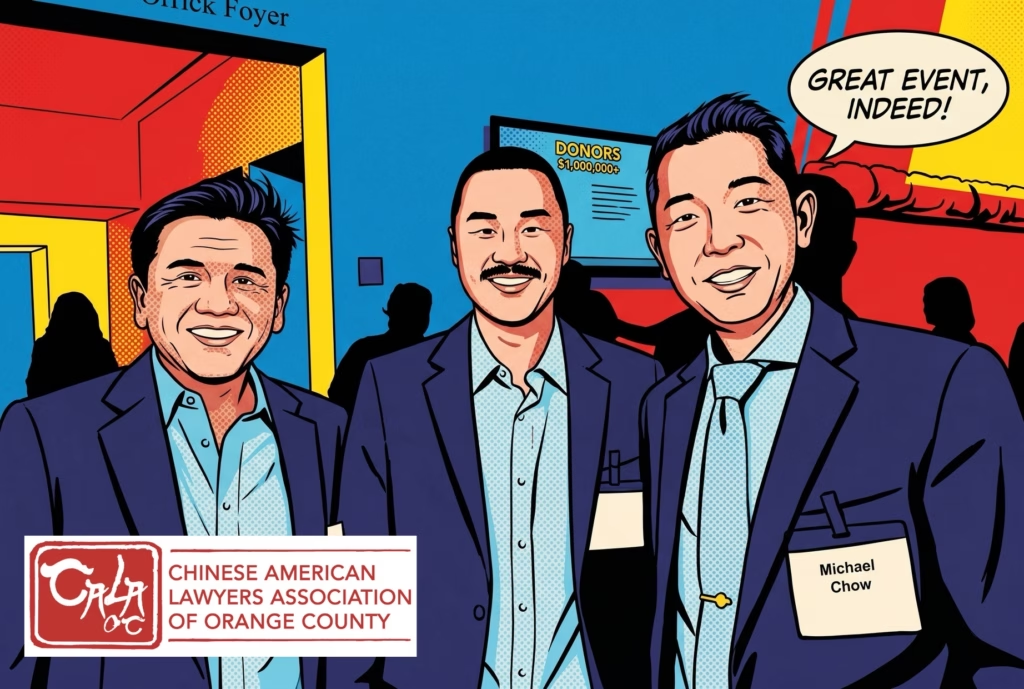
An AI brand activation Anaheim CA campaign can turn a convention booth, product launch, hospitality event, or creator gathering into a personalized content experience. Instead of handing visitors a standard giveaway, you can invite them to create an AI-styled portrait, interact with a branded digital character, generate a campaign-themed video, or participate in a gamified kiosk that collects permission-based customer insights.
The appeal is clear: attendees receive something made for them, while your brand earns attention, opt-in data, user-generated content, and a clearer view of what visitors actually care about. But AI alone does not make an activation effective. The strongest programs match the technology to a business goal, account for Anaheim venue rules early, and measure more than social impressions.
Anaheim is especially relevant because its event economy includes conventions, resort meetings, creator events, sports-adjacent promotions, and large hospitality gatherings. Social Media Examiner’s AI Business World event page identifies Anaheim as a location for AI marketing audiences, including a conference scheduled for April 2–3, 2027. That does not guarantee a successful activation, but it does reinforce the city’s fit for brands targeting marketers, creators, and technology-curious attendees.
AI Digital Art Photo Booth in Anaheim: Portraits, Sketches, Fun
Anaheim is not one uniform event environment. The Anaheim Convention Center, Disneyland Resort Corridor, Anaheim GardenWalk, Honda Center, Angel Stadium, and nearby convention hotels can each create different constraints around load-in access, available space, electrical service, network access, vendor coordination, and guest flow.
A compact AI photo station may work well in a hotel ballroom foyer. A larger multi-screen content lab may be better suited to an expo floor with a wider footprint and a queue plan. Before choosing visuals or hardware, define where guests will stand, how they will enter and exit, where staff will manage the line, and what happens if cloud processing slows down.
TL;DR
An AI activation works best when it is designed as a measurable exchange: the attendee receives a useful, entertaining, or highly shareable personalized output, and your brand receives consented engagement, qualified data, or product interest signals.
Key Takeaways
• Choose the activation mechanic based on your main goal: content creation for reach, a quiz or product selector for lead quality, or a hybrid experience for both.
• Confirm venue power, Wi-Fi, load-in timing, labor policies, and floor-plan approval before committing to a large installation.
• Build brand safety into the prompt, visual library, moderation process, and fallback plan rather than treating it as a last-minute review task.
• Track dwell time, completion rate, opt-in rate, lead qualification, content downloads, and CRM match rate alongside shares and impressions.
• Give creative teams enough time for prompt testing, visual approvals, privacy language, and technical rehearsals. Same-week customization may be possible for simple overlays, but custom AI experiences usually need more lead time.
The Decision In One Sentence
If your objective is broad visibility, use an AI content experience that produces polished branded media quickly. If your objective is sales follow-up, add a short qualification step that captures a meaningful intent signal before digital delivery.
A photo is not automatically a lead. A lead is an attendee who has clearly agreed to share information and provided enough context for your team to take a relevant next step.
Toy Box Photo Booth Aug 9 11th V2 6
Choosing The Right AI Activation Format
The best format depends on what you need the activation to accomplish after the event ends. A visually impressive experience can create traffic, but it may produce low-quality contact records if the data exchange is unclear. Conversely, a detailed product quiz may create strong intent signals but attract fewer casual visitors.
Compare Booths, Filters, And Interactive AI Experiences
Moderate without qualification; stronger with optional survey fields
Avoid if the venue cannot support a visible queue or dedicated operator
Custom AI filter or background generator
Fast social content and campaign aesthetics
Selects a look, pose, product setting, or branded scenario
Low to moderate unless paired with a permission-based form
Avoid if your campaign requires deep product education
Gamified AI kiosk
Product discovery, contests, retail pop-ups
Answers prompts, completes challenges, or receives tailored recommendations
Moderate to high when questions reveal purchase intent
Avoid if the interaction takes too long for peak trade show traffic
AI content lab or headshot station
Premium hospitality, recruiting, B2B events
Creates professional portraits, videos, or campaign assets
Moderate, often high-value because the guest invests more time
Avoid for very small footprints or short, high-volume breaks
An AI photo booth is often the most flexible starting point because guests understand the interaction quickly. The difference from a regular photo booth is what happens after capture: AI can place a participant in a campaign world, apply a controlled visual style, create alternate versions, or personalize the output using approved inputs.
For brands exploring AI photo booth rentals for brand activations in Anaheim, the most useful question is not “What effects are available?” Ask, “What should the guest do after they receive the content?” That answer determines whether you need a QR code, email delivery, SMS flow, product offer, appointment link, or sales-team handoff.
Match The Mechanic To Lead Intent
Not all participant actions signal the same level of interest. Someone who creates an AI portrait may enjoy the experience but have no buying intent. Someone who chooses a product use case, selects a budget range, and asks for delivery by email may be much closer to a sales conversation.
Use a lighter or deeper interaction based on event context:
• High-traffic expos: Keep the first interaction under a few minutes. Capture minimal consented data, then use QR delivery to move people through the line.
• B2B conferences: Add one or two optional questions tied to the offer, such as role, company size, or a challenge the attendee wants to solve.
• Product launches: Let attendees choose among product features or campaign scenarios. Those selections become useful consumer insights without forcing a long form.
• Recruiting or VIP events: Offer a high-value output, such as a professional AI-enhanced headshot or cinematic branded video, in exchange for a more deliberate registration flow.
The trade-off is simple. More questions can improve qualification, but every added field may reduce completion. Keep only the information your sales or marketing team will actually use.
Use AI As One Part Of A Bigger Engagement Mix
At a large Anaheim convention, an AI experience does not need to carry the entire booth. It can be the content engine inside a larger program that includes demos, product sampling, a lounge, a giveaway, or a gamified challenge. Trade Show Labs’ Anaheim trade show ideas includes AI photo booths within broader mixes of branded games and simulator-style attractions for convention settings.
That combination matters because different elements serve different jobs. A game can pull people in. A product demonstration can explain the offer. An AI portrait or video can give visitors a reason to share and remember the interaction.
AI Photo Booth San Diego: Choosing the Right Experience
Building A Reliable Anaheim Activation
The most expensive activation failure is not a weak filter. It is a polished concept that cannot operate reliably in the assigned venue footprint. Your production plan should cover creative approvals, technical dependencies, staffing, accessibility, and recovery procedures before event day.
Create A Realistic Production Timeline
Custom AI projects have layers: campaign objectives, creative direction, prompt design, branded overlays, visual testing, privacy review, delivery flow, and rehearsal. Each layer needs approval.
Captured Celebrations states that custom AI transformation filters can place guests in branded scenarios and are typically developed during the two weeks before an activation. Its Anaheim packages also list custom filters, branded overlays, real-time social sharing, and post-activation analytics, with packages starting at $2,000. Its Anaheim brand activation FAQ is a useful market reference, not a universal pricing standard.
A practical planning sequence looks like this:
Define the exchange. Decide what guests receive, what data is optional, and what business result matters.
Approve the creative system. Finalize visual references, logo placement, approved language, prohibited themes, and output examples.
Test the guest journey. Run the actual steps from arrival through consent, capture, generation, delivery, and exit.
Confirm venue operations. Verify load-in windows, elevator or dock access, power distribution, Wi-Fi policies, floor marking, and staffing requirements.
Rehearse failure modes. Test what staff will do if the network drops, a printer fails, a QR code does not scan, or an output needs moderation.
Fair warning: a custom visual concept can look complete in a presentation and still fail under live conditions. For example, an elaborate generative transformation may take too long during a convention rush. The fix may be a faster preset, a limited menu of approved styles, or a delayed digital-delivery option rather than forcing guests to wait at the station.
Plan For Venue, Network, And Queue Constraints
Venue rules vary by event and contract, so do not assume a standard setup applies everywhere in Anaheim. The right questions should be part of your vendor and venue conversation:
• What are the permitted load-in and load-out hours?
• Is venue-provided internet required, and can your activation use a separate wired connection or approved backup network?
• How many dedicated electrical circuits are available for cameras, lighting, monitors, printers, and computers?
• Are there restrictions involving labor, rigging, freight handling, floor protection, or equipment placement?
• What is the accessible route to the experience, and can wheelchair users reach the camera, screen, and printed materials comfortably?
• Where will a queue form without blocking aisles, exits, neighboring exhibitors, or food service?
A connected AI station should have a fallback. This may include an approved local capture mode, queued delivery after the network returns, printed instructions for retrieving content later, or a non-AI branded photo option. The goal is not to pretend outages never happen. It is to prevent one outage from ending the guest experience.
Protect Likeness, Consent, And Brand Safety
AI-generated imagery can be highly personal. If you process guest photos, clarify what is being collected, why it is used, how long it is retained, whether it will be used for marketing, and how participants can decline. Your privacy language should be easy to read at the point of participation, not buried behind a QR code.
A safer activation uses controlled inputs and outputs:
• Restrict styles to a pre-approved prompt library rather than allowing unrestricted public text prompts.
• Avoid sensitive visual themes, claims, or transformations that could create reputational risk.
• Use a review process for outputs that are publicly displayed on large screens.
• Offer an alternate participation mode for attendees who do not want facial imagery processed.
• Keep data collection separate from required participation whenever possible. A person should be able to receive a basic experience without being pressured into marketing consent.
Accessibility deserves the same attention. Use readable on-screen text, clear instructions, sufficient turning space, seated or adjustable capture options when feasible, and staff who can assist without taking control away from the guest. If a video component carries important information, caption it. If the interaction depends on fine motor gestures, provide a touch-screen or staff-assisted alternative.
Photo Booth Rental at the Los Angeles Convention Center (LACC)
Measure Results Beyond Impressions
Impressions are useful for reach, but they do not tell you whether the activation moved people closer to a decision. A better scorecard follows the full journey.
Metric
What It Reveals
How To Use It
Foot traffic
How many people approached the experience
Compare location and signage performance
Dwell time
Whether the interaction held attention
Identify steps that feel engaging or slow
Completion rate
Whether guests finish the flow
Find friction in forms, generation time, or delivery
Opt-in rate
How many participants consent to follow-up
Evaluate the clarity and value of the data exchange
Qualified lead rate
How many leads meet your target criteria
Improve questions and sales handoff rules
Download or share rate
Whether the content remains useful after the event
Compare creative styles and delivery methods
CRM match rate
How many records connect to known contacts or accounts
Assess data quality and duplicate handling
A reported Anaheim case from Digital Orbit 360’s brand activation page lists 600 leads, 923 downloads, and 106,739 impressions. Those figures are most useful as a reminder that activation reporting should connect engagement activity to funnel behavior. A large impression total may be encouraging, but it should not substitute for knowing how many contacts became qualified opportunities or customers.
It is a live marketing experience that uses AI to personalize, generate, or adapt branded interactions for attendees. Common examples include AI photo booths, face-swapping experiences, headshot labs, prompt-controlled image generators, drawing robots, and interactive kiosks. In Anaheim, these are often used at conventions, resort events, creator gatherings, retail pop-ups, and product launches.
How Does An AI Activation Differ From A Regular Photo Booth?
A regular booth captures and delivers a photo. An AI activation can transform that photo into an approved campaign world, offer multiple branded scenarios, tailor content based on guest selections, or connect the output to a digital lead-capture journey. The strongest difference is not the effect itself; it is the personalized interaction and the measurable follow-up path.
Which Activation Format Is Best For Lead Generation?
A gamified kiosk or AI content station with a short qualification step usually provides stronger lead context than a photo-only experience. Choose an AI photo booth when traffic and social reach are the priority. Choose a guided quiz, product matcher, or appointment flow when your sales team needs intent signals. A hybrid format works well when you need both booth traffic and usable lead data.
Operations And Risk Questions
How Much Does An AI Brand Activation Cost In Anaheim?
Pricing depends on hardware, staffing, custom development, event duration, venue requirements, and the complexity of the content flow. Published Anaheim examples range from entry-level activation packages beginning around $2,000 to trade show-oriented offers beginning around $1,800, but your final cost can rise with custom builds, multiple stations, premium set design, or extensive integration work. Request an itemized scope rather than comparing only a headline price.
How Long Does It Take To Design And Launch One?
Simple branded overlays may move quickly after assets are approved. Custom AI styles, interactive flows, CRM integration, and large-format scenic elements need a longer review cycle. Plan for concept approval, design revisions, technical testing, privacy review, and a rehearsal. If your event is only days away, consider a controlled, proven format rather than a complex new generative experience.
What Venue Requirements Matter Most In Anaheim?
Prioritize power, reliable connectivity, load-in access, footprint, queue space, staffing requirements, and accessibility. At convention venues and large hotels, also confirm whether the event organizer or venue controls internet, electrical service, freight handling, or labor. Ask these questions before signing off on an activation size or network-dependent experience.
How Do You Keep AI-Generated Content On Brand?
Use a closed creative system: approved reference images, a limited style menu, tested prompts, restricted text inputs, branded overlays, and a clear moderation process. Do not rely on a general-purpose generator with unrestricted guest prompts for public display. If an output is delayed or unsuitable, staff should be able to offer a pre-approved alternate output immediately.
Conclusion
An AI brand activation in Anaheim can create more than a memorable photo moment. When you connect the experience to a clear campaign objective, consent-based data strategy, resilient venue plan, and practical measurement model, it can support awareness, lead generation, and customer insight at the same time.
Start With The Exchange
Before selecting a booth, filter, robot, or interactive screen, decide what attendees gain and what your team needs to learn. That one decision will shape the creative, staffing, technology, privacy approach, and reporting plan.
Turn Event Attention Into Useful Action
Build an experience that is fast enough for the venue, valuable enough for the guest, and structured enough for your team to act on after the event. The most effective activation is not necessarily the most complex one. It is the one that reliably turns a few minutes of attention into meaningful brand engagement.